2/24 What Constitutes the Easter Cycle? Part I (Easter this Year is 4/20/2014)

Historically, the Paschal or Easter cycle began to develop much earlier than the Christmas cycle, because the feast of the Pasch was in practice earlier than the feast of the Nativity of our Lord (Christmas).  With the Easter cycle, we shall begin a more detailed explanation of the Liturgical Year.

The Easter cycle begins with the Sunday ten weeks before Easter, and terminates eight weeks after Easter.  The Easter cycle is divided into pre-paschal, i.e., the season or period before Easter, and the Easter season.  The season of Lent begins on Ash Wednesday (March 5, 2014), and ends with the Celebration of the Evening Mass of the Lord’s Supper on Holy Thursday (April 17, 2014).

The Paschal Triduum begins on Holy Thursday with the Evening Mass of the Lord’s Supper (April 17, 2014), and ends with Evening Prayer on Easter Sunday (April 20, 2014).

The Easter Season begins on Easter Sunday (April 20, 2014), and ends with Evening Prayer on the Solemnity of Pentecost (Sunday, June 8, 201).

Ordinary Time begins after Evening Prayer on the Solemnity of Pentecost (June 8, 2014) and continues until Evening Prayer of the First Sunday of Advent (November 30, 2014).


2/23 The Easter or Paschal Cycle

One who closely follows the Liturgical Year of our Church will readily perceive, that she re-lives each festal event in a deeply spiritual manner.  This may be observed in our feastday services which, with their profound prayers, songs, hymns and symbolic rites, place before our eyes both the factual content and the deep theology of each feast.  Therefore, it should not surprise us that the feastday services impress us so strongly and stir us to the depths of our souls.  This is why the Church diligently prepares the faithful spiritually, psychologically and physically for every feast.  Therefore the greater the feast, the greater and longer is the preparation for it, and the longer is the post-festal celebration.

This is why the feast of the Resurrection of our Lord, which is the greatest feast in the Year, requires an extraordinarily long preparation as well as a long post-festal celebration which is, as it were, a prolongation of the feast of Easter.


Meaning of the Ceremonies at Mass

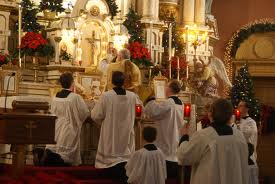
J_Traditional Latin Mass

1. The Priest Goes to the altar – Christ Goes to Mount Olivet.
2 The Priest Commences Mass – Christ Begins to pray.
3 The Priest Says Confiteor – Christ Falls down and sweats blood.
4 The Priest Goes up and kisses the altar – Christ Is betrayed by Judas with a kiss.
5 The Priest Goes to the Epistle side – Christ Is captured, bound, and taken to Annas
6 The Priest Reads the Introit – Christ Is falsely accused by Annas and blasphemed.
7 The Priest Goes to the middle of the altar and says the Kyrie eleison – Christ Is brought to Caiphas and there three times denied by Peter.
8 The Priest Says the Dominus vobiscum – Christ Looks at Peter and converts him.
9 The Priest Reads the Epistle – Christ Is brought to Pilate.
10 The Priest Says the Munda cor meum at the middle of the altar – Christ Is taken to Herod and mocked.
11 The Priest Reads the Gospel – Christ Is taken back to Pilate and again mocked.
12 The Priest Uncovers the chalice – Christ Is shamefully exposed.
13 The Priest Offers bread and wine – Christ Is cruelly scourged.
14 The PriestCovers the chalice – Christ Is crowned with thorns.
15 The Priest Washes his hands – Christ Is declared innocent by Pilate.
16 The Priest Says the Orate Fratres – Christ Is shown by Pilate to the people with the words, Ecce Homo.
17 The Priest Prays in a low voice – Christ Is mocked and spit upon.
18 The Priest Says the Preface and the Sanctus – Christ Is preferred instead of Barrabas and condemned to crucifixion.
19 The Priest Makes the Memento for the living – Christ Carries the cross to Mount Calvary.
20 The Priest Continues to pray the Canon in a low voice – Christ Meets His Mother and the other pious women.
21 The Priest Blesses the bread and wine with the sign of the cross – Christ Is nailed to the cross.
22 The Priest Elevates the Sacred Host – Christ Is raised on the cross.
23 The Priest Elevates the chalice – Christ Sheds blood from the five wounds.
24 The Priest Prays in a low voice – Christ Sees His afflicted Mother at the cross.
25 The Priest Says aloud, Nobis queque peccatoribus – Christ Prays on the cross for men.
26 The Priest Says aloud the Pater noster – Christ Says the seven last words on the cross.
27 The Priest Breaks and separates the Host – Christ Gives up His spirit and dies.
28 The Priest Lets a small portion of the sacred Host fall into the chalice – Christ His soul descends to Limbo.
29 The Priest Says the Agnus Dei – Christ Is acknowledged on the cross as the Son of God by many bystanders.
30 The Priest Administers Holy Communion – Christ Is laid in the tomb.
31 The Priest Cleanses the chalice – Christ Is anointed by pious women.32 The Priest Prepares the chalice again – Christ Rises from the dead.
33 The Priest Says the Dominus vobiscum – Christ Appears to His Mother and the disciples.
34 The Priest Says the last prayers – Christ Teaches for forty days.
35 The Priest Says the last Dominus vobiscum – Christ Takes leave of His disciples and ascends to heaven.
36 The Priest Gives the benediction to the people – Christ Sends down the Holy Ghost
37 The Priest Says the Ita Missa est and the last Gospel – Christ Sends the apostles into all parts of the world to preach the Gospel.

2/20 Hours of the Passion

Excerpt from the Seventh Hour: From 11 PM to Midnight

But I already hear the clamor of Your enemies, who are coming to take You. Who will defend You in Your state? But here You are, stirring Yourself as though rising again from death to life, looking at me, and saying to me, “O soul, are you here? Have you then been spectator of My pains and of the so many deaths I suffered? Know that in these three hours of most bitter agony in the Garden, I enclosed in Myself all the lives of the creatures, and I suffered all of their pains, and their very death, giving My own Life to each one of them. My agonies will sustain theirs; My bitternesses and My death will turn into a fount of sweetness and Life for them. How much souls cost Me! Were I at least requited! You have seen that while I was dying, I would return to breathe again, those were the deaths of the creatures that I felt within Me!”

My panting Jesus, since You also wanted to enclose my life in You, and therefore also my death, I pray You, for this most bitter agony of Yours, to come to my assistance at the moment of my death. I have given You my heart as refuge and rest, my arms to sustain You, and all of my being at Your disposal; and—O, how gladly I would give myself into the hands of Your enemies, to die in Your place! Come, O Life of my heart, at that moment, to return to me all I have given You: Your Company, Your Heart as bed and rest, Your arms as support, Your labored Breath to alleviate my labors; in such a way that, in breathing, I will breathe through Your Breath which, like purifying air, will purify me of any stain, and will dispose me to enter the Eternal Beatitude.

Even more, my sweet Jesus, then You will give Your very Most Holy Humanity to my soul, so that, in looking at me, You may see me through Yourself; and in looking at Yourself, You may find nothing for which to judge me. Then You will bathe me in Your Blood; You will clothe me with the candid garment of Your Most Holy Will; You will adorn me with Your Love, and giving me the last kiss, You will let me take flight from earth unto Heaven. And what I want for myself, do it for all the agonizing; clasp them all in Your embrace of Love, and giving them the kiss of their union with You, save them all and allow no one to be lost!

2/14 Ash Wednesday is four days away!

“Fasting is not a new invention, but a treasure received fem the Fathers.  All that is ancient is worthy of praise.  Respect the antiquity of fasting!  It is as old as man himself.”  (St. Basil, On Fasting I)

The Great Holy Fast, called also the Forty Days Fast, is one of the oldest and most sacred Christian practices.  The history of the Great Fast is long and rich in tradition, dating from Apostolic times.  The pre-paschal fast is called Great, not only because of its duration but also because of its significance in the life of the Church and of every Christian.

The Fathers of the Church have the greatest respect and the highest praises for the holy fast.  Regarding its antiquity, St. Basil (329-379) wrote:  “Allow me again to appeal to history and to recall that fasting is very old and that all the saints observed it as though it were an inheritance from parents, transmitted from father to son.   Thus did this treasure come down to us as an unbroken tradition.”  (On Fasting I)


Shrove Tuesday (Tuesday before Ash Wednesday) – This Year falls on February 17th!

J_Face

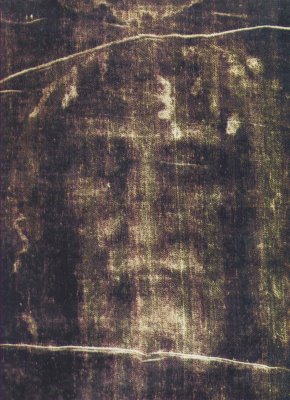
Most Holy Face of Jesus
Click here for Website on the Feastday 

In Tours, France during the 1840’s a young Carmelite nun received a series of revelations from Our Lord about a powerful devotion He wished to be established worldwide—–the devotion to His Holy Face and Name.

THE “GOLDEN ARROW” PRAYER 

MAY the Most Holy, Most Sacred, Most Adorable, Most Incomprehensible and Unutterable Name of God be always praised, blessed, loved, adored and glorified, in Heaven, on earth, and under the earth, by all the creatures of God, and by the Sacred Heart of Our Lord Jesus Christ in the Most Holy Sacrament of the Altar. Amen.  

Short Novena in preparation for His Feast: 

– O Lord Jesus Christ, in presenting ourselves before Thy adorable Face, to ask of Thee the graces of which we stand in most need, we beseech Thee above all, to grant us that interior disposition of never refusing at any time what Thou requires of us by Thy holy commandments and divine inspirations. Amen.
– O Good Jesus, who has said, “Ask and you shall receive, seek and ye shall find, knock and it shall be opened to you,” grant us O Lord, that faith which obtains all, or supply in us what may be deficient. Grant us, by the pure effect of Thy charity, and for Thy eternal glory, the graces that we need and that we seek from Thy infinite mercy. Amen.
Be merciful to us, O my God, and reject not our prayers, when amid our afflictions, we call upon Thy Holy Name and seek with love and confidence Thy adorable Face. Amen.
– O Almighty and Eternal God, look upon the Face of Thy Son Jesus. We present It to Thee with confidence to implore Thy pardon. The All-Merciful Advocate opens His Lips to plead our cause. Hearken to His cries, behold His tears, O God, and through His infinite merits, hear Him when He intercedes for us poor miserable sinners. Amen.
– Adorable Face of Jesus, my only love, my light and my life, grant that I may know Thee, love Thee and serve Thee alone, that I may live with Thee, by Thee and for Thee. Amen.
– Eternal Father, I offer Thee the adorable Face of Thy Beloved Son for the honor and glory of Thy Name, for the conversion of sinners and the salvation of the dying. O Divine Jesus, through Thy Face and Name, save us. Our Hope is in the virtue of Thy Holy Name! Amen. 

2/10 Hours of the Passion

Excerpt from Fourth Hour: From 8 to 9 PM

My weary Good (Jesus), I kiss Your Most Holy Head. I see it tired, exhausted, and all occupied in Your crafting of Love. Tell me, what do You do?

And You, “My child, in this Host I work from morning to evening, forming Chains of Love; and as souls come to Me, I bind them to My Heart. But do you know what they do to Me? Many wriggle free by force, shattering My Loving Chains; and since these Chains are linked to My Heart, I am tortured and become delirious. Then, in breaking My Chains, they render My crafting useless, looking for the chains of the creatures. And they do this even in My Presence, using Me in order to reach their own ends. This grieves Me so much as to make Me faint and rave.”