Mary’s sorrows

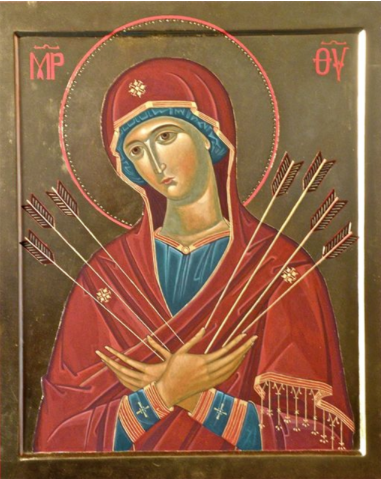
M_Our Lady of Sorrows

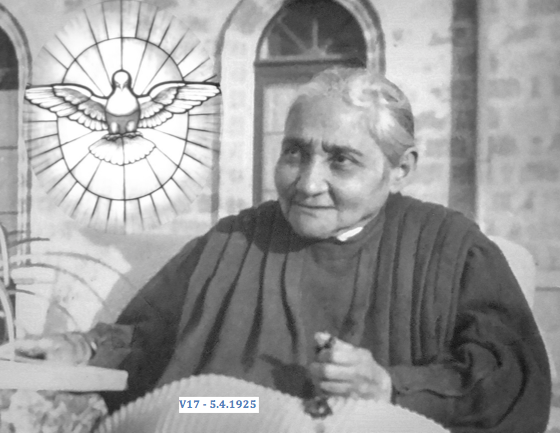
From the OFFICIAL website for the little daughter of the divine will Luisa Piccarreta

The wounds of Jesus and the sorrows of the Blessed Virgin Mary grant the grace of making the human will rise again in God’s Will.

The mystery of the participation of the Blessed Virgin Mary Sorrowful Mother in the passion of her Son is probably the event of the Gospel that has found a wide and intense resonance in popular devotion, in certain pious exercises (Way of the Cross, Via Matris, etc.).

A proof of that religiosity is the famous medieval sequence Stabat Mater Dolorosa (The sorrowful mother stood),  attributed to Jacopone that exceptionally became part of the mass formulary.  Even if Stabatpraises, with a naive feeling of pity, the pain suffered by the Virgin in the Passion and Death of Jesus, it intensely reflects the essential of the Gospel namely that: “the center of the Christian religion is not in the mourning itself of Marybut in that “bringing  the death of Christ” that the “mater dolorosa” helps to live as an experience. ” [E.. De. Martino]

The sequence is already  found in the Franciscan missals of the first half of the 14th century.

Finally Pope Pius X fixed the date on September 15.

In the apostolic Exhortation Marianis Cultus, Paul VI, presented in this manner the memorial of September 15: “the memorial of Our Lady of Sorrows is a  perfect occasion to relive a decisive moment in the history of salvation and to venerate together with the Son exalted on the cross the mother who shared His suffering”(n.7).

Contemplating Mary associated with the Passion of the Son, the Church meditates on her own mystery and on her own mystical participation in the sorrows of the Redeemer  so that, fruitful of children, she can arrive  to the final glory: “Make that the church, uniting herself with Mary to the passion of Christ, be worthy to participate in His resurrection”.

The participation of the passion has two perspectives: personal and communal. It is a continual desire to be free of all form of sin, of evil, individual and social. To take up daily our own cross (Luke 9:39) and to compassionately alleviate the cross of any man or woman we find on our path and of the humanity that we are part of (Luke 10, 25-37; John 13, 34).

The encyclical Redemptoris Mater of St. John Paul II masterfully helps to focus the profound relationship between the peregrinatio fidei of Mary and that of the Church especially at the numbers 23 and 24: “One can say that if Mary’s motherhood of the human race had already been outlined, now (under the cross) it is clearly stated and established. It emerges from the definitive accomplishment of the Redeemer’s Paschal Mystery. The Mother of Christ, who stands at the very center of this mystery-a mystery which embraces each individual and all humanity-is given as mother to every single individual and all mankind. The man at the foot of the Cross is John, “the disciple whom he loved.” But it is not he alone. Following tradition, the Council does not hesitate to call Mary “the Mother of Christ and mother of mankind”: since she “belongs to the offspring of Adam she is one with all human beings…. Indeed she is ‘clearly the mother of the members of Christ…since she cooperated out of love so that there might be born in the Church the faithful”.

And so this “new motherhood of Mary,” generated by faith, is the fruit of the “new” love which came to definitive maturity in her at the foot of the Cross, through her sharing in the redemptive love of her Son. (n.23)

The words uttered by Jesus from the Cross signify that the motherhood of her who bore Christ finds a “new” continuation in the Church and through the Church, symbolized and represented by John. In this way, she who as the one “full of grace” was brought into the mystery of Christ in order to be his Mother and thus the Holy Mother of God, through the Church remains in that mystery as “the woman” spoken of by the Book of Genesis (3:15) at the beginning and by the Apocalypse (12:1) at the end of the history of salvation. In accordance with the eternal plan of Providence, Mary’s divine motherhood is to be poured out upon the Church, as indicated by statements of Tradition, according to which Mary’s “motherhood” of the Church is the reflection and extension of her motherhood of the Son of God. (n.24)

A penetrating gaze on the Virgin, as a model of contemplation is given by Saint John Paul II  in his  Rosarium Virginis Mariae, where in fact, recalling the milestones of the Mother of Christ,  he highlights the look that she was able to address to the Mystery of the Son, therefore becoming herself the model for the adoring contemplation of the believer: “The contemplation of Christ has an incomparable model in Mary. In a unique way the face of the Son belongs to Mary. It was in her womb that Christ was formed, receiving from her a human resemblance which points to an even greater spiritual closeness. No one has ever devoted himself to the contemplation of the face of Christ as faithfully as Mary. The eyes of her heart already turned to him at the Annunciation, when she conceived him by the power of the Holy Spirit. In the months that followed she began to sense his presence and to picture his features. When at last she gave birth to him in Bethlehem, her eyes were able to gaze tenderly on the face of her Son, as she “wrapped him in swaddling cloths, and laid him in a manger” (Luke 2:7).

Thereafter Mary’s gaze, ever filled with adoration and wonder, would never leave him. At times it would be a questioning look, as in the episode of the finding in the Temple: “Son, why have you treated us so?” (Lk 2:48); it would always be a penetrating gaze, one capable of deeply understanding Jesus, even to the point of perceiving his hidden feelings and anticipating his decisions, as at Cana (cf. Jn 2:5). At other times it would be a look of sorrow, especially beneath the Cross, where her vision would still be that of a mother giving birth, for Mary not only shared the passion and death of her Son, she also received the new son given to her in the beloved disciple (cf. Jn 19:26-27). On the morning of Easter hers would be a gaze radiant with the joy of the Resurrection, and finally, on the day of Pentecost, a gaze afire with the outpouring of the Spirit (cf. Acts 1:14).

At number 22 of the same encyclical letter, the Holy Father illustrating the mysteries of sorrow writes: “This abject suffering reveals not only the love of God but also the meaning of man himself. Ecce homo: the meaning, origin and fulfilment of man is to be found in Christ, the God who humbles himself out of love “even unto death, death on a cross” (Phil 2:8). The sorrowful mysteries help the believer to relive the death of Jesus, to stand at the foot of the Cross beside Mary, to enter with her into the depths of God’s love for man and to experience all its life-giving power”.

Therefore Mary is really the model for those who, contemplating the Mystery of God Become Man, effectively deepen the mystery of man and the Paschal Mystery, that is the root of his salvation.

In confirmation of all this there is the testimony of Luisa, who considered the contemplation of  Jesus’ Passion and Mary’s sorrow as a  fundamental point of reference for her spiritual experience.

Sharing Mary’s sorrow in seeing his Son dying on the cross is not simply sitting back and watch to grieve, but as Luisa teaches us, accompanying  our Celestial Mother in her sorrow to participate in the fruits that are ripened from the Passion for the salvation of souls.

In a passage from her diary, dated  September 17, 1905 Luisa, in  the day of the Sorrows of Mary Most Holy, reports what Jesus said about How one can participate in the sorrows of Mary.

Everyone can share in the merits and in the goods produced by the sorrows of Mary Most Holy. One who, in advance, places herself in the hands of Providence, offering herself to suffer any kind of pains, miseries, illnesses, calumnies, and everything which the Lord will dispose upon her, comes to participate in the first sorrow of the prophecy of Simeon.  “Simeon blessed them and said to Mary his mother, ‘Behold, this child is destined for the fall and rise of many in Israel, and to be a sign that will be contradicted (and you yourself a sword will pierce) so that the thoughts of many hearts may be revealed’” (Luke 2:34-35).

One who actually finds herself amid sufferings, and is resigned, clings more tightly to Jesus and does not offend Him, it is as if she were saving Him from the hands of Herod, keeping Him safe and sound within the Egypt of her heart – and she participates in the second sorrow. “When they had departed, behold, the angel of the Lord appeared to Joseph in a dream and said, ‘Rise, take the child and his mother, flee to Egypt, and stay there until I tell you. Herod is going to search for the child to destroy him’” (Matthew 2:13).

One who feels downhearted, dry and deprived of God’s presence, and remains yet firm and faithful to her usual practices – even more, she takes the opportunity to love Him and to search for Him more, without tiring – comes to participate in the merits and goods which The Virgin Mary acquired when Jesus was lost. When his parents saw him, they were astonished, and his mother said to him, ‘Son, why have you done this to us? Your father and I have been looking for you with great anxiety’” (Luke 2:48).

One who, in any circumstance she encounters, especially in seeing Jesus gravely offended, despised, trampled upon, tries to repair Him, to compassionate Him, and to pray for the very ones who offend Him – it is as if He encountered in that soul His own Mother who, if She could have done it, would have freed Him from my enemies; and she participates in the fourth sorrow.  “Daughters of Jerusalem, do not weep for me; weep instead for yourselves and for your children,  for indeed, the days are coming when people will say, ‘Blessed are the barren, the wombs that never bore and the breasts that never nursed.’” (Luke 23:28-29).

One who crucifies her senses for love of my crucifixion, and tries to copy the virtues of His crucifixion within herself, participates in the fifth one. When Jesus saw his mother and the disciple there whom he loved, he said to his mother, ‘Woman, behold, your son.’ Then he said to the disciple, ‘Behold, your mother.’ And from that hour the disciple took her into his home” (John 19:26-27).

One who is in a continuous attitude of adoring, of kissing Jesus’ wounds, of repairing, of thanking etc., in the name of all mankind, it is as if she were holding Him in her arms, just as Mary held Him when He was deposed from the Cross – and she participates in the sixth sorrow. “There were many women there, looking on from a distance, who had followed Jesus from Galilee, ministering to him. Among them were Mary Magdalene and Mary the mother of James and Joseph, and the mother of the sons of Zebedee.” (Matthew 27:55-56).

One who remains in God’s grace and corresponds to it, giving a place to no one else but Him within her heart, it is as if she buried Him in the center of her heart – and she participates in the seventh one. “The women who had come from Galilee with him followed behind, and when they had seen the tomb and the way in which his body was laid in it,  they returned and prepared spices and perfumed oils. Then they rested on the sabbath according to the commandment.” (Luke 23:55-56)


My dear Sorrowful Mother,

today, more than ever, I feel the irresistible need to be close to You.

No, I will not move from your side,

to be spectator of your bitter sorrows and to ask You,

as your child, for the grace to place in me your sorrows

and those of your Son Jesus, and also His very death;

so that His death and your sorrows

may give me the grace to make my will die continually,

and make rise again, upon it, the life of the Divine Will.

(Luisa Piccarreta)


[Translation by Antonella]
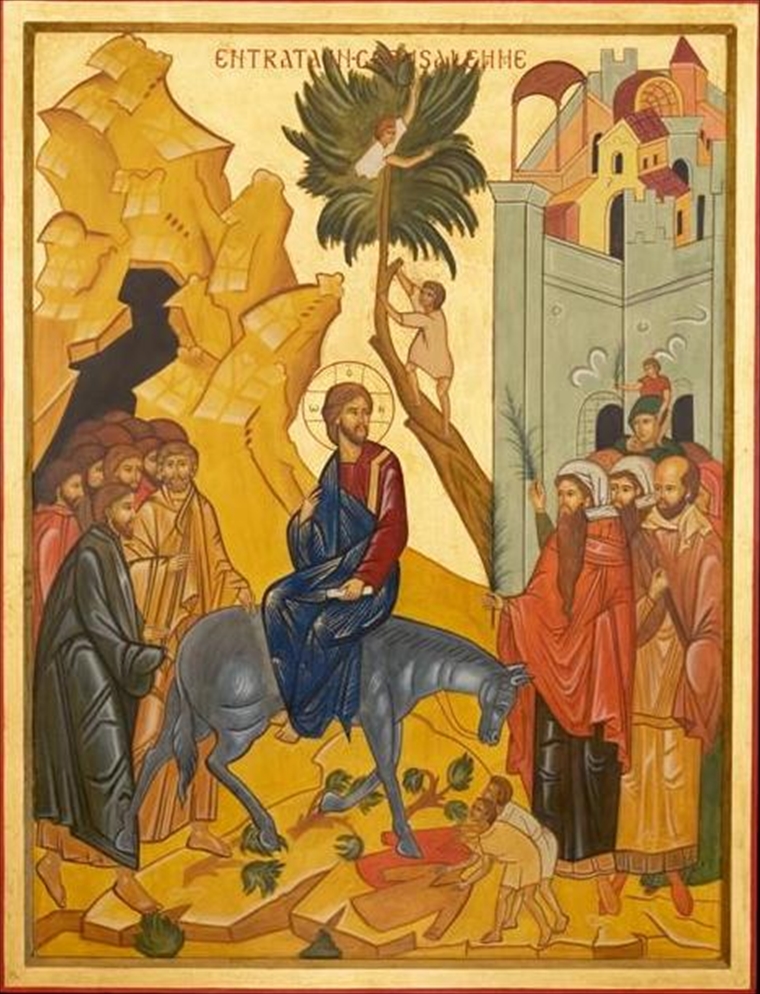


The Palm Sunday The Passion of Jesus according to Luke

J_Palm Sunday

From the Official Website of the Servant of God Luisa Piccarreta

In this comment we will focus briefly our attention on the “treasure of the passion of our Lord that everyone is invited to meditate in order to be fed and saved” as we can read in the Imitation of Christ, a classic of Christian spirituality. After all the slow and simple reading itself of the account of the passion is already an act of faith and a proposal for life, especially in the perspective of Luke’s Gospel.


In fact, the third Evangelist gave an “existential” impression to the plot that he had already received from the most ancient Christian tradition: it is as if he were drawing a path that every disciple must follow in the footsteps of his Lord.

Following Jesus in His passion, the Christian is called to a personal and vital adhesion to be accomplished in Jerusalem, the city that is the destination of the earthly and spiritual journey of Christ and his disciple.


So, Simon of Cyrene and the women of which Luke gave us a very accurate portrayal, were no spectators or neutral witnesses, but they were almost models of those who followed Jesus even in his final and decisive moment. About Simon, Luke noted that “they laid on him the cross to carry behind Jesus” and this expression is normally used by the evangelist to define the commitment of the disciple who “takes up his cross daily” following his Lord even in his final offering.

The women “beat their breasts” and this gesture was repeated at the end of the narrative from the crowds that ” they all went back home, beating their breasts.” This act is a symbolic representation of repentance and conversion that arouse by the appeal of Christ: “Weep for yourselves ….”


Jesus on the cross provided the disciple with another great example to be embodied in life, that of forgiveness of sinners and of offences received: “Father, forgive them for they know not what they do.” It is a lesson that Jesus repeated throughout his life on earth and that the first Christian martyr, Stephen, would welcome and put into practice at the very instant of his death (Acts 7:60).

In this line of complete love, forgiveness and self-giving we can also place the episode, which is reported only by Luke, with the repentant criminal to whom Jesus granted the gift of salvation in the Kingdom. With that sinful man we all have to repeat: “We rightfully receiving the due reward of our deeds, but this man has done nothing wrong.” And with these words of conversion God will throw open the arms of his merciful love also for us.


According to Luke, Christ, even in his death, has become the sign of another way that we must follow, that of perfect abandonment in God’s hands. As it is known, it is only Luke that mentioned another final prayer of Jesus dying on the cross, in addition to the desolate cry of Psalm 22 (“My God, my God, why have you forsaken me?”).

In fact, Jesus quoted the words of Psalm 31 and said: “Father, into your hands I commend my spirit.” It is like the synthesis of a long lesson that Christ spread in Luke’s Gospel on this issue. This means that according to Luke the last word that emerges from the lips of Jesus,  is in that “Father!” pronounced at the end with serenity and confidence.
At the end of his Passion narrative, Luke puts a note that at first seems to be marginal “all his acquaintances and the women who had followed Jesus from Galilee saw these events.” Likewise also the crowds converted from the cross of Christ “thought about what had happened. “

At the beginning of the Gospel of  Luke, Mary is shown to us as the one who “kept all these things and pondered them in her heart” (2:19.51). Therefore, to understand the deep meaning that is hidden beneath the outer covering of events of Christ’s Passion we must “observe, re-think, meditate.”


Oh Jesus,

your executioners were able to lacerate Your body, insult You, trample upon You…,

but they could touch neither Your Will nor Your love;

these You wanted free, so that, like two currents they might run and run,

without anyone being able to hinder them,

pouring Yourself out for the good of all, and also of Your very enemies.

Oh, how Your Will and Your love triumphed in the midst of Your enemies!

They would strike You with scourges,

and You would strike their hearts with Your love

and with Your Will You would chain them.

They would prick Your head with thorns,

and Your love would turn on the light in their minds to make You known.

They would open wounds on You, and Your love would heal the wounds of their souls.

They gave You death, and Your love gave life back to them;

so much so, that as You breathed your last on the Cross,

the flames of Your love, touching their hearts,

forced them to prostrate themselves before You and to confess You as true God.

Never were You so glorious and triumphant as You were

in Your pains during the course of Your mortal life down here.

Now, in Your likeness, You made the soul free in her will and in her love.

So, others might take possession of the external works of the creature,

but no one – no one can do so with her interior, with her will and her love.

You Yourself wanted her to be free in this,

so that, freely, not being forced,

this will and this love might run toward You

and immersing herself in You, she might offer You

the noblest and purest acts which a creature can give You;

and since You are free, and so is she,

you might pour yourselves into each other and run – run toward Heaven

to love and glorify the Father, and to dwell together with the Sacrosanct Trinity;

run toward the earth to do good to all;

run into the hearts of all to strike them with our love, to chain them with your will, and make of them conquests.

Greater dowry You could not give to the creature.

But where can the creature make greater display of this free will and of this love?

In suffering. In it love grows, the will is magnified,

and, as queen, the creature rules over herself, she binds your Heart,

and her pains surround You like a crown, they move You to pity,

and you let Yourself be dominated.

You cannot resist the pains of a loving soul,

and You keep her at Your side like a queen.

In the pains, the dominion of this creature is so great,

that they make her acquire noble, dignified,

ingratiating, heroic, disinterested manners, similar to Your manners;

and the other creatures compete to let themselves be dominated by this soul.

And the more the soul operates with You, is united with You, identifies herself with You,

the more You feel absorbed in the soul.

So, as she thinks, You feel Your thought being absorbed in her mind;

as she looks, as she speaks, as she breathes,

You feel your gaze, Your voice, Your breath,

Your action, step and heartbeat being absorbed in hers.

She absorbs all of You, and while she absorbs You,

she keeps acquiring Your manners, Your likeness;

You keep gazing at Yourself in her continuously, and You find Yourself.”

(Adaptation from a passage of  Luisa’s writings)


So, we need to follow the path of contemplation, reflection, and silence. It’s important to create  a space in the liturgy so that the Word of God can enter into our lives and flourish.

don Marco

The agony of Jesus in the garden of Gethsemane (first part)

J_PassionPic LP

From the Official Website of the Servant of God Luisa Piccarreta

The prayer of Jesus in Gethsemane (Mark 14:32 to 42) reveals the inner passion of Jesus. The other passages tell us what Jesus suffered and what they inflicted on him, but the event of Gethsemane and Jesus’question to the Father on the cross tell us what Jesus experienced.

The story of the Passion according to Mark begins and ends by describing this interior torment of Jesus; also under the cross Jesus will revive his inner passion in the question that He screams from the cross: “My God, my God, why have you forsaken me?” (Mk 15:33). The inclusion is a narrative way, to say that what was told at the beginning and at the end there was also “in the middle”.

This inner passion  didn’t last a moment, it didn’t happen only in the garden of Gethsemane, but it accompanied all the passion of Jesus. The Gospels are always very sober in revealing the inner world of Jesus. The few times in which they do it, they deserve a lot of attention: the gospel of Mark is one of those moments. In this path also Luisa will help us because it is precisely with the Hours of the Passion, that she introduces us into the inner world of Jesus and says how He lived those moments so important and difficult of his life.

We will try to deeply analyze this passage of Jesus’ prayer and we’ll let Luisa and Emeritus Pope Benedict XVI help us, as Luisa in the Hours of the Passion and in some passages of her writings, meditated on this moment of the Passion of Jesus, and Pope Benedict XVI dedicated his Wednesday audience in February 2012 to the prayer of Jesus in the Garden of Olives, precisely the Gospel of Mark and it is very interesting to note that, in this catechesis, and in other talks of Pope Emeritus, there are some indirect quotes from the Hours of  the Passion and other passages of Luisa’s writings.

From the Gospel according to Mark (Mk 14:32-42)

32 Then they came to a place named Gethsemane, and he said to his disciples, “Sit here while I pray.” 33 He took with him Peter, James, and John, and began to be troubled and distressed. 34 Then he said to them, “My soul is sorrowful even to death. Remain here and keep watch.” 35 He advanced a little and fell to the ground and prayed that if it were possible the hour might pass by him; 36 he said, “Abba, Father, all things are possible to you. Take this cup away from me, but not what I will but what you will.” 37 When he returned he found them asleep. He said to Peter, “Simon, are you asleep? Could you not keep watch for one hour? 38 Watch and pray that you may not undergo the test. The spirit is willing but the flesh is weak.” 39 Withdrawing again, he prayed, saying the same thing. 40 Then he returned once more and found them asleep, for they could not keep their eyes open and did not know what to answer him. 41 He returned a third time and said to them, “Are you still sleeping and taking your rest? It is enough. The hour has come. Behold, the Son of Man is to be handed over to sinners. 42 Get up, let us go. See, my betrayer is at hand.”

How can we proceed with reading and learning the message that the Gospel offers us? Let’s start with an overview and then, little by little, let’s delve more deeply until we reach the heart of the story, the most important thing. It is as if we did a spiral path;  we will start with some exegetical considerations  in order to understand more the passage, then we will delve deep the message of the Gospel through the contribution that our Pope gives us to finally get to Luisa who, through the Hours of the Passion and her writings, allows us to have all the instruments to pray and grasp what the Lord now wants to tell us.

Some general comments on the text

The first thing we have to remember is what Jesus said: “Sit here while I pray.” (v.32) and then later “Remain here and keep watch” (v.34). These are the words that Jesus said to Peter, James and John.

Jesus ended the last supper with his disciples and went to the Garden of Olives to live a strong moment of intimacy with God. He left everyone else and took with him these three disciples. Why these three people? They are the three witnesses chosen and called first to contemplate the suffering of God because of the evil of the world. They are the representatives of the Church that have been chosen by Jesus to be witnesses of an important event.

It is not the first time that Jesus makes this kind of choice; again in the Gospel of Mark, in the story of the raising of Jairus’ daughter, it is said that “he took with him Peter, James and John.” Even when Jesus went up to Mount Tabor, where the Transfiguration took place, the Gospel reminds us that “he took with him Peter, James and John.” If the Gospel presents in these three events the same characters, it means that these events have a particular importance. In fact these are the three times in which Jesus manifests himself in a certain way.

Those who remained there and watched in the Garden of Olives, saw the great mystery; they saw the Passion of our Lord for them; they were called to contemplate the true Passion of Jesus. This is the most difficult moment of the Passion of Jesus. Even in The Hours of the Passion, Jesus confided to Luisa that in reality the sufferings he endured on the cross were nothing compared to the agony that He lived in the Garden of Olives.  The true Passion was experienced by him there.

The second element that we have to highlight  is that the scene takes place in the night! The Bible speaks of three nights of history, which created the three important days of the History of salvation. The first night is that of the primordial chaos, which we find in the book of Genesis (1), when God created the heavens and the earth and gave them to the man who, because of his sin, had turned away from his Creator. The second night is the fight with Jacob (Gen32: 24-32), when God formed his people of Israel by giving it a name, “Israel.” And the third night is that of the Mount of Olives, when the true Israel gives God his real name: “Abba”, Father! If in the creation God placed the world “beside himself”, the creation is the overflow of God’s love, now God himself “goes out of himself” (ecstasy of love!) and goes to the place much further away: on the mouth of the Son who is going to die on the cross. It is the birth of God in the world and the world in God.

The third element is the reference to the scene of the Transfiguration. If at Transfiguration the Father calls Jesus “Son”; Here, at the moment of “disfigurement” the Son calls him “Father.” Between the two scenes there is a profound unity, because there, on Mount Tabor, Jesus’ humanity allowed its divinity to shine; Here, in the garden, the divinity allowed all its humanity to shine.

Fourth element.  The Gospel of Mark doesn’t contains the Lord’s Prayer, not because it ignores it, but since it is a gospel for the catechumens, we can only know God as Father in baptism. But in this particular scene, this prayer is present in its essential parts: Abba Father, your will be done, let us not come into temptation. Mark returns to the Our Father in this scene, revealing “who God is” as we must turn to Him, what is the “center” of the Our Father, and what God has to “work” in us, that is to help us not to fall into temptation.

Jesus wants the company of Peter, James and John. Luisa’s company

Let’s take a step forward in our reflection trying to delve deeper. The Holy Father can help us in this passage. He dedicated to this passage of the Gospel one of his Wednesday catechesis, on  February  1, 2012

Pope opened his catechesis saying: “The scenario of the Gospel narrative of this prayer is particularly significant. Jesus sets out for the Mount of Olives after the Last Supper while he is praying together with his disciples.”

These prayers probably allude to those psalms which are called psalms of ‘”Hallel”, psalms of praise that were sung or recited during the preparation for the feast of Passover, with which was exalted the power of God who freed the people from slavery of Egypt and all together they asked to God to assist, as then, his people during hard times. And like every year, for the feast of the Passover, Jesus prepared for that prayer, “but this time – said the Pope – something new happens”.

It seems that Jesus does not want to be left alone. Jesus would often withdraw from the crowd and from the disciples themselves to a lonely place or he would go up into the hills. Instead at Gethsemane he invites Peter, James and John to stay closer to him. They are the disciples he called upon to be with him on the Mount of the Transfiguration. This closeness of the three during his prayer in Gethsemane is important. On that night too Jesus was going to pray to the Father “apart”, for his relationship with the Father is quite unique, it is the relationship of the Only-Begotten Son, but He wants these three apostles to be near him.

In the Hours of the Passion,  at the fifth hour, Luisa feels drawn to Jesus, from his wounded heart, He calls her and she runs. She thinks to herself where this force that attracts her to Jesus comes from, perhaps it is state of bitterness in which Jesus is and for this reason He asks for her company… and  she flies to Him.

We  want to pause in our personal prayer to reflect on this desire of Jesus to live this moment of great suffering, crucial for his life, because that’s where Jesus decided to surrender. A time lived in intimacy with God the Father, and only with Him, because He had to accomplish His will, but He didn’t want to be alone,  He wanted the company of his disciples, as in the Hours of the Passion asked for Luisa’s company.

This detail shows that the moment of the Passion was not a private moment, but through these three apostles, representing the Church, each of us is called to be present there. And we, when we see Jesus offering his life, abandoning Himself totally in God and praying God in that way, full of inner sadness, we can review all our sorrows, our sufferings and our fears, as we also see Jesus’ fear.

Almost like a master, Jesus wants to lead us to see how in God’s faith and love we can live our difficult and sad moments of life. It is an invitation to live our “Gethsemane” looking at Jesus’ “Gethsemane”. Jesus, calling his three disciples, calls each of us to see how He faces his Gethsemane, trusting in the Father.

[Translation by Antonella]

Love is my perennial “Passion” The agony of Jesus in the garden of Gethsemane (second part)

J_Passion LP

From the Official Website of the Servant of God Luisa Piccarreta

Jesus’ inner sadness is full of love.

Jesus addressed to the three disciples these words:  “My soul is very sorrowful, even to death”. It isn’t an expression by Jesus, it is a quote from the Psalm 43 in which we can find the drama of the human condition, and in this case, the condition of Jesus. This firm determination “unto death” calls to mind a situation lived by many of those sent by God in the Old Testament and which is expressed in their prayers.

For example Moses was dramatically aware of the trial he was undergoing while guiding the people through the desert and said to God: “I am not able to carry all this people alone, the burden is too heavy for me. If you will deal thus with me, rather kill me at once, kill me if I have found favour in your sight, that I may not see my wretchedness” (cf. Num 11:14-15).

Elijah too found doing his duty to God and to his People difficult. “He himself went a day’s journey into the wilderness, and came and sat under a broom tree; and he asked that he might die, saying, “It is enough; now, O Lord, take away my life; for I am no better than my fathers” (The first Book of Kings 19:4).

What Jesus said to the three disciples whom he wanted near him during his prayer at Gethsemane shows that He felt fear and anguish experiencing his loneliness in the face of his own death. Moreover Jesus’ fear and anguish included all the experiences of men in the face of their own death. He felt the weight of that moment represented by his sadness and anguish and was afraid of not being able to endure it. And He fell on the ground and prayed that, if it were possible, the hour might pass from Him,”

Jesus addressed to the Father, He fell prostrate on the ground and prayed. His face on the ground expressed his obedience to the Will of the Father and before saying that He wanted to accomplish the will of his Father, He expressed his attitude with this gesture of the body. It is the full surrender to God. This gesture is repeated in the ordination of deacons, priests and bishops in order to express their willingness to accomplish the will of God in their own lives. It is an attitude that we must learn to live also in our personal prayer.

Pope Benedict continued his catechesis saying: “In prayer we too should be able to lay before God our labours, the suffering of certain situations, of certain days, the daily commitment to following him, to being Christian, and also the weight of the evil that we see within ourselves and around us, so that he may give us hope and make us feel his closeness and give us a little light on the path of life.”

Jesus teaches us this same attitude in the garden of Gethsemane, that is in the most difficult moment of his life when he was facing his death, He put his life in God’s hands so that He might lead it according to His Will. Jesus might even get angry with God, He might even wonder  the ‘why’ of  everything  that was going on, instead He surrendered completely to God, without hesitation. Even Jesus asked  Himself the questions that we ask ourselves, but He chose, at that time, to put his life in God’s hands.

How did Luisa describe, through what Jesus said to her, this moment of Jesus’ prayer in the Garden? The Hours of the Passion does not want to describe what Jesus experienced outwardly in the Passion, but what He experienced inwardly in dealing with the Passion: all his thoughts, his repairs that He wanted to offer for every human sin in every pain suffered during those hours. Describing the moment of prayer in the Garden of Olives,  Jesus lived the most difficult moment of the entire Passion, and explained the reason.

Love tormented Jesus more than the sufferings of His Passion. It was the Eternal Love, which, wanting primacy in everything, was making Him suffer, all at once and in the most intimate parts, what the executioners would make Him suffer little by little.

Love! Jesus suffered so much at that moment, because He loved! This was the suffering of the Son of God who loved infinitely guilty man who refused this love; a rejection that Jesus felt heavily on himself, it is as if it crushed him. But before this renewed rejection, represented by Judas’ betrayal, Jesus so loved man that He gave his life. The physical sufferings that He endured on the cross were nothing compared to the pain that He felt in his heart when He accepted God’s will, because the Father asked Jesus to love the man despite his refusal.

It was Love which prevailed in everything, over Him and within Him. Love was nail for Him, Love was scourge, Love was crown of thorns – Love was everything for Him. Love was his perennial passion, while that of men was in time.

Jesus invited Luisa to enter into his Heart to be dissolved in his love and to comprehend how much He loved her. It is the same invitation that Jesus makes to us. We have to enter into Jesus to understand how much He loves us, and how much He suffered for love, so that we too can learn to love God just as Jesus loved Him. Only then,  we can get out of this diffidence; only if we begin to love in this way, we can love God even in the most difficult moments, rather than rebel against Him.

In Luisa’s writings there are some passages on this subject that we discussed in the Hours of the Passion where Jesus, speaking of his agony in Gethsemane, highlighted that it was love that led Him to undergo his Passion.

On November 25, 1909 Jesus told Luisa that men did nothing but work the skin of his Humanity, while the eternal Love worked all of his interior. So, in his agony, the eternal Love, the immense Love, the incalculable Love, the hidden Love – not men – opened large wounds in Him, pierced Him with flaming nails, crowned Him with burning thorns, made Him drink boiling gall.

And his Humanity, unable to contain so many different martyrdoms at the same time, poured out large streams of Blood; It writhed, and reached the point of saying: ‘Father, if it be possible, let this chalice pass from Me; yet, not my will, but Yours be done’ – which It did not say in the rest of the Passion.

The real cause of the Passion of Jesus, was not the wickedness of men, but Love. Love like a nail nailed Jesus to the cross, and there Jesus loved each man with divine love, with total love. Only love could keep Jesus on the cross as the Redeemer. On the cross with Jesus there were also two other people, that were not gone up there for love, they swore, But Jesus on the cross made the highest act of love, He saved mankind. He prepared all this inwardly in his agony in the Garden of Olives.

It was love that supported Jesus in his Passion; and it is love that has to support us in our “Passions”, when our life is put seriously to the test. Each of us lives or lived many “Passions”. Sometimes it seems that our life has been very generous with us; sometimes these “Passions” beat, crushed, dehumanized us . And in these moments, we wonder, where is love? How much love do I put in this suffering? What came out of me? Love or anger, hatred, resentment, violence, rebellion? Jesus, in this hour of his Passion, showed me that when He experienced sadness and bitterness for this situation, He felt supported by love that led Him to reach the end of everything.

The second passage, that we consider, is dated January 22, 1913. In it Jesus spoke to Luisa of the three effects of His Passion.

His first Passion was of love, because the first step with which man, in sinning, gives himself to evil is the lack of love; so, since love is missing, He falls into sin. In order to be repaid through Him for the lack of love of the creatures, love made Jesus suffer more than anyone; It almost crushed Him, more than if He were under a press. It gave Him as many deaths for as many creatures receiving life.

The second step that occurs in sin is defrauding God of His glory. So, in order to be repaid for the glory taken away by the creatures, the Father made Him suffer the Passion of sin, such that each sin gave Him a special Passion. Although there was one Passion, He suffered for sin as many Passions as there would be sins committed until the end of the world. So, the glory of the Father was restored.

The third effect produced by sin is weakness in man. Therefore, Jesus wanted to suffer the Passion from the hands of the Jews – His third Passion – to restore in man his lost strength. So, with the Passion of love, love was restored and placed at the right level; with the Passion of sin, the glory of the Father was restored and placed at its level; with the Passion of the Jews, the strength of the creatures was placed at its level and restored. Jesus suffered all this in the Garden, and the pain was so much, so many the deaths – the atrocious spasms inflicted upon Him, that He really would have died if the Will of the Father for his death had arrived.

Each of us is called to meditate on the Passion of the Lord, to contemplate Love, because only Love is able to give meaning to all that we live, we do and we suffer. When we think about love we will always refer it to pleasant, positive, beautiful, charming situations: romantic love,  the love that characterizes the most beautiful situations that make us feel good about ourselves and with others. And even the media pester us with this idea of ​​love  that is sometimes very idealized and mushy. But this is only one side of love that makes it only superficially known to us. But there is also another love that we need to know, which is part of our life and sometimes, suffering and pain, don’t show it to us. It’s love that is able to suffer! And the Passion of Jesus shows us just that kind of love, or rather, this way of loving,  when we suffer, when we are sorrowful, betrayed and persecuted. The suffering of Jesus was driven by love and thanks to this love that His suffering, His Passion have become salvation for every man. When suffering is supported by despair leads man to destruction. It is not God who destroys man, but it is the man who has chosen to destroy himself. God shows us the way of salvation and directs us to live everything, even suffering and trial, in love, because only love is the way that can lead man to salvation.

[Translation by Antonella]


Love is my perennial “Passion” The agony of Jesus in the garden of Gethsemane (third part)

J_Passion Pic LP

From the Officil Website for the Little Daughter of the Divine Will, Luisa Piccarreta

Jesus’ prayer to the Father and the conformation of the human will to the divine will.

Let’s go back to our story to continue with our meditation on the agony of Jesus. We have to make a little note to this story and it’s a kind of counterpoint that compares the attitude of the disciples with that of Jesus. These attitudes are put by Mark in opposition among them, to show how the acts of Jesus become the model that every disciple must follow. For example: the disciples were seated whereas Jesus fell prostrate on the ground, the disciples slept whereas Jesus stayed awake and prayed, the disciples were weak at that time, whereas Jesus found the strength to keep going. Around these opposing attitudes Mark shows how the disciples slept in the weakness of the flesh, closed in their will, whereas Jesus fell prostrate on the ground and stayed awake, He prayed in the power of the spirit, He opened to God’s Will and accomplished it. The gospel shows this difference not to humiliate the disciples, but to give strength to the action of Jesus and to emphasize the great scope of the event of the Passion.

Jesus came to this Hour, to this decisive hour in the history of man, that of faith. The real struggle is the struggle of man with God. After sin man continues to struggle with God, because he does not recognize Him as a father, but as a being to be feared, He is an antagonist to the man. If we recall the history of the people of Israel in the Old Testament we find the background of the ongoing struggle between God and his people, between God and man.

The people accused God of being a severe judge, a God who punishes, a God awful, whereas Jesus reveals to us a completely different face of God, the true face of God. But to discover this true face of God that Jesus reveals to us, we need faith. And faith, in this passage, is described precisely through the behavior of Jesus.

Faith is the passage from my will to the will of God. When can I fulfill the will of God? When I have faith in Him. Jesus has shown us the way to live this faith not with words, but rather with our life, abandoning ourselves fully to the Father, putting our life in his hands, accomplishing his will.

When does my will become the will of God? Luisa would say, when there is a complete and profound unity between the human and the divine will.

The agony of Jesus marks the moment when the wall between man and God was removed; “Happy is the night of our salvation, in which the Lord of life is immersed in all our nights, bringing the light of his name” (F. Silvano Fausti).  In the agony of the Garden Jesus worked for the salvation of man, if each of us brings our nights in the night of Jesus, our sufferings in the suffering of Jesus, our questions in the question of Jesus, He will offer them to the Father and by accomplishing His will, everything will become salvation for us.

But let us continue with our reading of this passage of the Gospel of Mark and get to the verse 36: “And He said, Abba, Father, all things are possible unto Thee. Take away this cup from Me; nevertheless not what I will, but what Thou wilt “.

In this prayer of Jesus we can identify three important steps: the first is represented by the first words of Jesus – Abba! Father! – It is a doubling of the term. Jesus called God twice, with two different names: Abba, that was a common term that young children would use to address their fathers with filial confidence and moreover it emphasizes the unconditional abandonment into the hands of their own father. And then Jesus reveals who this “Abba” is : it is God the Father, it is not God the judge, it is not God the punisher, it is not God the avenger, but God the Father, the one who loves.

A second step is characterized by the awareness of Jesus about the omnipotence of the Father: “All things are possible to you.” And this introduces a request, where there is the drama of the human will because of death and evil: “Take away this cup from me”. As Jesus felt this weight, this bitterness, He didn’t know if He could. He addressed to God who is omnipotent, so that He took away that cup away from Him.

And finally, the third step of the prayer of Jesus, is the decisive one: the human will adheres to God’s will. “Yet not what I will, but what thou wilt.”

The Pope, again in the catechesis of February 1, 2012, said: “In the unity of the divine person of the Son, the human will finds its complete fulfilment in the total abandonment of the I to the You of the Father, called Abba.

St Maximus the Confessor says that ever since the moment of the creation of man and woman, the human will has been oriented to the divine will and that it is precisely in the “yes”(fiat) to God that the human will is fully free and finds its fulfilment. Unfortunately, because of sin, this “yes” (fiat) to God is transformed into opposition:

Adam and Eve thought that the “no” to God was the crowning point of freedom, of being fully themselves. On the Mount of Olives, Jesus brings the human will back to the unreserved “yes”(fiat) to God; in him the natural will is fully integrated in the orientation that the Divine Person gives it. Jesus lives his life in accordance with the centre of his Person: his being the Son of God. His human will is drawn into the I of the Son who abandons himself totally to the Father. Thus Jesus tells us that it is only by conforming our own will to the divine one that human beings attain their true height, that they become “divine”; only by coming out of ourselves, only in the “yes” (fiat) to God, is Adam’s desire — and the desire of us all — to be completely free. It is what Jesus brings about at Gethsemane: in transferring the human will into the divine will the true man is born and we are redeemed. (Pope Benedict XVI).

The human will doesn’t stop being human, Jesus does not want the human dimension to be canceled, but He wants it to be submerged in the divine will (living “for” God “with” God and in “God”), so that it can be transformed or rather, conformed to Him. The human will no longer exist not because it was destroyed but because it was joined with the divine will becoming one, it was deified, realizing God’s plan to deify man.

On January 4, 1924 Luisa was thinking about the words of Jesus in the Garden and Jesus, moving in her interior, told her that it was not because of the chalice of His Passion that He said to the Father: ‘Father, if it be possible, let this chalice pass from Me’ it was the chalice of the human will which contained such bitterness and fullness of vices, that his human will, united to the Divine, felt such repugnance, terror and fright, as to cry out: ‘Father, if it be possible, let this chalice pass from Me.’ How ugly is the human will without the Divine Will which, almost as within a chalice, enclosed Itself in each creature!

The bitter cup that Jesus drank wasn’t the physical suffering, but the inner suffering because of the human will that does not enter into the divine will. Jesus knew that man’s sin lies in his inability to surrender to the will of God because of his distrust; and for Jesus this is a bitter cup, because at that moment he was experienced fully his humanity and saw that men were far from living the divine will. He saw that man could deify in his humanity but because of his distrust towards God  he didn’t it.

He added as many as three times: ‘Non mea voluntas, sed Tua fiat (Not my will, but Yours be done) because He felt upon Himself the wills of creatures united together, all of their evils, and in the name of all He cried out to the Father: ‘May the human will be done on earth no more – but the Divine. May the human will be banished, and may the Divine Will reign.’ So, even from that time – and he wanted to do this at the very beginning of his Passion, because the calling upon earth of the Fiat Voluntas Tua on earth as It is in Heaven was the thing that interested Him the most and the most important one – he Himself said in the name of all: ‘Non mea voluntas, sed Tua fiat.’

In a certain sense Jesus wanted to take the human will and this is why He called with Him Peter, James and John as witnesses, and when it seemed that the human will wanted to get away from the divine will, because it was affected by suffering and had as its perspective the death and thus more distance from God, Jesus did an act of obedience and above all an act of love towards God, putting everything into his hands. He explained to each of us that it is possible, also at that time, to live this dimension. This is the redemptive value of suffering. Suffering does not redeem man because it makes him atone for his sins, but because it is experienced in the love that purifies sins. It is not the physical pain that cleanses us, but the inner struggle that the physical suffering makes us live.

Again the Pope in his catechesis, tried to transfer these theological reflections into the daily experience of the believer, and said: “Dear brothers and sisters, every day in the prayer of the Our Father we ask the Lord: “thy will be done, on earth as it is in heaven” (Mt 6:10). In other words we recognize that there is a will of God with us and for us, a will of God for our life that must become every day, increasingly, the reference of our willing and of our being; we recognize moreover that “heaven” is where God’s will is done and where the “earth” becomes “heaven”, a place where love, goodness, truth and divine beauty are present, only if, on earth, God’s will is done.

In Jesus’ prayer to the Father on that terrible and marvellous night in Gethsemane, the “earth” became “heaven”; the “earth” of his human will, shaken by fear and anguish, was taken up by his divine will in such a way that God’s will was done on earth.

And this is also important in our own prayers: we must learn to entrust ourselves more to divine Providence, to ask God for the strength to come out of ourselves to renew our “fiat” to him, to say to him “thy will be done”, so as to conform our will to his. It is a prayer we must pray every day because it is not always easy to entrust ourselves to God’s will, repeating the “yes” of Jesus, the “yes” of Mary.

The Gospel accounts of Gethsemane regretfully show that the three disciples, chosen by Jesus to be close to him, were unable to watch with him, sharing in his prayer, in his adherence to the Father and they were overcome by sleep” (Pope Benedict XVI).

In the gospel Jesus told his apostles: “Are you still sleeping and taking your rest?” (verse. 41), but He did not said these words with bitterness, for their inability to stay awake, but for the inability to accept and face the dramatic moments of life. When man does not understand what is happening and this is too big for him here is that he takes refuge in sleep, to escape the events. Jesus said: “Are you still sleeping? ” because it was He, on behalf of all, who faced that drama and showed us how it is possible to live it in the right way,  so that we too, looking at Him, can live it in the same manner. The first one to imitate so deeply the behavior of Jesus was Luisa. It was her, his little newborn of his Will, his little daughter, who felt such repugnance and fright at her will that, trembling, she clung to Jesus and cried out with Him: ‘Father, if it be possible, let this chalice of my will pass from me.’ And, crying, she added with Him: ‘Non mea voluntas, sed Tua fiat’, because  at least one creature was needed in order to validate this contract with God.

We too, as Luisa and the three Apostles, are called to be witnesses of this “contract” because we too must learn to live it. Luisa lived it, the three apostles lived it after the resurrection when they re-read in the light of the resurrection of Jesus all his life and his Passion, and we too are called to take this path.

Perhaps the image of Jesus that the Gospel offers us is a bit different, but it is so true! The world is full of people who don’t accept the discourse that we are taking. People would like a different God and instead the beauty of it is that God manifested his face in this way: He shared our condition all the way, He shared our being before God and therefore our fear. The greatness of Christ is not in avoiding the human experience, but in living it. This is the face of God in Christianity, who says his greatness not distancing, but entering in the existence of man.

[Translation by Antonella]

3/19 – Eve of Palm Sunday of the Lord’s Passion

Book of Heaven
Volume 4; March 31, 1901 

Inconstancy and volubility.

This morning, feeling all embittered, I (Luisa) saw myself still so bad, that I almost did not dare to go in search of my highest and only Good. But the Lord, looking not at my miseries, still deigned to come, telling me: “My daughter, is it Me that you want? Well then, I have come to cheer you – let us be together, but let us remain in silence.”

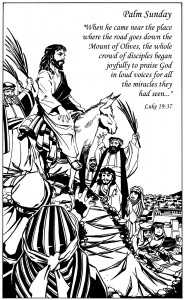
After staying for some time, He transported me outside of myself, and I (Luisa) saw that the Church was celebrating the Day of the Palms; and Jesus, breaking the silence, told me: “How much volubility, how much inconstancy! Just as today they cried out ‘Hosanna!’, proclaiming Me as their King, on another day they cried out ‘Crucify Him! Crucify Him! My daughter, the thing that displeases Me the most is inconstancy and volubility, because this is the sign that the truth has not taken possession of these souls. Even in things of religion, it may be that they find their satisfaction, their own convenience and interest, or that they just find themselves in that party; but tomorrow these things may be missing, or they may find themselves involved in other parties – and here is how they deviate from religion, and with no regret they give themselves to other sects. Indeed, when the true light of Truth enters a soul and takes possession of a heart, she is not subject to inconstancy. On the contrary, she sacrifices everything for love of It and to let herself be mastered by It alone; and with unconquered heart she despises everything else which does not belong to the Truth.” And while saying this, He cried over the condition of the present generation, worse than in those times, subject to inconstancy according to wherever the winds blow.

***

Volume 6; April 16, 1905

Suffering is reigning.

Continuing in my usual state, my lovable Jesus made Himself seen for a little, with a nail inside His Heart; and drawing near my heart He would touch it with that nail, and I (Luisa) would feel mortal pains.  Then He said to me:  “My daughter, it is the world that drives this nail deep inside my Heart, giving Me a continuous death.  So, by justice, just as they give Me continuous death, I will allow that they give death among themselves, killing one another like many dogs.”  And while saying this, He made me hear the screams of the rebel, to the point that I remained deafened for four or five days.  Then, as I was very much in suffering, He came back a little later and told me:  Today is the Day of the Palms in which I was proclaimed King.  All must aspire to a kingdom, but in order to acquire the eternal kingdom it is necessary for the creature to acquire the regime of herself through the dominion of her passionsThe only means is suffering, because suffering is reigning; that is, through patience, man puts himself in his place, becoming king of himself and of the eternal kingdom.”

***

3/19 Feast of St. Joseph continued . . .

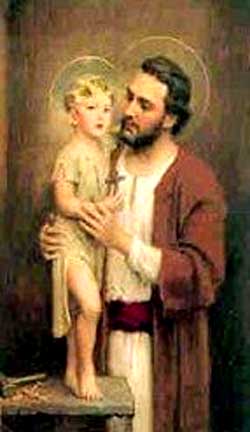
St. Joseph and the Child Jesus

The Church always honors St. Joseph with Mary and Jesus, especially during the Christmas solemnities.

This Saint “of the royal race of David” was a just man.  As by his marriage with the Blessed Virgin, St. Joseph has certain rights over the blessed fruit of the virginal womb of his spouse, a moral affinity exists between him and Jesus.  He exercised over the Child-God a certain paternal authority, as that of a foster-father, therefore he deserves a special veneration.

“Christ and the Virgin were with him at his last hour and watched by him their faces gleaming with sweet serenity.”  St. Joseph went to heaven for ever to enjoy the beatific vision of the Word whose humanity he had so long and so closely contemplated on earth.  This Saint is therefore justly considered the patron of the dying and the model of contemplative souls.

S_StJoseph

St. Joseph and the Child Jesus

Book of Heaven; Volume 20 – January 6, 1920

… Then, after this, I (Luisa) was thinking about the Holy Magi, when they visited the little baby Jesus in the grotto of Bethlehem; and my always lovable Jesus told me:  “My daughter, see the order of my Divine Providence:  for the great portent of my Incarnation, I (Jesus) chose and used a Virgin, humble and poor; and the Virgin Saint Joseph as my custodian, who acted as a father to Me, and who was so poor that he needed to work in order to sustain our lives.” …

Book of Heaven; Volume 30 – March 20, 1932

… “And I Myself, when I came upon earth, during the thirty years of My hidden Life—it can be said that, in appearance, I did no good to anyone, nor did a single one know Me.  I was, yes, in their midst, but unobserved; all the Good unfolded between Me (Jesus) and the Celestial Father, My Celestial Mother and dear Saint Joseph, because they knew He who I was; everybody else—nothing.”

Book of Heaven; Volume 32 – April 16, 1933

… “So if I (Jesus) worked with St. Joseph in order to procure the necessities of life, it was Love that ran.  They were Conquests and Triumphs that I made, because one Fiat was enough for Me to have everything at My Disposal.  And making use of My Hands for a little profit, the Heavens were amazed; the Angels remained enraptured and mute in seeing Me abase Myself to the humblest actions of life.” …

 Book of Heaven; Volume 21 – April 30, 1927

… “The same happened when My Mama and I were on earth, while We were preparing, between the two of Us, the Kingdom of Redemption—all the remedies that were needed so that all might find salvation.  No sacrifices were spared, nor works, nor life, nor prayers; and while We were intent on thinking about everyone—on giving Our Life for all, no one would think about Us; no one knew what We were doing.  My Celestial Mama was the depository of the Kingdom of Redemption, and therefore She took part in all the sacrifices, in all sorrows.  Only Saint Joseph knew what We (Blessed Mother and Jesus) were doing, but he did not share in all Our sorrows.  Oh! how Our Hearts ached in seeing that, while Mother and Son were consuming Themselves with pains and with love for all, in order to form all possible and imaginable remedies for all, so as to heal them and place them in safety, they not only did not think about Us, but offended Us, despised Us, and others plotted against My Life even from My birth.

“This I am repeating with you, My daughter, in order to form the Kingdom of the Divine Fiat.  The world takes from us, even though it does not know us.  Only My assisting Minister knows what we are doing, but he does not take part either in our sacrifices, or in our work.  We are alone.  Therefore, patience in this long work—the more we (Our Lord Jesus and Luisa) work, the more we will enjoy the fruits of this Celestial Kingdom.”

***

Sister  Mildred Neuzil

St. Joseph and the Law

In the famous heavenly apparitions to Sister Mildred Neuzil, St Joseph said to her: “…Mine was perfect obedience to the Divine Will and it was shown and made known to me by the Jewish law and religion. To be careless in this is most displeasing to God and will be severely punished in the next world…”. St Joseph lived perfectly according to the Torah and the Jewish customs which revealed God’s Divine Will for him. The New Testament calls Joseph a Tzadik which means that he lived out the torah and mitzvot in a manner that allowed him to gain merit for others. All Christians are called to live according to the Divine Will as revealed in the Torah. Gentiles and Jews live out this obedience to the Divine Will as expressed in the Law at the level appropriate to their calling.

Jews who are Christians or Catholics are still called to live out their vocation in obedience to the Jewish religious practices as did Jesus, Mary and Joseph. Those Catholic authorities who have hindered the Jews in the Church from living out their Jewish vocation and identity in the Church as individuals and as a collective community of Jews will have to answer for it in the next world. The Austrian mystic, Maria Simma who spoke with the holy souls in purgatory stated that Pope Paul IV spent over 400 years in purgatory because of his anti-Jewish policies such as placing the Jews in the Roman ghetto.

Those of us Catholic Jews who make excuses for our lack of living out our Jewish vocation will also have to answer for that. Many of us cling to the idea that Jews in the Church need only live as Gentile Catholics do because to observe the Torah Jewishly is too much of a bother or will make us look eccentric or we will be persecuted by our fellow Catholics. Many of us who were secular or reform were already disobedient to the Jewish law and religion, and we bring that with us into the Church. Of course only God knows who is making excuses and those who sincerely believe they are doing the right thing by living as a Gentile Catholic. Others of course due to their life situation may have to live out their vocation as a Jew in the church in a modified way at this stage of salvation history.

 The grace of the Messiah allows us to live not at the level of the letter of the Law but at the level of the spirit of law based on love. This does not mean that we are free to abandon the outward observances of the Law and mitzvot but that we through the grace and love of our Jewish Messiah access the spirit of the Law and observe it as the manifestation of God’s Divine Will just as St Joseph did. The Torah obedient life of the Holy Family in the House of Nazareth is a wonderful model of Torah observance for all Catholic Jews. After the resurrection and foundation of the Church Our Lady continued this Torah observant lifestyle in the Holy House of Ephesus- now focused on adoration of her Son in the Eucharist.

Rebbe Nachman of Breslov proclaims Joseph as the Hidden Tzadik who is the Master of the House (Home)in Likutey Moharan 67. “And all this is an aspect of “The Concealment”, when the beauty and splendour of the whole world becomes concealed. However there is a Tzaddik who is beauty, splendour and grace of the entire world, and who is symbolised by Joseph, who was “beautiful in form and handsome” (Genesis 39:6), “a beautiful sight, the joy of the entire land” (Psalm 48:3). When the beauty and splendour of this genuine Tzaddik, who is symbolised by Joseph, is revealed in the world by becoming renowned and esteemed, then the eyes of mankind will be opened. And whoever is included in the genuine grace of this Tzaddik, the world’s grace and beauty, by following him and surrending his self to become part of this Tzaddik’s soul, will have his eyes opened, and he will be able to see.”

Rebbe Nachman concludes: “And with this we return to BeREShYT, the beginning, the RoeSh BaYiT, the head and master of the house of the world, namely, the genuine Tzaddik, who is beauty and glory of the world, represented by Joseph, alluded to in the verse, “Joseph is the ruler…he supplies food…” (Genesis 42:6), because he is the RoeSh BaYiT, the master of the house of the world. For he is the one who maintains the Temple and every Jewish house and home…And when the name of this Tzadik, who represents the head of the house, becomes esteemed, the eyes of the Jewish people are opened, as above. So this is the connection of “bereshit’ to “l’einei kol Yisrael”. Bereshit- this is the master of the house, the Tzaddik, who is the glory of the world, through whom are opened “einei kol Yisael”, the eyes of all the Jewish people.” The glories of St Joseph are reserved to the latter days according to St Isidore of Seville. These glories are connected with the living out of the Divine Will at the highest levels of sanctity which is the deepest penetration of Torah.

 Posted by Aharon on “A Catholic Jew Pontificates”