9/16 Calendar for the Traditional Roman Rite of the Seven Sorrows of Our Lady

M_Seven Sorrows

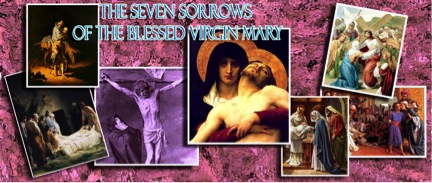
The purpose of the Devotion of the Seven Sorrows is to promote union with the sufferings of Christ through union with the special suffering that Our Lady endured because she was the Mother of God. By uniting ourselves with both the Passion of Christ and His holy Mother, we enter into Jesus’ Heart and honor Him greatly; He is more honored because we have so honored His Mother.

The Seven Dolors are taken from Scripture events and the devotion has a long history, although it was not officially promulgated by the Church until the early nineteenth century. Before Pope Pius VII’s formal approval, the Servite Order had permission in 1668 to celebrate the Feast of the Seven Dolors because the Order was instrumental in popularizing the Seven Sorrows Devotion.

In the Middle Ages, Catholic theology concentrated mostly on Christ’s Passion; at the side of the Man of Sorrows, however, the faithful always contemplated the Queen of Martyrs. Devotion to the Crucified Christ and to Our Lady of sorrows grew side by side. On Calvary there were in a sense two altars, one in the Body of Jesus, and the other in the Immaculate Heart. Christ immolated His flesh, Mary, her heart, her own soul. On September 15, the day following the ancient feast of the Holy Cross, the Church commemorates the compassion of Mary; but it is fitting during the year, especially during Lent, to honor the Sorrows of Mary.

Mary is not mentioned in the Gospel accounts of Christ’s Transfiguration, His entry into Jerusalem, but she is recorded as being present at Calvary. She understood what the Will of God was and was faithful, co-operating with her Son as Coredemptrix. She had prepared the victim for sacrifice and now she offered Him on the altar of Calvary.

The Gospel, John 19:25, says: “Near the Cross of Jesus stood His mother, his mother’s sister, Mary, the wife of Cleopas, and Mary Magdalene.” At Christ’s bequest, Mary was proclaimed the universal Mother of mankind from the Cross.

Mary had three loves in her Immaculate Heart: God, her Son, and souls. She so loved the world that she gave her only Son. As St. Bernard said, “The sword would not have reached Jesus if it had not pierced Mary’s heart.” Mary loved souls and on Calvary, after suffering such cruel torments she merited being the mother of all mankind.

Mary is the Apostle because she is Co-redemptrix: Behold Mary on Calvary, she suffers and prays; she stands, as one offering sacrifice.

St. Ambrose said, “I read that she stood, but I do not read that she wept.” When Mary gave us her Son, she gave us everything. Therefore it can very well be said: “Behold this heart which has so greatly loved all people that it has spared nothing for them.”

More Information on IV International Conference on the Servant of God Luisa Piccarreta in Corato, which will be held April 22 -26, 2015

[gview file=”http://luisapiccarreta.co/wp-content/uploads/2014/09/Registration-form-conference-2015-eng.pdf”] [gview file=”http://luisapiccarreta.co/wp-content/uploads/2014/09/Formulario-de-Inscripcion-congreso-2015-sp.pdf”] [gview file=”http://luisapiccarreta.co/wp-content/uploads/2014/09/Scheda-adesione-convegno-2015-ita.pdf”]

Photographs Pertaining to the Servant of God Luisa Piccarreta

Hair of Luisa
Hair of Luisa

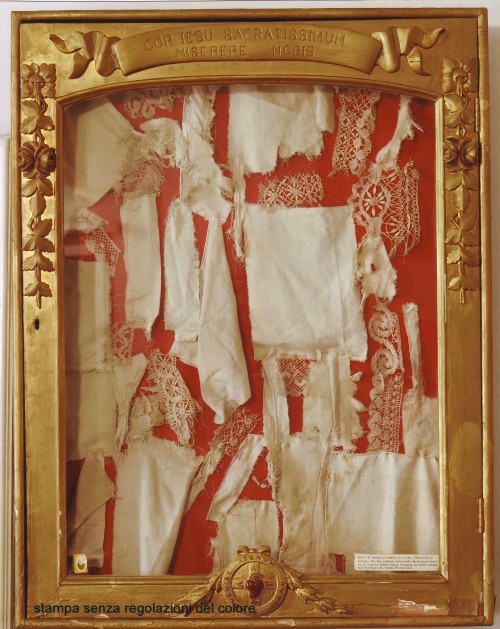
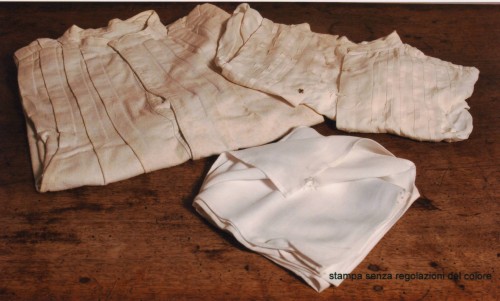
Cloths of Luisa
Clothes of Luisa

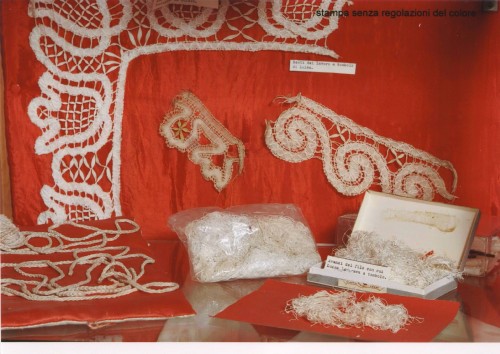
Work of the Tombolo
Work of the Tombolo

Works of Luisa
Tombolo works by Luisa

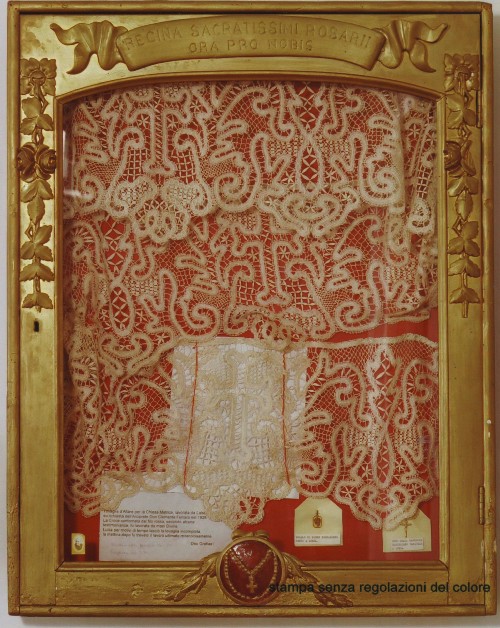
Work of the tombolo of Luisa
More Tombolo works by Luisa
The White Piece with two red lines at the bottom center is the section
finished by Luisa’s Angel

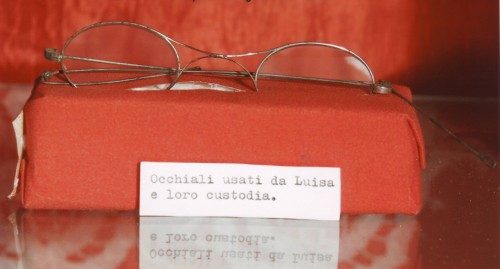
Glasses used by Luisa and its case
Glasses used by Luisa, and their case

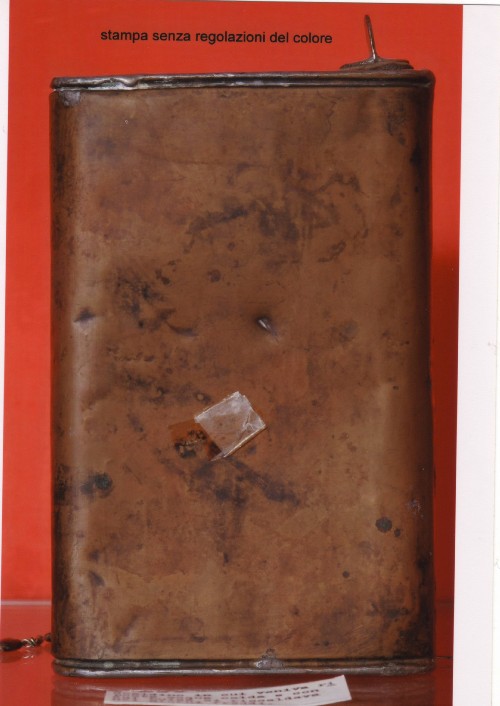
Warmer used to warm herself_Luisa
Warmer used by Luisa

Scapular and Dominican tertiary booklet of Luisa
Scapular and Dominican Tirtiary Booklet of Luisa’s

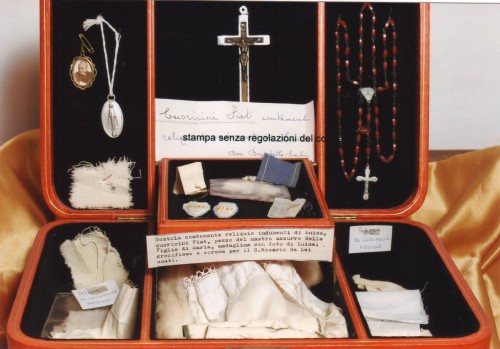
Box containing personal items of Luisa
Box containing personal Religious Items of Luisa

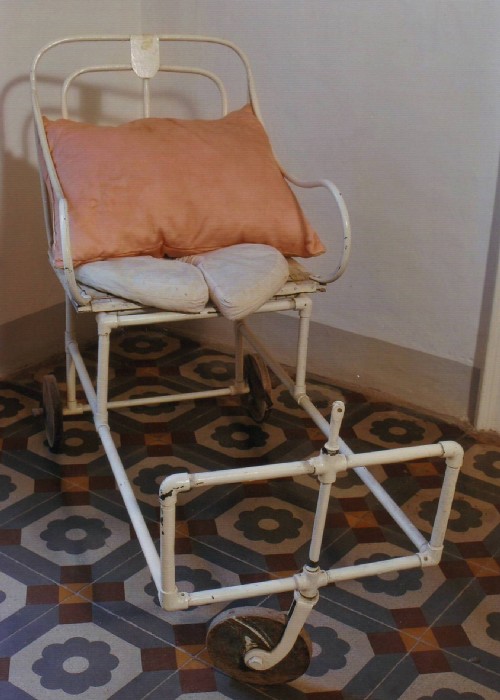
Wheelchair of Luisa
Luisa’s wheelchair

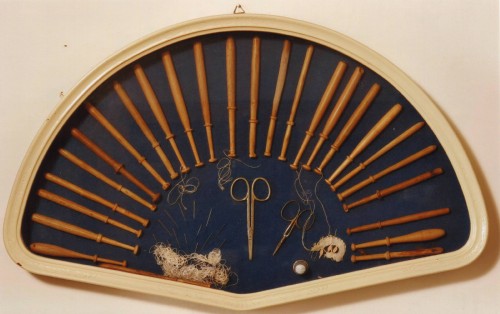
tools to work tombolo
Tools to work Tombolo

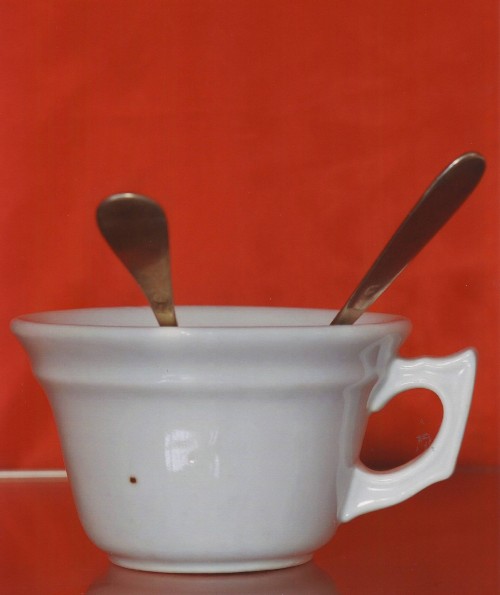
Cup used by Luisa
Luisa’s cup

Tombolo work by Luisa_Gift of Ms Luisa Ardito
Tombolo work done by Luisa, gift of Ms. Luisa Ardito

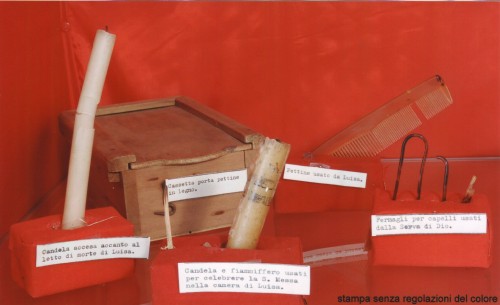
Candles used for MostHolyMass etc Luisa
Candles used in Luisa’s Room, some for the Most Holy Sacrifice of the Mass

Bands to cover the stigmata Luisa
Bands used to cover Luisa’s Stigmata

Presentation of the Biography of the Servant of God Luisa Piccarreta

presentazione libro_164d73cc-060f-43d4-8957-3b77a253f933

September 3rd 2014

With the imminence of the 150th anniversary of the birth of Luisa Piccarreta, that the IV International Conference will celebrate in Corato from April 22-26, 2015, yet another important step is added to that of the long process of spreading the life and writings of the Servant of God, the Coratina. This is the biography of Luisa Piccarreta, which will be presented in the Municipal Cloister Hall of Corato on September 3rd at 19.00, in the presence of the citizens, media, civil and ecclesiastical authorities. The book in question is the result of five years of research and preparation and it is a compendium of information relating to both the life of the Piccarreta, from childhood to adulthood (marked by her mystical and physical particular situation), and the historical, social and religious context in which she lived.

The biography, in addition to being part of a more complex process leading to the beatification of Piccarreta, is a valuable opportunity for the faithful to learn more about her extraordinary life. The author of the work, published by Libreria Editrice Vaticana, is Maria Rosaria Del Genio, a former head of the Italian Catholic Action and particularly devoted to the study of Mysticism.  Mons.Giovan Battista Pichierri, Archbishop of the Diocese of Trani-Barletta-Bisceglie Titular of Nazareth, Massimo Mazzilli, mayor of Corato, Maria Rosaria Del Genio, author of the biography, and the journalist Giuseppe Cantatore as moderator will participate at the presentation of the book (whose preface was written by the Prefect Emeritus of the Congregation for the Causes of Saints Card. José Saraiva Martins).

This Work, which will be soon translated into English and Spanish, has been totally funded by the Association Luisa Piccarreta – PFDV of Corato.

Click here for English translation
of the Letter of Alejandra Acuna to Sr. Assunta Marigliano
from the above Website

8/31 XXII Sunday in Ordinary Time

Today’s Gospel is from Romans 12:1-2

I beseech you therefore, brethren, by the mercy of God, that you present your bodies as a living sacrifice, holy, pleasing unto God, your reasonable service.  And be not conformed to this world, but be reformed in the newness of your mind, that you may prove what is the good and the acceptable and the perfect Will of God.

***

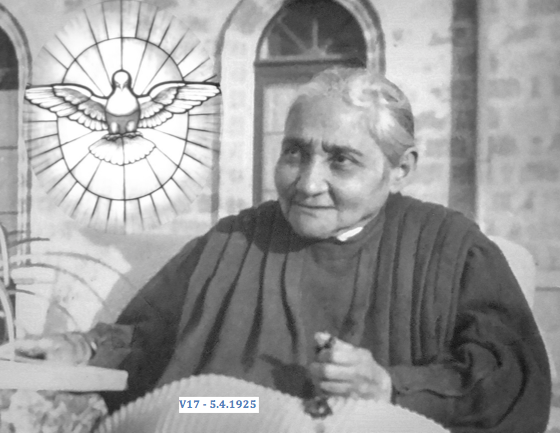
2/2/17 – Vol. 11

Servant of God Luisa Piccarreta:  He (Our Lord Jesus Christ) told me: “My daughter, the world has become unbalanced because it has lost the thought of my Passion. In darkness, it has not found the liLht of my Passion which would illuminate it by making known to it My Love and how much souls cost Me, in such a way that it could turn to loving the One who has truly loved it; and the Light of My Passion, guiding it, would put it on its guard against all dangers. In weakness, it has not found the Strength of My Passion which would sustain it. In impatience, it has not found the Mirror of My Patience which would infuse in it calm and resignation, in such a way that, in the face of My Patience, feeling ashamed, it would make it its duty to dominate itself. In pains, it has not found the comfort of the Pains of a God which, sustaining its pains, would infuse in it love of suffering. In sin, it has not found My Sanctity which, placing itself in front of it, would infuse in it hate of sin. Ah, man has made an abuse of everything, because he has moved away from the One who could help him! This is why the world has lost balance. It behaved like a child who no longer wanted to recognize his mother; or like a disciple who, denying his master, no longer wanted to listen to his teachings, or learn his lessons. What will happen to this child and to this disciple? They will be the sorrow of themselves, and the terror and sorrow of society. Such has man become – terror and sorrow; but a sorrow without pity. Ah, man is getting worse and worse, and I cry over him with tears of blood!”