St. Annibale Maria di Francia
Spiritual Director of Servant of God Luisa Piccarreta
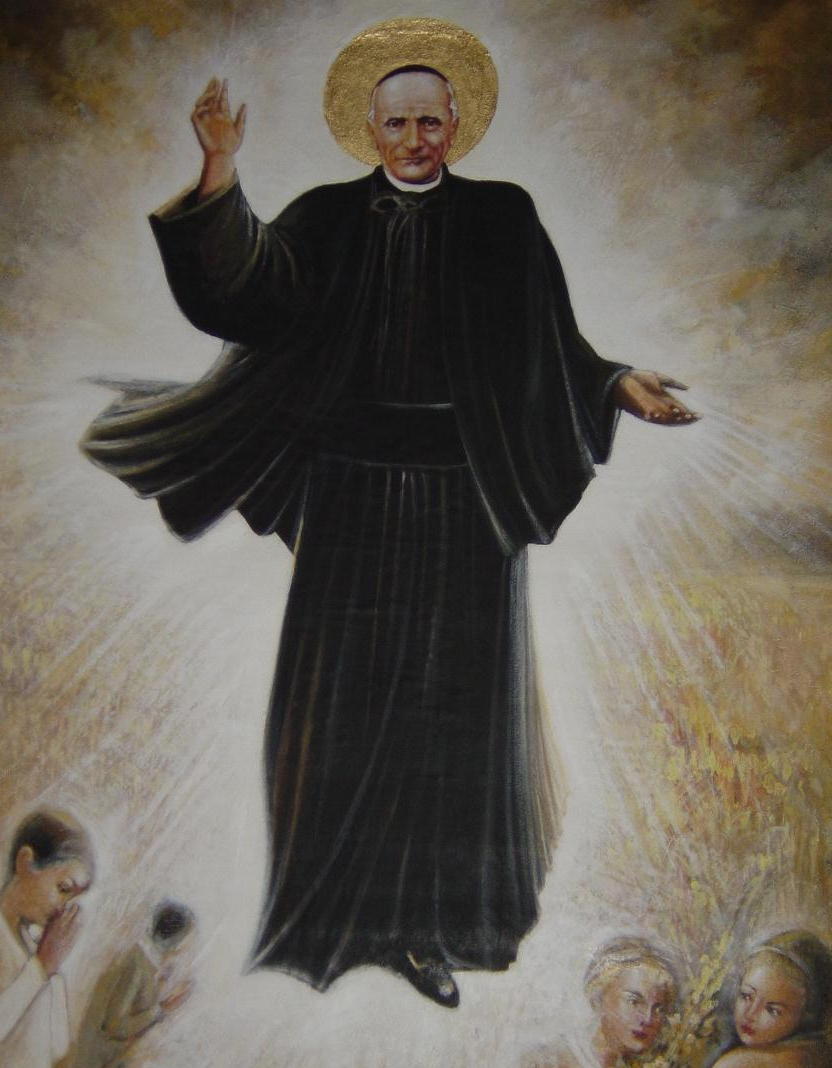
St. Annibale Maria di Francia
Feastday: June 1
1851 – 1927
Beatified By: 7 October 1990 by Pope John Paul II
Canonized By: 16 May 2004 by Pope John Paul II
Annibale Maria di Francia (born July 5, 1851 in Messina, Italy, died June 1, 1927) is a saint venerated by the Roman Catholic Church. His father Francis was a Knight of the Marquises of St. Catherine of Jonio, Papal Vice-Consul and Honorary Captain of the Navy. His mother, Anna Toscano, belonged to the noble family of the Marquises of Montanaro. He was, therefore, from noble lineage.
from Wikipedia
Annibale Maria di Francia (born July 5, 1851 in Messina, Italy, died June 1, 1927) is a saint venerated by the Roman Catholic Church. His father Francis was a Knight of the Marquises of St. Catherine of Jonio, Papal Vice-Consul and Honorary Captain of the Navy. His mother, Anna Toscano, belonged to the noble family of the Marquises of Montanaro. He was, therefore, from noble lineage.
His Childhood Years
The third of four children, he lost his father when he was only fifteen months old. The sad experience of being an orphan would have profound on his life and will make him deeply empathetic towards orphans.[citation needed]
At the age of seven he enrolled in the College of St. Nicholas, run by the Cistercian Fathers. He was a devout child. Here under the guidance of his spiritual director, he was introduced to a devout life and he developed such love for the Eucharist that he was allowed to receive the Holy Host daily, something exceptional in those days.
As a Young Student
He was only seventeen, when as he was at prayer in front of the Blessed Sacrament solemnly exposed, he was given the “revelation of Rogate”, that is, he deeply felt that vocations in the Church only come through prayer. Later on he found in the Gospel the very words of Jesus commanding such prayer: “Beg the harvest master to send out laborers to gather his harvest”. (Mt 9:38; Lk 10:2). These words became the main source of inspiration for his life and the charism which led his apostolate.
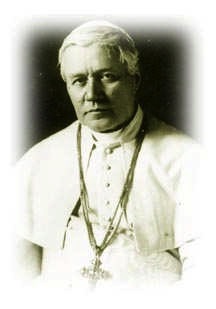
On July 11, 1909 he wrote to Pope S. Pius X: “From my youth I have devoted myself to the words of the Gospel: Pray therefore the Lord of the Harvest…In my charitable institutions, orphans, poor, priests and nuns, all pray incessantly to the loving Hearts of Jesus and Mary, to the Patriarch St. Joseph and to the Apostles, that they may provide the Holy Church with numerous and chosen laborers for the harvest of souls”.
The essence of the intuition of his youth was that prayer for vocations (Rogate) was not considered as a mere exhortation given by the Lord, but an explicit order, a compelling request, an “infallible remedy”. We can say, then, that his “discovery” cannot be regarded as something transitory and superficial but as the core of his life, the charism which will bring forth a new providential movement in the Church.
Young Hannibal proved to be of high intelligence and had a poetic disposition. He looked to a brilliant and secure career as a writer and poet but when he felt the sudden call from God, he immediately responded and generously put himself and his talents at the service of God.
When, on December 8, 1869 he was given the clerical garb, he soon began putting his talents to work and became a well received preacher. People, especially the simple and those from the lower classes, loved to listen to him because of the clarity of his sermons. He will carry on this special ministry for his entire life as a means to evangelize the simple and the poor.
As a Priest of God and Servant of His People
Once his theological studies were completed he was ordained a priest on March 16, 1878. Few months before his ordination, when he was still Deacon, he met a poor blind beggar, Francesco Zancone, who “providentially” led him to discover a world unknown to him: “Le Case Avignone” (The Avignone squatters), in the outskirts of Messina. It was to be his new field of apostolate and the beginning of a long journey of love and sacrifices for the poor and the orphans. Together with the intuition of the “Rogate”, this spirit of charity would be the characteristic of his life.
Wanting to dedicate himself completely to the poorest of the city he sought and received the permission and the encouragement of his bishop, Mons. Joseph Guarino. He looked at them with the eyes of Jesus and saw them as “sheep without a shepherd”.
Great and many were the difficulties and obstacles he had to face in this work but his profound faith sustained him always. He considered his service to the poor and the outcasts as a service done to Jesus Himself. As he cared for the poor he was at the same time attentive to both taking care of their human and spiritual needs.
In 1882 he opened a home for abandoned orphans and placed them under the patronage of St. Anthony of Padua. Later on all his charitable institutions for poor children will be called “Anthonian Orphanages”.
It was his main concern that in his institutions the children he provided not only with food and prepared for a job, but more importantly that they would receive a solid moral and religious education. He used to say: “We should love children with tender and fatherly love. This is the secret of secrets to gain them to God”.
He decided to begin a new publication and gave it the heading of “God and Neighbour” with the intention of involving all Christians in his charitable ideals. Soon he was publishing hundred of thousands of copies which he sent to benefactors around the world.
It was his fervent desire to help all the orphans and the poor of the world. But how? He perceived that the “Rogate” was the answer to his query. “What are these few orphans we attend to, these few people we bring the good news to, compared to the millions who are lost and abandoned as sheep without a shepherd?…I looked for an answer and I found a complete one in the words of Jesus: “Beg the harvest master to send out laborers to gather his harvest”. I concluded then that I had found the secret key to all good works and to the salvation of countless souls” .[1]
As a Man of God and a Man for Others
Saint Hannibal strived to become himself a model of the “good laborer” spoken of in the Gospels, and to be a priest “according to the Heart of Jesus”. His charity knew no bounds, and it was directed toward all those in need, including priests facing difficulties and cloistered nuns who often are forgotten by benefactors.
People regarded him as a Saint even when he was still alive. Mons. Angelo Paino, Bishop of Messina,later gave this testimony about him: “He was considered a Saint by all people. By this I mean people from all walks of life, social status and religious convictions”.
His Return to the Father’s Home
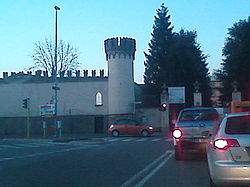
The Villa Torneamento in Monza, school called Padre Annibale di Francia
On June 1, 1927, Saint Hannibal died in Messina. As soon as the people heard the news of his death they began to say: “Let us go to see the sleeping saint”. A few days before the Blessed Virgin Mary had appeared to him and assured him of Her protection, a vision to reward his tender devotion toward her.
Newspapers of the entire region reported with pictures and articles of the funeral and burial. Crowds of thousands came to mourn his passing away. Local authorities quickly released the permit allowing that his body be buried in the church of the “Evangelical Rogation” which Saint Hannibal himself had wanted and built in Messina. It is the only church in the world dedicated to the Gospel’s passage: “Pray therefore the Lord of the Harvest”.
Many of his contemporaries, and among them the St. Luigi Orione, requested that a formal Cause for Canonization be promptly started. But World War II put a temporary stop to the undertaking.
On April 21, 1945, the information stage of the process for Canonization began with the “Diocesan Investigations”. All the writings of Saint Hannibal (62 volumes) were examined by a Special Committee of Theologians.
In 1979 the Congress of Cardinals voted to begin the formal Cause for Canonization which officially began in Messina on March 8, 1980 at the same time the ”Eccliastical” Tribunal set up a Committee of Historians.
On December 21, 1989 pope John Paul II promulgated the Decree on the “Heroic Virtues of the Servant of God”.
To proceed with the Cause of Canonization, a sign of God, a miracle was needed. On June 30, 1990 the Medical Commission of the Congregation for the Causes of Saints unanimously agreed that the case of Gleida Danese – a young Brazilian girl who was doomed to die because of the rupture of the aorta but who suddenly recovered – had no possible medical explanation. Both the Commission of Theologians on July 14, 1990 and then the Congress of Cardinals and Bishops on July 27, 1990 unanimously agreed upon the miraculous recovery of the girl and found that it was to be attributed to the intercession of the Servant of God, Hannibal Di Francia.
He was canonized on May 16, 2004, by Pope John Paul II.
Legacy
Today the religious families founded by Saint Hannibal are present in the five continents of the world. In the spirit of their Founder, they dedicate themselves to a variety of apostolates. They work in institutions for orphans and abandoned children, schools for deaf and blind, homes for aged and pregnant girls, educational institutions and vocational schools, missions and parishes, religious printing houses and vocation centers which promote the ideals of “Rogate”.
The message and the mission of Saint Hannibal is not only valued among those involved in vocation ministry and those who have at heart the formation of the clergy but also by all those who have come to understand the need of prayer for more vocations in the Church.
The need for such a prayer has been recently recognized by the Supreme Authority of the Church. Pope Paul VI on January 23, 1964 instituted the “World Day of Prayer for Vocations”. Since then, every year, the Popes remind the universal Church that still today salvation comes to us through the work of many and holy ministers of the Gospel and that to obtain them from God we must pray.