2/14 Rest from Work

One characteristic of sanctifying Sunday is rest from strenuous physical work.  during the first centuries Christians did not enjoy freedom of religion and were persecuted. For the early Christians, therefore, Sunday was an ordinary workday.  Since they had to work during the day, they conducted their Sunday services in the late evening, or early morning.

Sunday rest began to assume greater significance when in 313 A.D. the Church was granted complete religious freedom under emperor Constantine the Great.  The first laws regarding Sunday rest did not come from the Church, but from the state.  In 321 A.D. Emperor Constantine issued an edict in which he decreed:  “On the most revered day of the Sun let all judges, townspeople and all laborers rest.  Only let the farmers in the villages work freely without hinderance.”  The historian Eusebius (+c.340) testified that the Emperor Constantine the Great made Sunday a day of prayer, ordered all his subjects to put aside their work and excused all Christian soldiers from duty so that they might attend Sunday Service.  The Emperor Theodosius the Great (379-395) first of all forbad all public spectacles, then later in the decree of 386 he prohibited all court proceedings, commercial, business and legal transactions. Whoever violated this law incurred the same penalty imposed for sacrilege.  Such civil laws, of course, promoted the observance of Sunday as a holy day of prayer and rest.

Concurrent with civil legislation, the Church began more and more to enjoin there faithful to abstain from physical work on Sunday.  The Council of Laodicea in Asia Minor in 364 prescribed Sunday rest “as far as possible”.  Emperor Leo the Wise (886-911) forbade farmers to work on Sunday.  The patriarch of Constantinople Nicephor (806-815) declared that Christians should not even travel on Sunday, unless it was necessary.  As early as the eighth century we find more and more local synods prescribing Sunday rest.

In the West, Emperor Charlemagne in 789 banned work on Sunday as a violation of the third commandment of God.  In 1243, under Pope Gregory IX, the law of Sunday rest became a universal practice in the Latin Church.

From this, it is evident that the celebration of Sunday is the oldest and a very sacred Christian tradition, which originated with the Apostles themselves.  Consequently, participation in the Divine Liturgy and the observance of Sunday rest should be for us a natural practice of evident spiritual value.  We must not forget that obligation to keep Sunday holy is not only a Church law, but basically also a divine law from which no dispensation can be given.  Even if for grave reasons we cannot be present in Church for Sunday services, nevertheless, we are obliged to keep Sunday holy in our own way. We can do this, for example by frequent remembrance of God, longer prayers, spiritual reading, and guarded speech and conduct.

In this regard Metropolitan A. Sheptytsky, O.S.B.M says: “The law that enjoins presence at the Divine Liturgy, and the law of rest or inactivity on Sunday, are Church laws which only define, explain and complement more clearly the natural and positive law of God in the Mosaic legislation … Nothing can at any time dispense from the law of God, neither ecclesiastical authority nor burdensome circumstances.  All are obliged to observe the Law of God, even if it means risking or losing one’s life … Thus the obligation to observe Sunday, in so far as it is a Church law, does not oblige when its fulfillment involves a great burden and inconvenience … But the third commandment is such, that no burden, no inconvenience and no authority whatever has the power to dispense from it; because the third commandment is also in the New Testament a commandment of God; that is, an obligation that is inviolable and infallibly and indiscriminately binding on all. This obligation is also an obligation of the natural law, that is, an obligation which every person can know from natural reason and experience in his conscience.  To fail to fulfill that part of the third commandment which pertains to the natural law is, therefore, a sin even under circumstances which relieve one of the obligation to participate in the  Divine Liturgy and to abstain from manual work.   The failure to observe that commandment will always be a sin, and consequently, a great loss and injury to the soul.”  (On the Observance of Sunday, 1942


Book of Heaven
6/9/22 – Vol. 14

As I was in my usual state, my always lovable Jesus would come very often; and sometimes He would lean His head upon mine, telling me: “My daughter, I need rest. The uncreated Intelligence wants to rest in the created intelligence. But in order to find true rest, I should find in your intelligence all the glory and the contentment which all other intelligences should give Me. Therefore my Will wants to expand your capacity to be able to find this rest. No, I am not content if my Will does not place in you all that the others should give Me.” Then, He seemed to breathe over my intelligence, and it remained as though chained by many threads of light, for as many created minds as came out of the hands of our Creator. And each thread of light said: “Glory, gratitude, honor… to my God, trice Holy.” And Jesus said: “Ah, yes, now I can rest! I find the return of the intelligence of Creation; the created mind is fused with the Uncreated Mind.” …

… After this He came back again, but all afflicted; and He told me: “I feel sad when they think that I am severe, and that I make more use of Justice than of Mercy. They are with Me as if I were to strike them in each thing. Oh, how dishonored I feel by these ones! In fact, this leads them to remain at due distance from Me, and one who is distant cannot receive all the fusion of my Love. And while they are the ones who do not love Me, they think that I am severe and almost a Being that strikes fear; while by just taking a look at my Life they can only notice that I did only one act of Justice – when, in order to defend the house of my Father, I took the ropes and snapped them to the right and to the left, to drive out the profanators. All the rest was only Mercy: Mercy my conception, my birth, my words, my works, my steps, the Blood I shed, my pains – everything in Me was Merciful Love. Yet, they fear Me, while they should fear themselves more than Me.”
Online resources for The Twenty-Four Hours of the Passion of Our Lord Jesus Christ

The Twenty-Four Hours of the Passion of Our Lord Jesus Christ
Promises of Our Lord to those who Pray
The Twenty-Four Hours of the Passion or Our Lord Jesus Christ:
Below are some resources for people to find the prayer links online:
***
The first is from the Brazilian Catholic Television Station subgroup of Divina Voluntade with translations in Portugese and English:  https://www.divinavontade.com/meditacao-das-24h-da-paixao/
There is also a playlist from a YouTube Channel, which currently is the “work” we’ve visited about, called Fiat Luisa: https://www.youtube.com/channel/UCIMnpNpz4lEZCO60e1tQQJw


These are another set of direct links all linked below, that have the

The Twenty-Four Hours of the Passion of Our Lord Jesus Christ,
both to see and to hear audio, if desired.  They come from a trustworthy website: 
1st Hour – 5 pm
2nd Hour – 6 pm
3rd Hour – 7 pm
4th Hour – 8 pm
5th Hour – 9 pm
6th Hour – 10 pm
7th Hour – 11 pm
8th Hour- 12 am
9th Hour – 1 am
10th Hour – 2 am
11th Hour – 3 am
12th Hour – 4 am
13th Hour – 5 am
14th Hour – 6 am
15th Hour – 7 am
16th Hour – 8 am
17th Hour – 9 am
18th Hour – 10 am
19 th Hour – 11 am
20th Hour – 12 pm
21st Hour – 1 pm
22nd Hour – 2 pm
23rd  Hour – 3 pm
24th Hour – 4 pm

1/23 St. John Bosco Novena starts today

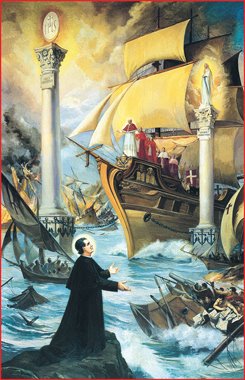
S_dream of don bosco

Click here for more on Dream of St. John Bosco

St. John Bosco, also known as St. Don Bosco, is famous for working with the youth.

St. John Bosco started the Salesian order which is the largest single religious order in the world today!

Here is a novena to St. John Bosco:

Novena Prayers:

Oh holy patron of the youth, I come to you with sincere confidence in your closeness to Jesus. Saint John Bosco, I need your help, I need your prayers, I need your intercession to God for His grace to help me with…

(state your intentions here)

With your love of Mary, our Mother, pray for me!

With your love for Jesus in the Blessed Sacrament, pray for me!

With your love for all those who suffer, pray for me!

Don Bosco, please pray fervently for the grace that I now ask from God our Father. In addition, please pray that I may have a sincere acceptance of the Will of God and a perfect trust in Him.

Our Father…
Hail Mary…
Glory Be…

Find the Original Here
***

1/22 More on the Day of Prayer for the Legal Protection of Unborn Children


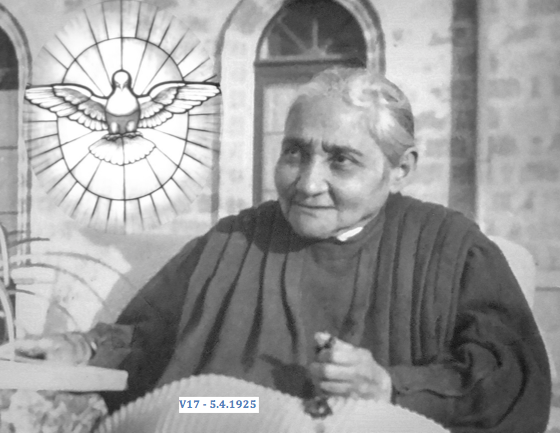
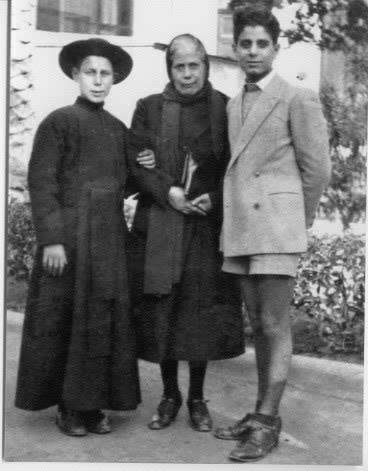
A young Fr. Bucci, his Aunt Rosaria and his brother Agostino

In a recent statement of Fr. Bucci, he made known that after Luisa’s death, in addition to beginning the spread of devotion to Luisa, and having read all of her Writings, Aunt Rosaria had an earnest devotion to the protection and sanctification of the unborn. To honor Rosaria Bucci in this earnest intention, and to thank her for her forty years of dedication and care of the Servant of God Luisa Piccarreta, with the following Writing of Luisa from Volume 36, we echo this same desire, linked with Luisa in the Holy Divine Will, praying for the Salvation and Sanctification of all unborn babies, past, present and future. May this be for the Glory of God and the Good of all souls, and hasten the Establishment of the Kingdom of the Divine Will on earth as It is in Heaven.

***

From the Easter Blessing given a few years ago by Padre Bernardino Bucci (who passed away July 17, 2020):

I give you my Priestly Blessing, In the Name of the +Father, +Son and +Holy Spirit.
Blessed Easter!

And also to pray with Rosaria Bucci, that she may continue to help stop abortions and all that may limit the life of the pregnancy of a woman and anything that ends the life of a preborn baby.

***

From a person who met with Padre Bucci:

Padre Bucci has told us that, a few weeks before Luisa died she informed his Aunt Rosaria, who helped with the care of Luisa for 40 years, that Jesus gave Rosaria the Mission of helping the Preborn in a similar way that Jesus gave Luisa the Mission of those Born to the Light of the Day, as in the following reading:

V36 – 4.12.38– “My Blessed daughter of My Will, how many Wonders My Will can make in the creature, as long as she gives It the First Place and All the Freedom to Operate. My Will takes the will, the word, the act that the creature wants to do, as part of Itself – Covers it with Its Creative Virtue, Pronounces Its Fiat in it, and Forms as many Lives for as many existing creatures. You were asking in My Will for the Baptism of All newborn babies that will come to the light of the day – and then, for Its Life to Reign in them. My Will did not hesitate for one instant; soon It Pronounced Its Fiat and Formed as many Lives from Itself for as many newborn babies coming to the Light – Baptizing them, as you wanted, with Its First Light, and then Giving each one of them Its Life…”

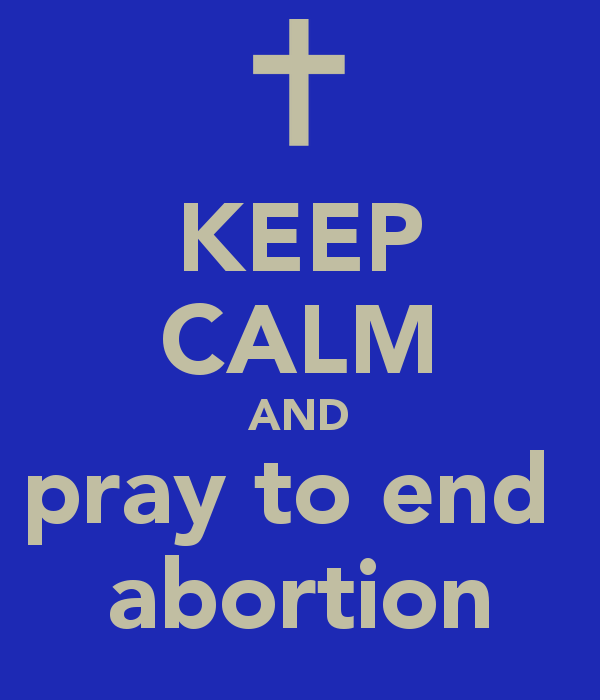
1/22 Prayer for the End of Abortion

January 22, marks the 46th anniversary of Roe v. Wade,

the Supreme Court decision that made abortion legal in the U.S.

  Pray the Command Prayer to End Abortion:

Abba Father, in the Name of Jesus

In the Unity and Power of the Holy Spirit

Under the Mantle of Mary,

with all the Angels and Saints,

through the intercession of the Servant of God Luisa Piccarreta

take my humble prayer and make it Your Command

to end abortion throughout the world

that all may be accomplished and completed in Your Most Holy Divine Will.

Fiat!

Amen.

Since that tragic decision,

millions of

children’s lives have been lost to abortion per year,
(there is 1 abortion every 30 seconds)

and many others suffer from that loss

— often in silence.

1/19 Freedom is necessary in order to recognize the good and the evil

Vol. 4 – 1/5/03

This morning I felt almost free of sufferings. I myself did not know what to do, when I felt I was outside of myself and I saw people from our country who, in addition to the words and the calumnies they had spoken, were plotting to come to deeds. In the meantime I saw blessed Jesus and I said: ‘Lord, You give too much liberty to these infernal men. Up until now it has been about infernal words, but now they want to reach the point of laying hands on your ministers. Bind them, and have compassion on them, and, at the same time, defend those who belong to You.’

And He: “Daughter, this freedom is necessary in order to recognize the good and the evil…”

…He (Jesus) told me: “My daughter, I did not make man for the earth, but for Heaven; his mind, his heart, and everything that his interior contains were to exist in Heaven. Had he done this, he would have received the influence of the Most Holy Trinity within his three powers, and It would have been copied within himself; but since he occupies himself with earth, he receives mud, rot and the whole bilge of vices that the earth contains.”

1/17 Our Lady appears at Pontmain, France in 1871

M_Our Lady of Hope

Pontmain, France  1871
Our Lady of Hope

It is the darkest hour of the War of 1870. Prussian armies have invaded a large part of France, and the nation is in complete disarray. On the morning of January 17, 1871, Prussian troops are at the outskirts of Laval in the district of Mayenne. The city is preparing to pay the heavy military assessment levied against it: three million francs in gold. “The rout of fleeing soldiers is unimaginable. They are deaf to the command of officers. Two of them have been shot down in their tracks, but this example has had no effect on the others. In the 39 years that I have been in the service, never have I found myself in such a distressing situation,” writes the Commander of the 16th Corps.

A Sign of Hope
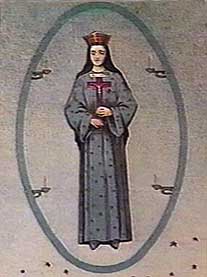
     Toward evening on January 17, Pontmain, a small town in the north of Mayenne, lies under a blanket of snow. People are anxious, but everybody is going about work as usual. In a barn in the middle of town two boys, Eugene and Joseph Barbedette, are helping their father pound stalks to feed to the horses. Some minutes before six o’clock in the evening, taking advantage of a break from work, Eugene leaves the barn and sees in the sky a “Lady” dressed in a dark-blue robe sprinkled with stars. She spreads her lowered hands in a gesture of welcome and smiles on him.  Joseph comes along a few moments later and also sees the Lady. But the father of the boys sees nothing. Undaunted, they call their mother, who also fails to see anything even after going back to the house for her eyeglasses. There is nothing to it, declare the parents, and the boys are to get on with work and then come in for supper. After a quick meal, the boys still see the beautiful Lady, so the Sisters of the school are called. Again, they see nothing. But two little girls with them do see the beautiful Lady and describe the star-studded blue robe, the dark veil, and the crown of gold.

Evening of Prayer
     The town now gathers around the two small boys. Father Gu?rin, pastor of Pontmain for 35 years, is called and there, in the snow, a vigil of prayer ensues, a veritable dialogue with the Virgin. While the people are praying, the apparition grows and is covered and surrounded with stars. A large blue oval with four candles attached encloses it. The people kneel, some in the snow, some in the barn, whose small door is open. Sister Mary Edward, kneeling at the door, leads the Rosary.  The Lady becomes more beautiful and increases in size as prayer continues. The increase is harmoniously proportioned.  The blue oval expands accordingly, and the stars surrounding the apparition seem to move aside to make way for the oval, ranging themselves two by two at the feet of the Lady. Those which spangle her robe multiply and the dark blue of the robe brightens.

Message of Hope
    After recitation of the Rosary, the people sing the Magnificat “in the sonorous tone of the Bretons.”  A white banner then appears on which large letters of gold slowly form. The two small boys try to decipher them while prayer goes on. After some moments, they can read:

“PRAY, MY CHILDREN.  GOD WILL ANSWER BEFORE LONG.  MY SON LETS     HIMSELF BE MOVED.”

     The message produces a strong emotional reaction in the crowd. After a momentary silence the pastor suggests they sing the hymn “Mother of Hope.”  The children leap for joy and clap their hands while repeating: “SEE HOW SHE SMILES! OH, HOW BEAUTIFUL SHE IS!” At the end of the hymn the banner bearing the inscription vanishes.

Sign of the Cross
     The prayer of the people takes a penitential turn with the singing of the hymn: “Gentle Jesus, Pardon now our penitent hearts…”      A sadness appears in the Virgin and is reflected in the children. A large red crucifix is then seen, surmounted by a placard bearing in beautiful red letters the name: JESUS CHRIST.  The Virgin presents the crucifix to the children. The sadness seen in her makes a deep impression on Joseph.  Later he will write:

“Her sadness was more than anyone can imagine. I saw my mother overwhelmed with grief when, some months later, my father died. You know what such grief in a mother’s face does to the heart of a child. But, as I remember, what instinctively came to mind was the sadness of the Most Blessed Virgin, which must have been the sadness of the Mother of Jesus at the foot of the Cross that bore her dying Son.”

“It’s All Over …”
     While all this is happening, the crowd continues to pray. Some moments later the red crucifix vanishes and the Virgin resumes her initial posture, arms extended downward. A small white Cross appears on each of her shoulders. The Lady smiles once more. At the suggestion of the pastor evening prayer is begun. People kneel where they happen to be, in the barn or in the snow. A large white veil appears at the feet of the Virgin, slowly lifts and gradually enshrouds her. When evening prayer is finished, the apparition vanishes. “IT’S ALL OVER,” declare the two small boys. The time is about nine o’clock in the evening and everybody leaves for home.

Conclusion
     This clear manifestation of the Mother of God tells us of her Son and renews our hope. There is no need to add anything, except perhaps to say that we ought to receive the message of Pontmain with the same joy and simplicity of soul as these villagers. Without fanfare or extraordinary demonstration, for two hours and more they prayed and listened to what the message meant for them.

Source:  Dictionary of Mary, (N.Y.: Catholic Book Publishing Co., 1985).