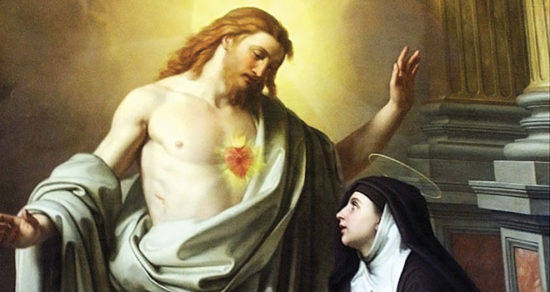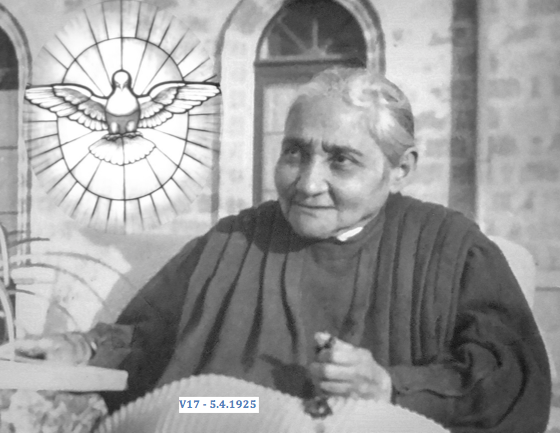
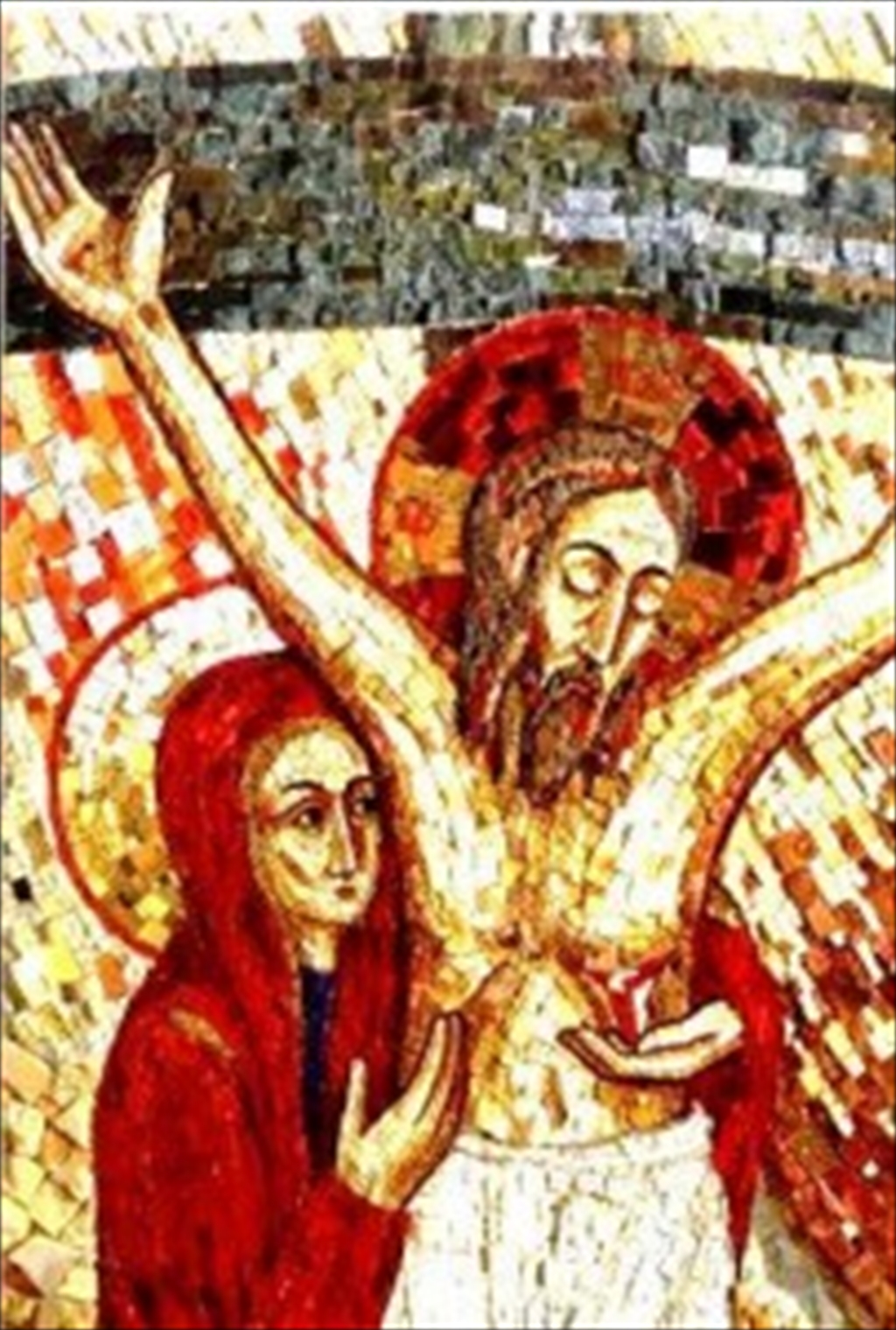
The Wound attracts the Wound VII Outpouring: Jesus pours blood from His Chest Wound.

M_the Wound attracts the Wound

LUISA PICCARRETA Official Website:

From the Gospel according to John (Jn 19.33 to 34)

“But when they came to Jesus and saw that he was already dead, they did not break his legs. Instead, one of the soldiers pierced his side with a spear, and at once blood and water came out”.

It’s around three in the afternoon, from moon, the sky has turned into darkness. Now it is finished. Jesus’ bones are out of joint, it is possible to count them one by one. His heart is like wax; it is melted within His breast. He is poured out like water. His  strength is dried up like a potsherd. His tongue sticks to his  jaws, and He ,with a soft voice, which is sufficient so that the soldiers can hear Him, whispers: “I thirst!”.

Those men still do not understand. They put a sponge full of the sour wine on a hyssop branch and held it to His mouth. That bad wine, which is like lifeless blood, is the only thing that a man can offer Him. The sour wine is the symbol of our life that is consumed by sin and ripped by the primordial wound. It is like wine that has lost its color, taste and aroma. Jesus also drinks that sour wine. He takes everything that  a man gives Him.


On July 4 1910, Jesus explained to Luisa that in a special way He wanted to suffer the agony in the Garden, in order to help all of the dying to die well and  the agony on the Cross was for help at the last moment, at the very last breath.

They are both agonies, but one is different from the other: the agony in the Garden, full of sadness, of fears, of anxieties, of frights; the agony on the Cross, full of peace, of imperturbable calm. And if Jesus cried out ‘I thirst!’, it was the insatiable thirst that all might breathe their last in His last breath; and in seeing that many would go out of His last breath, out of grief He cried out ‘Sitio!’ [‘I thirst!’], and this ‘sitio’ still continues to cry out to all and to each one like a bell at the door of each heart: ‘I thirst for you, oh soul! O please, never go out of Me, but enter into Me and breathe your last in Me!

Jesus told Luisa in another passage of November 9, 1906, that one who meditates continuously on His Passion and feels sorrow for it and compassion for Him, pleases Him so much that He feel as though comforted for all that He suffered in the course of His Passion; and by always meditating on it, the soul arrives at preparing a continuous food. In this food there are many different spices and flavors, which form different effects. So, if in the course of His Passion they gave Him ropes and chains to tie Him, the soul releases Him and gives Him freedom.

In the Passion they despised Him, spat on Him, and dishonored Him; on the contrary one who meditates on His Passion appreciates Him, cleans Him of that spittle, and honors Him. They stripped Him and scourged Him, the soul who meditates on His passion heals Him and clothes Him. They crowned Him with thorns, mocking Him as king, embittered His mouth with bile, and crucified Him; while the soul, meditating on all His pains, crowns Him with glory and honors Him as her king, fills His mouth with sweetness, giving Him the most delicious food, which is the memory of His own works; and unnailing Him from the Cross, she makes Him rise again in her heart. And every time she does so, He gives her a new life of grace as recompense. She is His food, and He becomes her continuous food.


After receiving the sour wine, Jesus, with His few strengths, said the last words: “It is finished”.  The sun has turned into darkness and the moon into blood,

All creation returns to feel lonely as before the birth of man. Darkness tries to hide from  creation what man has just accomplished. It does not want creation to know that it no longer has reason to rejoice. The end of all things seems that has arrived. Jesus bends his head and gives up His spirit.

God is dead and with Him also our humanity. The earth is again without form and void, and darkness is over the abyss of nothingness created again by us. Everything has turned back as before God said: “Fiat lux!”. Man died for his sin. No bush of the field is in the land, the grass does not spring anymore. A source of blood is gushing from the heaven and is irrigating the whole ground. God is dead for love. Jesus bows His head and blows His spirit into the nostrils of that land which is mixed with His blood. For love sin is defeated and along with it death too. Man becomes again a living being!


The time of sunset is approaching. Saturday preceding the Passover is the new day that is to come . The chief priests don’t want the bodies of the criminals to be hung from the cross: these are the bodies of people cursed by God! They break the bones of the two thieves who are  with Him to accelerate the course of their death. Jesus is already dead, there is no need to harm Him again.

A centurion, to make sure He is dead, prepares to strike Him with the spear. He grasps it, he pierced His side, he moves His arm to load the shot. That soldier was about to open His heart. No man has ever been able to do this.


To enter the heart of Jesus, to know His mysteries is man’s most sincere and noble desire. Jesus allows us to do this from the beginning, but since man has ceased to trust Him and wanted to reach on his own that knowledge, everything is ruined. His pride has opened within him a deep gorge of dissatisfaction. The more man has the more he is afraid of losing. The more he knows and the more he longs to dominate the world around him. He arranges his life in order to exorcise death, but the more he tries to do this and the more the thought of it haunts him.

All the sin of man is now concentrated in the blade of the spear that is going to penetrate His chest. The primordial hope to be like Him and to know His thoughts is finding its satisfaction in that spear. What does he hope to find? At one time, the result of that gesture were suffering and death. What will happen now?


Beneath the cross there is not only the centurion. There are not only the hypocritical Pharisees, the unscrupulous soldiers and the people of Israel who mocks Him. Beneath the cross there is a new people that without that spear has already learned to understand what His heart conceals. Simon of Cyrene learned it through His eyes and savored the peace that comes from carrying the cross with Jesus. Mary, His mother, understood this, day after day, walking with her Son along her earthly existence. His heart is so full of love and suffering that there is no human being who can get close to His feelings more than She does.

Beneath the cross there is also John, who trusted Jesus’ love and learned to love as Jesus loves, giving his own life for his friends. Under the cross there are all the people that Jesus loved throughout His life, and that they felt loved by Him, recognizing in His love, the love of the Father. These are different people who belong to different cultures and religions, to different ages and  classes of population, they have nothing in common except His same love.

And now they are there and will remain there. They are His friends, His brothers. They are His Church. Also Peter and the other apostles of whom there is no trace will soon return. After His death also Nicodemus and Joseph of Arimathea, who are teachers of the Law and powerful men, will find the courage to follow Him. They will lay His body in a tomb and anoint it with thirty pounds of oil, as for the kings, because Jesus is king even if the world does not understand this, but His friends understand this and as for the Kings, they serve Him faithfully.


That spear cuts through the air and comes close to His chest. The centurion took the place of the first woman and the first man. The curiosity of that soldier has taken the place of human greed to give satisfaction to both. The deep wound that inhabits our being is going to be filled by what they always yearn.

The spear pierces the skin and the entire blade penetrates His chest. His heart is more and more close.

The blade sinks into His side up to touch the layers of the source of a new life. The peak of our sin comes to the bottom of His heart. Man came there where he always wanted to go. Now his desire to know good and evil is now a reality, he can really be like God. All evil  caused by men comes to light. All the good is going to spring from that pierced side.

Sin  broke the rock of time and space. A gush of water and blood comes out of the depths of the eternal mysteries. A new source of life has been opened in history to gush forever: it is the river of His Mercy.

The blood that He had saved as a last gift of love, pours itself  on the body of the centurion and with him also on the body of every man that has been replaced by him. We are flooded by His Mercy.

So this is what hides in the heart of Jesus: an infinite love for us. So, to be like Him is to love as He loves: to the end, till the last drop of blood in our body.

Love makes us divine. But this is a love that is until the end, till the last drop of blood. After all, His enemies had already understood that. They, too, continued to live by giving their lives for love. This is the meaning of everything. This is what makes us children of God.


Man has now recovered his lost image and rediscovers himself as child of God who is loved by Him. The wound that inhabits the human heart has regained its original state: it has again become thirsty of love. The wound in the side of Jesus attracts our wound. Jesus shouts from His heart to us: “If anyone is thirsty come to me and the one who trust me drink.” We never will turn away from His heart and will drink forever at the source of His Mercy.


O Adorable Heart, pierced for us,

receive our prayers,

the expectations of the poor, the tears of the suffering,

the hopes of the peoples,

so that all mankind

may meet in Your Kingdom of Love,

Justice and Peace.

a cura di don Marco
Father John Olin Brown left for the Father’s house

The Association Luisa Piccarreta is experiencing today one of  the saddest and very touching moments, because it is mourning the death of Fr John Olin Brown, an American priest who, right here, in the land of Luisa, was ordained a priest by swearing his loyalty to the Divine Will.

In fact, as noted by His Excellence Giovan Battista  Pichierri” at the times of Monsignor Cassati, father John landed in Italy from the United States of America, to deepen the spirituality of the Servant of God Luisa Piccarreta”; twenty years later, returned to our diocese and has not survived a serious lung infection, and right  here he made his encounter with the Divine Spouse.

Let’s pray that all his human acts will be sealed by the Divine Will, and as he broke the bread with the yeast of the Fiat, the doors of the  Kingdom can be opened to him. The Archbishop also announced that the funeral will be held Monday, Aug. 22 at. 10.00 a.m.  in Corato, at the Parish Mater Gratiae, Oasis of Nazareth..

Fiat

8/07 Consecration and Feast Day for the Father of All Mankind – First Sunday in August

J_God the Father

This crowning feast day of the Holy Octave of Consecration to God Our Father serves to solemnly assemble the children of God, the ultimate purpose of which is to honor God Our Father (1) by recognizing that He is truly our Father and we are truly His children, (2) by offering Him our unconditional “Fiat,” and (3) by consecrating ourselves to Him totally. Having prepared for this solemn day and our consecration by exercising and offering the Holy Octave themes of praise, thanksgiving, offering, repentance, inheritance, Fiat, and fidelity, we now ask through the intercession of the Servant of God Luisa Piccarreta; Mary, our Mother; Jesus, our God and our Savior; and The Holy Spirit, our God and our Sanctifier, to guide and prepare us so that through our total consecration, we can become living temples of the indwelling Presence of God.

We also ask God Our Father on this special day (1) to allow us to cultivate and maintain a close and intimate relationship with Him, (2) to have Mercy on all His children–past, present, and future, (3) to bring His peace to the world, (4) to gather all His children to Himself, and (5) and that His Kingdom comes and His Will is done on earth as it is in heaven.

8/06 The priests who survived the atomic bomb

P_Jesuit Priests Atomic Bomb survivers

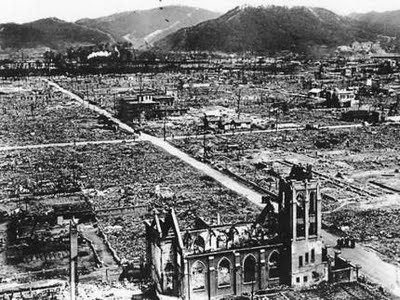
Apparently this is the Jesuit Church
dedicated to “Our Lady of the Assumption”

Please Note Four People Wearing Black Clothing to the Right of the Church. It Looks Like they are Wearing Black Cassocks?  If so, these are either the Four Jesuit Priests who Survived the Atomic Bomb, or Some of the Jesuit Priests who had come to Rescue Them?

Their Monastery/Rectory was located just eight blocks away from the center of the devastation, (not ground zero because the atomic  bomb detonated in the air). The Church was heavily damaged, but the Rectory survived, and so did the four German missionaries who prayed the Rosary in that house faithfully every day. 

Four Jesuit Priests stationed there survived the searing hurricane of blast and gamma rays during the atomic bomb explosion. 

These four Priests were:

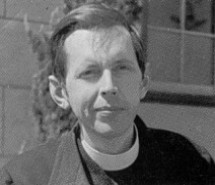
P_Fr Hugo Lassalle atomic bomb
Father Hugo Lassalle, S.J.
[b. in Germany in 1898 – d. 1990]
Superior of the Rectory and Church a)  the Superior, Father Hugo Lassalle, S.J.

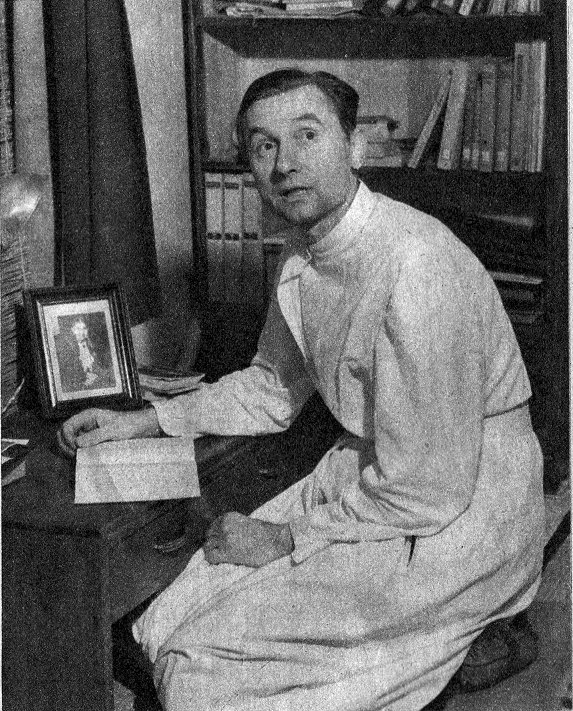
P_Father Wilhelm Kleinsorge atomic bomb
Father Wilhelm Kleinsorge, S.J.
[b. in Germany in 1907  – d. on November 17, 1977]
b)  Father Wilhelm Kleinsorge, S.J.
(Photo Not Available)
c)  Father Hubert Cieslik, S.J.


d)  Father Hubert Schiffer, S.J.

Father Schiffer, S.J. could not understand how, IF not through the intercession of Our Lady of Fatima because of their daily recitation of the Holy Rosary and living the Message of Fatima, a.k.a. God’s Peace Plan, they could have survived the extreme temperatures and pressure surges produced by the Atom bomb, let alone the radiation. 17.  The facts are evident, the building remained standing, surviving the terrible bomb blast. 
18.  Over the next 30 years, Father Hubert Schiffer was examined about 200 times for radiation exposure – he had none!

*****

The remarkable survival of the Jesuit Fathers in Hiroshima that has echoes in the Bible and in the story of Fatima can also be read in an article compiled by Mark Strabinski (click on his link), or in the article written by Donal Anthony Foley on Thursday, 5 August 2010 (that follows) –

This Wednesday, August 6 (2014), will see the Feast of the Transfiguration celebrated in the Church. It commemorates the occasion when Christ, accompanied by Peter, James, and John, went up a high mountain – traditionally identified with Mount Tabor in Galilee – and was there “transfigured” before them, so that “his face shone like the sun, and his garments became as white as light” (Mt 17:2).

The Greek word for transfiguration is metemorphothe, from which we get the word “metamorphosis”. So the Transfiguration was a complete and stunning change in the appearance of Jesus, as his divinity shone through his humanity, in a way which completely overwhelmed the awestricken disciples. Its purpose was to prepare them for the reality of the crucifixion, so that having once seen – in some sense – his divinity, they would be strengthened in their faith.

August 6 is also an important date in world history: the fateful day on which the first atomic bomb was dropped on Hiroshima in Japan. On that day, a Monday, at 8.15 in the morning, an American B-29 bomber, Enola Gay, dropped its bomb “Little Boy”, which fell to a predetermined detonation height of about 1,900 feet above the city. It exploded with a blinding flash, creating a giant fireball, which vaporised practically everything and everyone within a radius of about a mile of the point of impact. It is estimated that up to 80,000 people were directly killed by the blast, and by the end of the year, that figure had climbed considerably higher, due to injuries and the effects of radiation. Over two thirds of the city’s buildings were completely destroyed.

But in the midst of this terrible carnage, something quite remarkable happened: there was a small community of Jesuit Fathers living in a presbytery near the parish church, which was situated less than a mile away from detonation point, well within the radius of total devastation. And all eight members of this community escaped virtually unscathed from the effects of the bomb. Their presbytery remained standing, while the buildings all around, virtually as far as the eye could see, were flattened.

Fr Hubert Schiffer, a German Jesuit, was one of these survivors, aged 30 at the time of the explosion, and who lived to the age of 63 in good health. In later years he travelled to speak of his experience, and this is his testimony as recorded in 1976, when all eight of the Jesuits were still alive. On August 6 1945, after saying Mass, he had just sat down to breakfast when there was a bright flash of light.

Since Hiroshima had military facilities, he assumed there must have been some sort of explosion at the harbour, but almost immediately he recounted: “A terrific explosion filled the air with one bursting thunderstroke. An invisible force lifted me from the chair, hurled me through the air, shook me, battered me [and] whirled me round and round…” He raised himself from the ground and looked around, but could see nothing in any direction. Everything had been devastated.

He had a few quite minor injuries, but nothing serious, and indeed later examinations at the hands of American army doctors and scientists showed that neither he nor his companions had suffered ill-effects from radiation damage or the bomb. Along with his fellow Jesuits, Fr Schiffer believed “that we survived because we were living the message of Fatima. We lived and prayed the rosary daily in that home.”

There is actually a biblical precedent for what happened to the eight Jesuits, in the book of Daniel. In Chapter 3, we read of the three young men who were thrown into the fiery furnace at the orders of Nebuchadnezzar, but who survived their ordeal and even walked around in the midst of the flames, accompanied by an angel who looked like “a son of the gods”.

After this first bombing, the Japanese government refused to surrender unconditionally, and so a second atomic bomb was dropped on the city of Nagasaki three days later on August 9. Nagasaki had actually been the secondary target, but cloud cover over the primary target, Kokura, saved it from obliteration on the day. The supreme irony is that Nagasaki was the city where two-thirds of the Catholics in Japan were concentrated, and so after centuries of persecution they suffered this terrible blow right at the end of the war.

But in a strange parallel to what happened at Hiroshima, the Franciscan Friary established by St Maximilian Kolbe in Nagasaki before the war was likewise unaffected by the bomb which fell there. St Maximilian, who was well-known for his devotion to the Blessed Virgin, had decided to go against the advice he had been given to build his friary in a certain location. When the bomb was dropped, the friary was protected from the force of the bomb by an intervening mountain. So both at Hiroshima and Nagasaki, we can see Mary’s protective hand at work.

The apparitions at Fatima in Portugal took place in 1917, when from May to October three young children, Francisco and Jacinta Marto, and their cousin, Lucia dos Santos, saw the Blessed Virgin six times, culminating in the “miracle of the sun” on October 13, when 70,000 people saw the sun spin in the sky and change colour successively, before falling to the earth in a terrifying manner. Many of those present thought it was the end of the world, but the sun reassumed its place in the sky to great cries of relief.

The essence of the Fatima message concerns conversion from sin and a return to God, and involves reparation for one’s own sins and the sins of others, as well as the offering up of one’s daily sufferings and trials. There was also a focus on prayer and the Eucharist at Fatima, and particularly the rosary, as well as the Five First Saturdays devotion, which involves Confession, Holy Communion, the rosary and meditation, for five consecutive months with the intention of making reparation to Our Lady (for more details visit Theotokos.org.uk).

It’s interesting to reflect, then, on the theme of “transfiguration” which links these various events. Christ’s face shone like the sun on Mount Tabor, and at Fatima, Our Lady worked the great miracle of the sun to convince the huge crowd which had gathered there that the message she was giving to mankind was authentic. Consider, too, that the poor people of Hiroshima and Nagasaki suffered as man-made “suns” exploded in their midst causing horrific devastation. But at Hiroshima the eight Jesuits, who were living the message of Fatima, and particularly the daily rosary, were somehow “transfigured,” protected by God’s divine power, from the terrible effects of the bomb.

Surely there is a message here for all of us, that living the message of Fatima, in a world which grows ever more dangerous, and which is still threatened by nuclear war, is as profound a necessity for us as it was for Fr Schiffer and his companions.

Jesus says, “You are gods.” (Jn. 10:34) How is this possible?

Jn 10_34

PUBLISHED and WRITTEN BY 

At baptism, we become partakers of the divine nature,” (CCC 1265 or 2Pt.1:4) or as St. Athanasius states that we are, “becoming by grace what God is by nature.” The Catechism quotes St. Athanasius to explain this teaching, “For the Son of God became man so that we might become God,” (460) and furthermore it explains, “The only-begotten Son of God, wanting to make us sharers in his divinity, assumed our nature, so that He, made man, might make men gods.” (CCC 460)

For most of us, the concept that “You are gods.”(Jn. 10:34) or that we are being “divinized” is difficult to grasp so let us first look at Jesus’ baptism when the Holy Spirit descends upon Jesus and the Heavenly Father says, “This is my beloved Son, with whom I am well pleased.”(Matt. 3:17) Likewise, the Holy Spirit also descends into our souls at baptism, and we, too, become His sons and daughters as the Psalmist states, “You are ‘gods’; you are all sons of The Most High.” (82:6)  The Heavenly Father’s words also apply to us as when St. Faustina hears Him say, “You are My delightful dwelling place; My Spirit rests in you.”  (Diary 346)

OurLadyHeart

Our Lady of the Divine Indwelling

St. Paul reminds us that we are temples of God, “Do you not know that your body is a temple of the Holy Spirit within you?” (1Cor.6:19) and “For this reason, those in whom the Spirit dwells are divinized.” (CCC 1988) Divinization also means that the Holy Spirit makes us, “a new creature.”(CCC 1265) However, it is not just the Holy Spirit that dwells in our souls, but it is also the Holy Trinity.   The Catechism explains that baptism is the “entry into the life of the Most Holy Trinity,”(1239) and we become “the indwelling of His Presence in us” (2781).  

Trinity

Trinity

St. John Paul II enlightens us that “‘Divinization’…occurs through the admission into the intimacy of the Trinitarian life”, (Novo Millennio Ineunte no. 23) as when the Holy Trinity speaks in the soul of St. Faustina, “‘You are Our dwelling place.’ At that moment, I felt in my soul the presence of the Holy Trinity, the Father, the Son, and the Holy Spirit. I felt that I was the temple of God. I felt I was a child of the Father,”she said. (Diary 451)

St. Faustina says, “Divinize me so that my deeds may have supernatural value,” (1242) but she remains a meek and humble student of the indwelling Presence. She accepts to be molded regardless of her sins and frailties.  Jesus explains to St. Faustina what He can do despite our faults and failings, “Your heart is My constant dwelling place, despite the misery that you are.  I united Myself with you, to take away your misery and give you My mercy.” (Diary 723)  She learns to worship the Holy Trinity within her soul so well that the Blessed Virgin Mary appears to her explaining the divinization going on in her soul, “You are a dwelling place pleasing to the living God; in you, He dwells continuously with love and delight. And the living presence of God, which you experience in a more vivid and distinct way, will confirm you, my daughter, in the things I have told you.” (Diary 785)

Divine Mercy and St Faustina

Divine Mercy and St Faustina

St. Faustina continues to plead with God, “Divinize me that my deeds may be pleasing to You,” (Diary 1289) so the Blessed Virgin Mary gives her instruction on how to live continually with the indwelling Presence, “My daughter, strive after silence and humility, so that Jesus, who dwells in your heart continuously, may be able to rest. Adore Him in your heart; do not go out from your inmost being. My daughter, I shall obtain for you the grace of an interior life which will be such that, without ever leaving that interior life, you will be able to carry out all your external duties with even greater care. Dwell with Him continuously in your heart. He will be your strength. Communicate with creatures only in so far as is necessary and is required by your duties.” (Diary 785)

Divinization is difficult to understand due to the way we view ourselves, “we hold this treasure in earthen vessels,” (2Cor.4:7) but Instrumentum Laboris instructs us that the “Eucharist is the summit of the Church’s life, since communion with the Lord leads to the sanctification and “divinization” of the person.” (1) Similarly, to help St. Faustina comprehend, Jesus tells her that as she sees Him outside so He is within, “I am dwelling in your heart as you see Me in this chalice.” (1820)  But, why is all this relevant or important to us now?  Because “The hour is coming when true worshipers will worship the Father in Spirit and truth.” (John 4:23)

Sacred-Heart-StMargretMary

St Marget Mary and the Sacred Heart of Jesus

Yes, the hour is coming very soon when there will be no physical Church to worship in as Pope Benedict XVI explains in the year 2010:

“This passage in chapter 4 of John’s Gospel is the prophecy of a worship in which there will no longer be any temple, but in which the faithful will pray without an external temple in the fellowship of the Holy Spirit and the truth of the Gospel, in communion with Christ; where what is needed is no longer a visible temple but rather the new fellowship with the risen Lord.  That always remains important, because it signifies a major turning point in the history of religion as well.”

(Light of the World, pages 16-17)

Inner Light - Source Unknown

Inner Light – Source Unknown

Finally, believe and understand that He wants to divinize us not by the “counterfeit divinization of eros,” (Pope Benedict XVI, Deus Caritas Est no. 4) as when the serpent says, “you will be like gods,” (Gen.3:5) but by being humble, intimate, and living temples of God as when Jesus states, “We will come into him, and make Our dwelling in him.” (Jn. 14:23) Therefore, in these turbulent times trust and have confidence that His loving indwelling Presence is always with us day and night to divinize us as Jesus tells St. Faustina, “You are my dwelling place and my constant repose.  For your sake I bless the earth.” (Diary 431) ST FAUSTINA PRAY FOR US.