8/14 Vigil of the Assumption of the Blessed Virgin Mary. The priests who survived the atomic bomb The remarkable survival of the Jesuit Fathers in Hiroshima has echoes in the Bible and in the story of Fatima

The remarkable survival of the Jesuit Fathers in Hiroshima

(Excerpted from Article by Donal Anthony Foley on Thursday, 5 August 2010 )

Today, August 14th, is the Feast Day of St. Maximilian Kolbe
(1894-1941)
Priest, Martyr 

. . . August 6 is also an important date in world history: the fateful day on which the first atomic bomb was dropped on Hiroshima in Japan. On that day, a Monday, at 8.15 in the morning, an American B-29 bomber, Enola Gay, dropped its bomb “Little Boy”, which fell to a predetermined detonation height of about 1,900 feet above the city. It exploded with a blinding flash, creating a giant fireball, which vaporised practically everything and everyone within a radius of about a mile of the point of impact. It is estimated that up to 80,000 people were directly killed by the blast, and by the end of the year, that figure had climbed considerably higher, due to injuries and the effects of radiation. Over two thirds of the city’s buildings were completely destroyed.

But in the midst of this terrible carnage, something quite remarkable happened: there was a small community of Jesuit Fathers living in a presbytery near the parish church, which was situated less than a mile away from detonation point, well within the radius of total devastation. And all eight members of this community escaped virtually unscathed from the effects of the bomb. Their presbytery remained standing, while the buildings all around, virtually as far as the eye could see, were flattened.

Fr Hubert Schiffer, a German Jesuit, was one of these survivors, aged 30 at the time of the explosion, and who lived to the age of 63 in good health. In later years he travelled to speak of his experience, and this is his testimony as recorded in 1976, when all eight of the Jesuits were still alive. On August 6 1945, after saying Mass, he had just sat down to breakfast when there was a bright flash of light.

Since Hiroshima had military facilities, he assumed there must have been some sort of explosion at the harbour, but almost immediately he recounted: “A terrific explosion filled the air with one bursting thunderstroke. An invisible force lifted me from the chair, hurled me through the air, shook me, battered me [and] whirled me round and round…” He raised himself from the ground and looked around, but could see nothing in any direction. Everything had been devastated.

He had a few quite minor injuries, but nothing serious, and indeed later examinations at the hands of American army doctors and scientists showed that neither he nor his companions had suffered ill-effects from radiation damage or the bomb. Along with his fellow Jesuits, Fr Schiffer believed “that we survived because we were living the message of Fatima. We lived and prayed the rosary daily in that home.”

There is actually a biblical precedent for what happened to the eight Jesuits, in the book of Daniel. In Chapter 3, we read of the three young men who were thrown into the fiery furnace at the orders of Nebuchadnezzar, but who survived their ordeal and even walked around in the midst of the flames, accompanied by an angel who looked like “a son of the gods”.

After this first bombing, the Japanese government refused to surrender unconditionally, and so a second atomic bomb was dropped on the city of Nagasaki three days later on August 9. Nagasaki had actually been the secondary target, but cloud cover over the primary target, Kokura, saved it from obliteration on the day. The supreme irony is that Nagasaki was the city where two-thirds of the Catholics in Japan were concentrated, and so after centuries of persecution they suffered this terrible blow right at the end of the war.

But in a strange parallel to what happened at Hiroshima, the Franciscan Friary established by St Maximilian Kolbe in Nagasaki before the war was likewise unaffected by the bomb which fell there. St. Maximilian, who was well-known for his devotion to the Blessed Virgin, had decided to go against the advice he had been given to build his friary in a certain location. When the bomb was dropped, the friary was protected from the force of the bomb by an intervening mountain. So both at Hiroshima and Nagasaki, we can see Mary’s protective hand at work

Behold the handmaid of the Lord: What is unspeakable becomes tangible

“The greater is the work I want to do in a soul, the littler I choose her. I like childlike freshness and beauty very much;…”
(Click here for website)

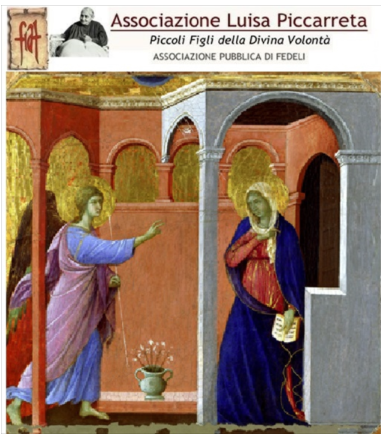
On a spring morning, in a remote village in the Galilee something unpredictable and unthinkable is about to happen.

Suddenly a deep silence envelops the room where Mary is immersed in prayer. Everything seems to stop in an eternal moment. God breaks into Her life. An angel appears to Her. No, it’s not a dream. What is unspeakable becomes tangible, a transcendent reality, overcoming what we can imagine and experience according to the categories of what is natural and sensitive, becomes lived history.

The coming of the Lord in our lives always happens in unusual ways. He rarely manifests Himself in an extraordinary way. God prefers to meet us in simplicity, where we spend our daily life, with our joys and hopes, our anguishes and misunderstandings. Our limits, our sins, the hardness of our heart make us unable to discern the manifestation of the Lord. We must learn to recognize God as alive and present in the many “angels” that He puts on our path, in the many witnesses and prophets who listen, live and proclaim His Word, who go through the paths of our existence. Very often we are distracted by the sparkle of human wisdom, by the comfort of our certainties, the reassuring warmth of our good intentions, even by the habit of listening to His Word: we know it very well, by heart, to the point that we become impervious and insensitive to it. We do not let ourselves be touched, questioned. Our faith is academic. The Lord, on the other hand, seeks us and wants to transform us, to show us a new, different path on which we can direct our future.


God always chooses ways that are far from human logic, to carry out His plan of redemption. He wants man to cooperate with Him, but He does not address the rich and powerful man, those who enjoy prestige and consideration in society.  He Chooses what in the world is foolish, to confuse the wise, what is considered as nothing, as was the status of women in the cultural context of the time of Mary, whose social position was comparable to little more than a servant. A virgin in addition, a woman unscathed and without any stain, uncorrupted.

Well, in Mary’s virginity there is something deeper and more significant than the simple, though essential consideration of her physical condition. Mary’s virginity is synonymous with an inner purity and image of a complete availability to listen, welcome and incarnate the Word of God. To do this. it is essential to prepare a worthy dwelling for the Lord. We should free ourselves from what is an obstacle for us, we should join God in an incessant prayer that becomes a lived life, so that He can be all that fills us, and satisfies us with Him

In a long and fascinating passage from the Diary of Luisa, on November 10, 1923, Jesus spoke in an extraordinary way of the smallness of Mary. He also spoke of the smallness that Luisa should have to welcome the gift of living in the Divine Will.

Among all generations, the Virgin Mary is the littlest, because Her will never entered into Her as acting, but always the Eternal Will; and this not only kept Her little, beautiful, fresh, as She had come out of God, but made Her the greatest of all. Only because of Her littleness was She lifted up to the height of Mother of the One who formed Her. So, all the good of man is in doing the Divine Will; all the evil is in doing his own. Therefore, in order to come to redeem man, God chose Mary because She was little, and God used Her as channel in order to let all the goods and fruits of Redemption descend upon mankind

So that the Divine Will might be known, and Heaven might be opened to let the Divine Will descend upon earth and reign on it as It does in Heaven, God had to choose another little one among all generations. Since this is the greatest work God wants to do – to restore man in his origin, from which he came, to open to him that Divine Will which he rejected, to open His arms to him to receive him once again into the womb of the Divine Will – God’s infinite wisdom calls the littlest one out of nothing. It was just that she be little: if God placed a little one at the head of Redemption, He had to place another little one at the head of the Fiat Voluntas Tua on earth as it is in Heaven.

Between two little ones God was to enclose the purpose of the creation of man – God was to realize His designs upon him: through one, He was to redeem him, wash him of his ugliness with Jesus’ Blood, and give him forgiveness; through the other one, God was to make him return to his beginning, to his origin, to the lost nobility, to the bonds of the Divine Will broken by him, admitting him once again to the smile of the Eternal Will, kissing each other and live one within the other. This alone was the purpose of the creation of man, and what God established no one will be able to oppose.

Centuries upon centuries will go by – just as in Redemption, so also in this; but man will return into God’s arms as he was created by Him. But in order to do this, first God has to choose the one who must be the first to live life in the Eternal Will, bind in her all the relations of Creation, and live with her with no split of wills; rather, with her will and His as one.

The Divine Will preserves her fresh and beautiful; she forms God’s smile and amusement, and God does with her whatever He wants. Enjoying her littleness and her happy destiny, she will cry for her brothers and will occupy herself with nothing else but compensating God, for all and for each one, of all the wrongs they do to God by withdrawing from His Will. The tears of one who lives in the Divine Will will be powerful; more so, since she wants nothing but what God Himself wants; and after the first channel of Redemption, through her God will open the second one of the Fiat Voluntas Tua on earth as it is in Heaven.

On hearing this, Luisa was disconcerted and asked who this second creature was. Jesus answered that it was her, His little one because of her smallness and to make it clearer, Jesus showed her all generations, as though divided into two wings – one on the right and the other on the left of the throne of God. At the head of one wing there was the August Queen Mama, from whom descended all the goods of Redemption.

Luisa remained attracted by the beauty of Mary’s marvelous, prodigious littleness: little and powerful, little and great, little and Queen; little, with everyone hanging upon Her littleness, while She disposes of everything, rules over all, and only because She is little, She enfolds the Word within Her littleness, making Him descend from Heaven to earth, to let Him die for love of men. At the head of the other wing one could see another little one, -she was the one whom Jesus had called His little daughter of the Divine Will.

And Jesus, placing Himself in the middle of these two wings between the two little ones who were at the head of them, with one hand took Luisa’s hand, and with the other that of the Queen Mama, and He joined them together, saying that they were His little daughters. He asked them to hold each other’s hand before God’s Throne, and to embrace the Eternal Divine Majesty in their little arms. To them alone, because they are little, is it given to embrace the Eternal One, the Infinite One, and to enter into Him. And if the first little one snatched Redemption from the Love of the Eternal One, so may the second, her hand held by the first, be helped by Her to snatch from the Eternal Love the Fiat Voluntas Tua on earth as it in Heaven.

Luisa had no words to be able to express herself.  She remained more humiliated and confused, and almost like a fussy little girl, she wanted Jesus in order to tell Him of her fears, of her doubts. And she prayed that He would cast all these things away from her, as she feared that the mere thought of them was a subtle pride, and that He would give her the grace to really love Him and to do His Most Holy Will in everything. Then, Jesus, interrupting her thoughts, made Himself seen inside of her, and said that she should not be afraid, He was the One who would do everything in her; she would do nothing but follow Him faithfully, as she was right that she was too little and could do nothing, but Jesus would do everything in her!


don Marco

XIX Sunday in Ordinary Time: The gift of the Heavenly Father against discomfort


(Click here for website)


Dear brothers and sisters, Fiat!

The passage from today’s Gospel (Jn 6,41-51) continues the teaching that Jesus addressed to all those who followed Him to Capernaum, after the multiplication of the loaves and fish. Last Sunday we listened to Jesus’ self-revelation. (“I am the bread that came down from heaven “) Today the Gospel takes it up again: On hearing that, Jesus’ listeners, remain disconcerted and ask themselves: “Is this not Jesus, the son of Joseph, whose father and mother we know? How can he now say, ‘I came down from heaven’? “But Jesus reiterates:” I am the living bread that came down from heaven. Whoever eats this bread will live forever”.

The reference to the Eucharist is already clear (it will be even more later). To explain the greatness of this gift, Jesus recalls the comparison with the manna, called by Jews “bread from heaven”, that in the wilderness had nourished the ancestors and freed them from the slavery of Egypt: “Your ancestors ate the manna in the wilderness, yet they died; This is the bread that comes down from heaven, so that one may eat of it and not die.” Thus, Jesus Himself establishes a sort of parallel between the “bread of heaven” in the Old Testament and the one in the New Testament, the former foretells the latter, and finds its full meaning, its fulfillment, its perfection in the latter.

In the Old Testament we can see a foretaste of the Eucharist in the first reading of today concerning the prophet Elijah (1 Kings 19: 4-8). Elijah who lived in the ancient dissident kingdom of Israel, was seized by a moment of despair: after so many struggles, risks and memorable undertakings to bring back to God a rebellious people, he noted his failure: everyone preferred to follow false, but easy and comfortable pagan deities. Then the prophet went away; he went into the desert, he lay down under a broom and asked God that He would make him die; but God intervened, He sent him bread and water, He ordered him to continue the journey that would lead him to a direct encounter with Him.

Elijah’s discomfort reflects what many people feel, sooner or later: disappointment, distrust, bitterness, awareness of their limitations, desire to throw in the towel in that endless match that sometimes the days of man, one after the other, seem to be. But when this happens, it is because one forgets God’s help: His Word, His promises, the certainty that He is always with His own and offers to them His support, the true “bread from heaven”.

Elijah, like the Jews with the manna, and the crowd for whom Jesus multiplied the loaves and fish, received a material food, which is granted “one-off” in particular circumstances. But, how much greater the spiritual food is! Yet it is not a prerogative of some privileged people: it is available to anyone who wants to receive it, and not only once, but always, as long as the journey can last until the goal.

The Eucharist is also the indispensable support to realize the portrait of the ideal Christian that the apostle Paul traces for the benefit of the Christians of Ephesus and of all the others, both past and present (second reading, Eph 4,30-5, 2). He says: Brothers and sisters “Do not grieve the Holy Spirit of God, … Let all bitterness, indignation, anger, shouts and slanders with all sorts of malice disappear from you. Be kind to one another, merciful, forgiving one another as God has forgiven you (through the merits of) Christ. So be imitators of God, as beloved children, and walk in love, in the way in which Christ also loved us and gave himself for us “.

The portrait made by the apostle Paul is a double portrait: first, it outlines how the Christian should not be, so as not to grieve the Lord (what a beautiful reason!); then there is the positive thing, to suggest how to live in love, imitating the love of Christ for us. There is nothing more to say.

In the passage of November 2, 1926, while Luisa was following in the Divine Will what Jesus did in Redemption, Jesus explained to her that His Redemption came as remedy for man, and therefore It serves as remedy, as medicine, as food, for the sick, for the blind, for the mute, and for all kinds of maladies. And because they are sick, they do not enjoy nor receive all the strength which all the remedies that Jesus came to bring them for their good contain. The Eucharistic Sacrament which He left as food in order to give them perfect health – many eat It over and over again, but they appear always sick. How many corrupted palates, how many undigesting stomachs, which prevent creatures from enjoying the taste of Heaven ‘s food, and from digesting all the strength of God’s Sacramental Life. And so they remain infirm; and because they are members feverish in evil, they take it with no appetite.

This is why Jesus longs so much for the coming of the Kingdom of the Supreme Fiat – because, then, everything He did in coming upon earth will serve as food for those who enjoy perfect health. What is not the difference between a sick person who takes the same food, and someone else who enjoys perfect health? The infirm one takes it without appetite, without taste, and it serves him in order to sustain himself and not die. The healthy one takes it with appetite, and because he enjoys it, he takes more, and preserves himself strong and healthy. So, what will not be God’s contentment in seeing that, in the Kingdom of the Divine Will, everything He did will serve no longer as food for the sick, but as food for the children of God’s Kingdom, who will be all full of vigor and in perfect health? Even more, by possessing the Divine Will, they will possess God’s permanent Life within them, just as the Blessed in Heaven possess.

So, the Divine Will will be the veil that will hide God’s Life in them. And just as the Blessed possess Him within themselves as their own life, because true happiness has its origin inside the soul, and so the happiness which they receive continuously from the Divinity holds hands and exchanges the kiss with the happiness which they possess inside, and this is why they are fully happy; in the same way, the soul who possesses the Divine Will will have His perennial Life within her, which will serve her as continuous food – not once a day, like the food of His Sacramental Life. In fact, the Divine Will will make greater display, nor will It be content with giving Itself once a day, but It will give Itself continuously, because It knows that these have pure palates and strong stomachs to be able to enjoy and digest, in every moment, the strength, the light, the Divine Life. And the Sacraments, His Sacramental Life, will serve as food, as delight, as new happiness for the Life of the Supreme Fiat which they will possess.

The Kingdom of the Divine Will will be the true echo of the Celestial Fatherland, in which, while the Blessed possess their God as their own life, they receive Him into themselves also from the outside. So, inside and outside of themselves, Divine Life they possess, and Divine Life they receive. What will not be God’s happiness in giving Himself sacramentally to the children of the Eternal Fiat, and in finding His own Life in them? Then will God’s Sacramental Life have Its complete fruit; and as the species are consumed, He will no longer have the sorrow of leaving His children without the food of His continuous Life, because His Will, more than sacramental accidents, will maintain Its Divine Life always with Its full possession. In the Kingdom of the Divine Will there will be neither foods nor communions that are interrupted – but perennial; and everything He did in Redemption will serve no longer as remedy, but as delight, as joy, as happiness, and as beauty ever growing. So, the triumph of the Supreme Fiat will give complete fruit to the Kingdom of Redemption

don Marco 

FIAT – Quando la Divina Volontà regna nelle Anime (FIAT – When the Divine Will reigns in the Souls)

FIAT – Quando la Divina Volontà regna nelle Anime
(FIAT – When the Divine Will reigns in the Souls)
(Click here for website)

– AvailabLe in Italian. It was published by the Association Little Children of the Divine Will in 1997 on the 50th anniversary of the Transit to Heaven of the Servant of God Luisa Piccarreta. It’ s a collection of excerpts from Luisa’s writings, by Saint Hannibal M. Di Francia. It was added to the 3rd edition of the Hours of the Passion with the title of “Treaty” (1917).

I am calling upon the Powerful Prayer Warriors of the Redeemer, the Son of God. You are now in the end times of your world…

August 2, 2018 @ 12:45pm
(Click here for website)

Eucharistic Chapel, St. Rosalie’s Church, Hampton Bays, NY
St. Michael Archangel

Lo and Behold!

I am calling upon the Powerful Prayer Warriors of the Redeemer, the Son of God.
You are now in the end times of your world, and I call upon those of you who are in the United States and Russia, in particular, to bind yourselves together in prayer for the future of the world, for the peace and prosperity of the future will depend on your two great countries to defeat the new world order and their plans to create a third world war between your countries.

All the Redeemer’s sons and daughters in the world, and particularly in the United States and Russia, must pray powerfully and support your leaders who want peace and prosperity, as opposed to the evil one’s new world order which has survived and thrived through the centuries by creating divisiveness, hatred and war between the peoples of the world.

It is the plan of the Father in Heaven to defeat this evil that satan and his minions have devised against humanity, and now it is time for the people of the world to support the leaders who want nothing but peace and prosperity for the people.

For the first time in centuries, the leaders of the world can bring about world peace and democracy throughout the world, but satan and his minions will use the evil one’s evil basket of tools and weapons to thwart the plans of your leaders who have the best intentions for the people.

As Powerful Prayer Warriors, it is your responsibility to support these leaders and their intentions for a better world.

The greatest weapon for you to help defeat the evil one is
frequent veneration and reception of the Holy Eucharist.

The most powerful gift of the Father in Heaven through His Son, the Redeemer, and through the power of the Holy Spirit is the sacrament of the Holy Eucharist.

Recognize that the Holy Eucharist is more powerful than any of the weapons of the evil one and his minions. Recognize that in addition to your prayers and frequent veneration and reception of the Holy Eucharist that you must act as disciples and apostles to your family members, friends, and to all your brothers and sisters in Christ to encourage them also to recognize the importance of the Holy Eucharist in your prayer life daily.

If you do as I say, you will usher in a new era of peace for humanity and contribute to the destruction of the evil one and his plans to destroy humanity.

The future is yours to achieve greatness for God’s children through your prayers and frequent veneration and reception of the Holy Eucharist.

But you must act quickly and decisively now for the evil one and his minions are near to being defeated and cast into the bowels of darkness.

You may recognize in the air that the threat of world war is being diminished. Recognize that this is a sign from the Father in Heaven that the great transformation is near and pray that the evil one is finally thwarted in his plans to destroy humanity.

If you align yourselves in prayer and through the frequent veneration and reception of the Holy Eucharist, the power of your works will go a long way to ushering in a renewed Era of Peace and a New Heaven and a New Earth.

So be it!

Thanks be to God!

Message ended 1:03pm

Hymn to Hope

Oh, holy Hope, how admirable you are!
(Click here for website)


I imagine seeing the soul who is possessed by this beautiful Hope,

like a noble wayfarer, who walks in order to go

and take possession of a land that will make his whole fortune.


But since he is unknown and he journeys through lands which are not his,

some deride him, some insult him, some strip him of his clothes,

and some reach the point of beating him and even of threatening to kill him.


And the noble wayfarer – what does he do in all these trials?

Will he be disturbed?


Ah, no – never! On the contrary, he will deride those who do all this to him,

and knowing with certainty that the more he suffers,

the more he will be honored and glorified when he comes to take possession of his land,

he himself teases the people into tormenting him more.


But he is always tranquil, he enjoys the most perfect peace;

and what is more, while in the midst of these insults,

Who administers so much peace

and so much firmness to this wayfarer in continuing the journey he has undertaken?

Certainly Hope in the eternal goods that will be his;

and since they are his, he will overcome everything in order to take possession of them.


Now, by thinking that they are his own, he comes to love them

and here is how Hope gives rise to Charity.