[gview file=”http://luisapiccarreta.co/wp-content/uploads/2018/09/Newsletter-No-196-2018-September.pdf”]
9/1 September is the Month of Our Lady of Sorrows
The Real Presence in the Eucharist . . .
. . . and the real presence in the Womb
8/26 Feast of Our Lady of Czestochowa
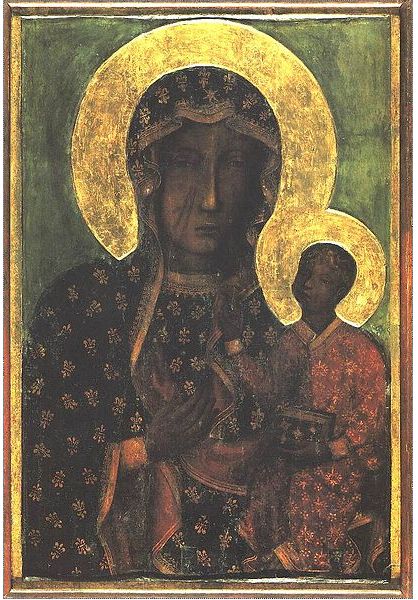
| THE BLACK MADONNA OF POLAND OUR LADY OF CZESTOCHOWA AND JASNA GORA |
| Bryan J Walsh
|
|
The Black Madonna is a painting of the Madonna and Christ Child which legend states was painted by St. Luke the Evangelist. St. Luke is believed to have used a tabletop from a table built by the carpenter Jesus. It was while Luke was painting Mary that she told him about the events in the life of Jesus that he eventually used in his gospel. This same legend states that that when St. Helen went to Jerusalem to search for the true cross in 326 AD, she happened upon this portrait of Our Lady. She gave it to her son, Constantine, who had a shrine built to house it. In a critical battle with the Saracens, the portrait was displayed from the walls of Constantinople and the Saracens were subsequently routed. The portrait was credited with saving the city. The painting was eventually owned by Charlemagne who subsequently presented the painting to Prince Leo of Ruthenia (northwest Hungary). It remained at the royal palace in Ruthenia until an invasion occurred in the eleventh century. The king prayed to Our Lady to aid his small army and as a result of this prayer a darkness overcame the enemy troops who, in their confusion, began attacking one another. Ruthenia was saved as a result of this intervention by Our Lady. In the fourteenth century, it was transferred to the Mount of Light (Jasna Gora) in Poland in response to a request made in a dream of Prince Ladislaus of Opola. The legendary history becomes better documented with the painting’s ownership by Prince Ladislaus. In 1382 invading Tartars attacked the Prince’s fortress at Belz. In this attack one of the Tartar arrows hit the painting and lodged in the throat of the Madonna. The Prince, fearing that he and the famous painting might fall to the Tartars, fled in the night finally stopping in the town of Czestochowa, where the painting was installed in a small church. The Prince subsequently had a Pauline monastery and church built to ensure the painting’s safety. In 1430, the Hussites overran the monastery and attempted to take the portrait. One of the looters twice struck the painting with his sword but before he could strike another blow he fell to the floor writhing in agony and died. Both the sword cuts and the arrow wound are still visible in the painting. Later, in 1655, Poland was almost entirely overrun by the forces of Sweden’s King Charles X. Only the area around the monastery remained unconquered. Somehow, the monks of the monastery successfully defended the portrait against a forty day siege and eventually all of Poland was able to drive out the invaders. After this remarkable turn of events, the Lady of Czestochowa became the symbol of Polish national unity and was crowned Queen of Poland. The King of Poland placed the country under the protection of the Blessed Mother. A more recent legend surrounding the painting involves the Russian invasion of Poland in 1920. Legend holds that the Russian army was massing on the banks of the Vistula river, threatening Warsaw, when an image of the Virgin was seen in the clouds over the city. The troops withdrew on seeing the image. There have been reports for centuries of miraculous events such as spontaneous healings occurring to those who made a pilgrimage to the portrait. It gets its name “Black Madonna” from the soot residue that discolors the painting. The soot is the result of centuries of votive lights and candles burning in front of the painting. With the fall of communism in Poland, pilgrimages to the Black Madonna have increased dramatically. |
V11 – 5.3.16 Universal prayer. How Jesus prayed in the Divine Will.
V11 – 5.3.16 Universal prayer.
How Jesus prayed in the Divine Will.
While I was praying, my adorable Jesus placed Himself close to me, and I could hear that He too was praying. So I began to listen to Him. Jesus told me: “My daughter, pray, but pray as I pray. Pour yourself entirely into My Will, and you shall find God and all the creatures in It. You shall give them to God as if they were one single creature, because the Divine Volition is the Owner of all; then you shall place at the feet of the Divinity the good acts in order to give honor to It, and the bad ones in order to repair for them through the Sanctity, Power and Immensity of the Divine Will, from which nothing can escape.
This was the life of My Holy Humanity upon earth. As Holy as It was, I still needed this Divine Volition in order to give complete satisfaction to the Father, and to redeem the human generations. In fact, only in this Divine Volition could I find all generations, past, present and future, and all their thoughts, words, acts, etc., as though in act. In this Holy Will, I took
all the thoughts into My Mind – nothing could escape Me – and for each one of them in particular I placed Myself before the Supreme Majesty and I repaired them. In this same Will, I descended into the mind of each creature, giving them the good which I had pleaded for their intelligences. In My glances I took the eyes of all creatures; their words in My voice; their movements in My movements; their works in My hands; their steps in My feet; their affections and desires in My Heart; and making them My own, in the Divine Will My Holy Humanity satisfied the Father, and I saved the poor creatures. And the Divine Father remained satisfied. He could not reject Me, He Himself being the Holy Will. Would He perhaps reject Himself? Certainly not. More so, since in these Acts He found Perfect Sanctity, Unreachable and Enrapturing Beauty, Highest Love, Immense and Eternal Acts, Invincible Power… This was the whole Life of My Holy Humanity upon earth, which continues in Heaven and in the Most Blessed Sacrament.
Now, why can’t you also do this? For the one who Loves Me, United with Me, Everything is possible. In My Will, pray and bring before the Divine Majesty the thoughts of all within your thoughts; the glances of all in your eyes; in your words, movements, affections and desires, those of your brothers, in order to repair them and plead Light, Grace and Love for them. In My Will you shall find yourself in Me and in all, you shall Live my Life, and shall pray with Me. The Divine Father shall be happy, and the whole of Heaven shall say: ‘Who is calling us from earth? Who is the one who wants to compress this Holy Will within herself, enclosing all of us together?’ And how much good the earth can obtain, making Heaven descend upon earth!”
Fiat!
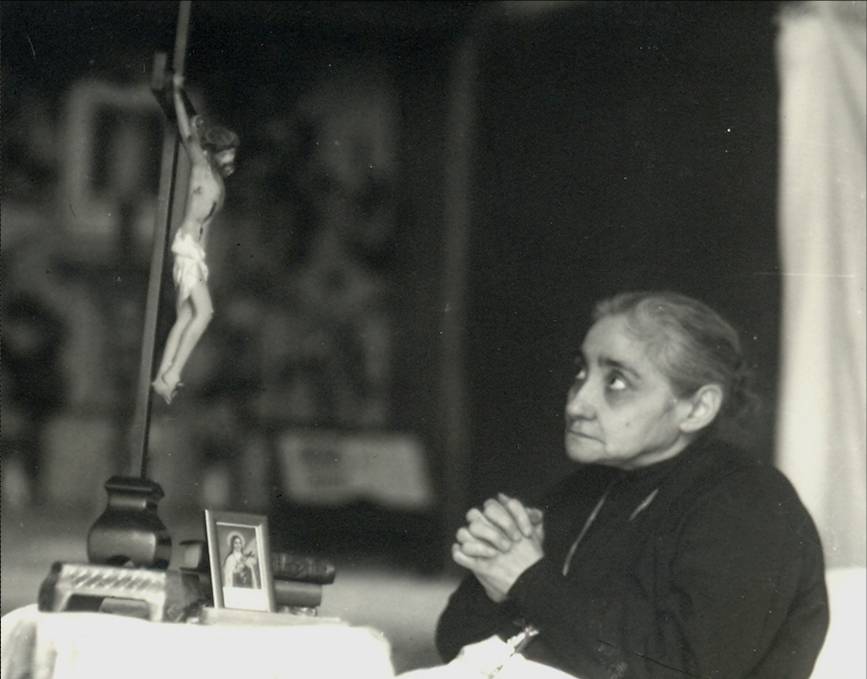
Jesus and the rich young man…
If you wish to have Divine Will as Life…
give away your human will
and read, study and put into practice
The Book of Heaven!
Message from The Luisa Piccarreta Association in Corato, Italy
Message from Michele Colonna, President of The Luisa Piccarreta Association in Corato, Italy:
Vi abbraccio tutte nella Divina Volontà….FIAT (Original)
I hug you all in the divine will…. Fiat (Translation)
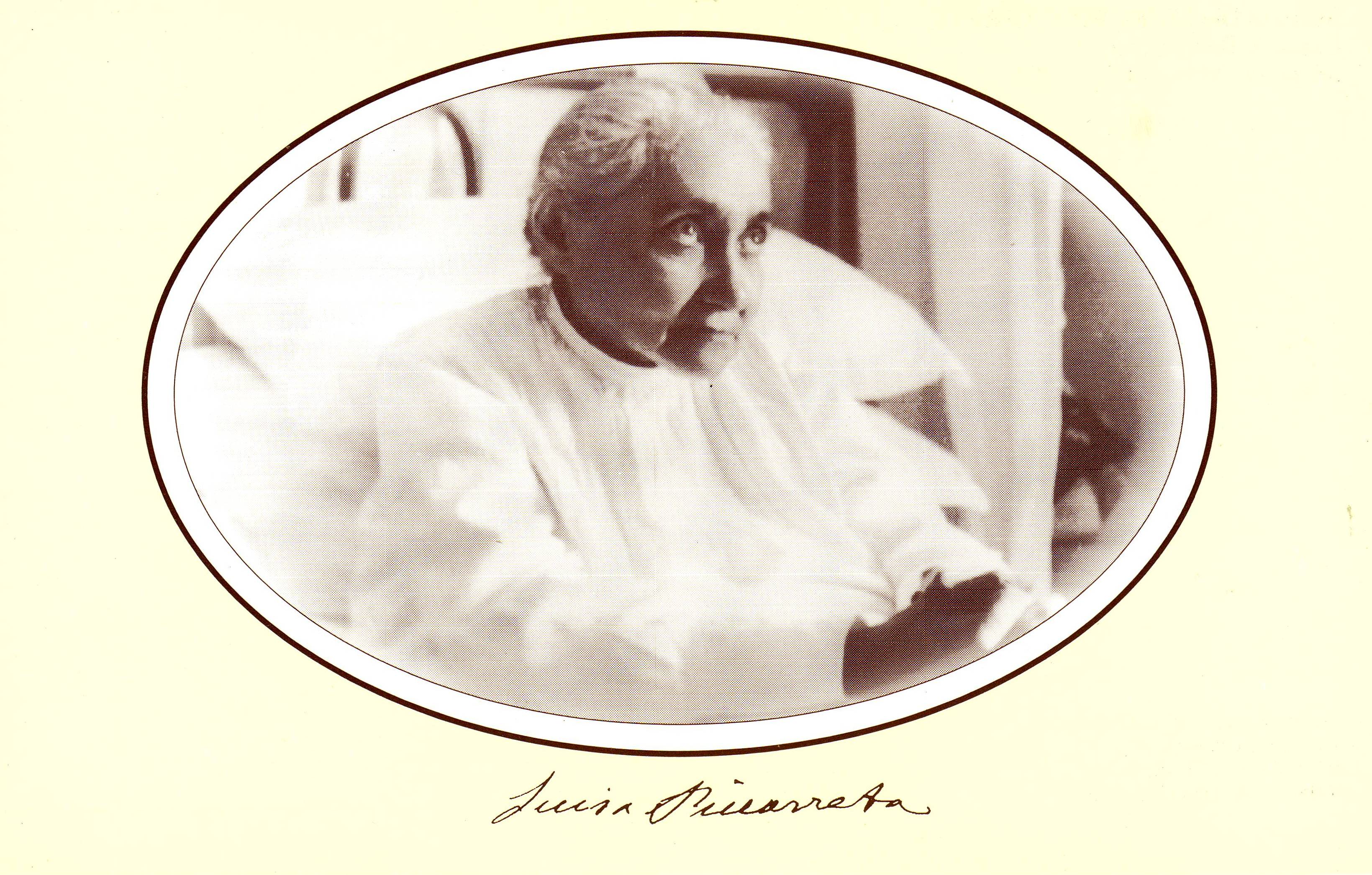
Michele Colonna, the president of the Pious Association Luisa Piccarreta LCDW in Corato, Italy has given the good news that the Vatican has just given permission to move the body of Luisa from the side of Santa Maria Greca Church where she has been since July 3,1963 to the front of the Church at the side Altar of the Holy Spirit.
This is a great sign that the Vatican recognizes her heroic sanctity.
Keep on praying for her Beatification
XX Sunday of Ordinary Time: Not a series of rules but a person
(Click here for website)
Dear brothers and sisters, Fiat!
Last Sunday we listened to the recommendations of the Apostle Paul (Eph 5), with which he traces the portrait of the ideal Christian. Those recommendations continue today with an invitation to make good use of our time. In fact, the one who wastes time in idleness, vice, or banality, can hardly be called a good Christian, because he wastes opportunities to do good.
The passage from today’s Gospel concludes (Jn 6:51-58) the discourse of Jesus in the synagogue of Capernaum, concerning the Eucharist that He would institute some time later, during the Last Supper. Jesus continues the discourse on communion in an extremely realistic way, at the limit of sharpness, and with an impressive insistence: “The bread that I will give is my flesh…; Unless you eat the flesh of the Son of Man and drink his blood…; For my flesh is true food, and my blood is true drink…; Whoever eats my flesh and drinks my blood… remains in me.”
We understand how these words may have confused (we will hear this next Sunday) Jesus’ disciples, who did not yet know how He would give Himself to eat. However those words are fundamental; It is not by chance that the evangelist begins the account of the life of Jesus with an affirmation (Jn 1:14) that can be seen as title: “The Word became flesh”. Moreover, in the prologue, the evangelist announces also why the Word, the Son of God, became flesh, that is a man: ” To all who did receive him, to those who believed in his name, he gave the right to become children of God “. With these words the evangelist summarizes another aspect of the speech of Capernaum, concerning the consequences of “eating the flesh of Jesus”. We understand it trough the following sentences: “The bread that I will give is my flesh for the life of the world “. unless you eat the flesh of the Son of Man and drink his blood, you do not have life within you. Whoever eats my flesh and drinks my blood has eternal life, Whoever eats my flesh and drinks my blood remains in me and I in him. the one who feeds on me will have life because of me.”
Those words also lead us to reflect on a more general but fundamental theme: what is faith? What is religion? and in particular the Christian religion? How does it differentiate itself from the others? According to some people, one religion is as good as another: it is in any case the relationship between man and what he considers as transcendent entities, however he wants to call them. But a minimum of study suffices to show how this opinion is unfounded; all scholars recognize at least the basic difference between the positive religions (the monotheism of Jews, Christians and Muslims), which profess to rely on a divine revelation, and natural religions, usually polytheistic, originated from simple human reflection.
Without dwelling on such a complex subject, the Christian faith is distinguished by the Incarnation: God has not only revealed Himself to men, but He Himself became man in the person of Jesus, the Word became flesh. Consequently, the Christian is not a man who recognizes as divine a series of utterances and tries to translate them into his own life; being a Christian does not mean embracing a philosophy, nor sharing a series of worship practices with other people. The peculiarity of the Christian is something that is not found in any other religion: his faith allows him to meet “a Person”, it makes him adhere to that Person who is unique, who is man and at the same time God, a Person with whom he can weave a relationship of love, of trust, which leads to welcoming all that belongs to him: His words, His style of life, His promises. Moreover, that relationship is nourished by finding its visible manifestation, in participating in the Eucharist, in which those who love feed on the Beloved and become one with Him.
On June 18, 1923 Luisa reported in her diary an important teaching of Jesus on the Eucharist, in particular on why Jesus wanted to institute the Sacrament of the Eucharist.
The prodigy was great and incomprehensible to human mind. For the creature to receive a Man and God, to enclose the infinite in a finite being, and to give to this infinite Being divine honors, decorum and a dwelling worthy of Him – this mystery was so abstruse and incomprehensible, that the Apostles themselves, while they easily believed in the Incarnation and in many other mysteries, remained troubled before this one, and their intellects were reluctant to believe. And it took Jesus’ repeated saying for them to surrender.
So, what to do? Jesus, who instituted It, was to take care of everything, since, when the creature would receive Him, the Divinity was not to lack the honors, the divine decorum, the dwelling worthy of God. Therefore, as Jesus instituted the Most Holy Sacrament, His Eternal Will, united to His human will, made present to Him all the hosts which were to undergo the sacramental consecration until the end of centuries. And Jesus looked at them, one by one; He consumed them, and He saw His Sacramental Life palpitating in each host, yearning to give Itself to creatures.
Jesus’ Humanity, in the name of the whole human family, took on the commitment for all, and gave a dwelling within Itself to each host; and His Divinity, which was inseparable from Him, surrounded each sacramental host with divine honors, praises and blessings, to give worthy decorum to His Majesty. So, each sacramental host was deposited in Him, and contains the dwelling of His Humanity and the cortege of the honors of His Divinity; otherwise, how could He descend into the creature? And it was only because of this that He tolerated sacrileges, coldness, irreverences, ingratitudes, since, in receiving Himself, He secured His own decorum, the honors and the dwelling which befitted His very Person. Had He not received Himself, He could not have descended into creatures, and they would have lacked the way, the door, the means to receive Him.
This is Jesus’ usual way in all His works: He does them once in order to give life to all the other times in which they are repeated, uniting them to the first act as if they were one single act. So, the power, the immensity, the all-seeingness of the Divine Will made Him embrace all centuries; It made present to Him the communicants and all the sacramental hosts; and He received Himself as many times, to make His very Self pass, through Himself, into each creature.
The same was for the act of the Incarnation of His Life and of His Passion. Jesus incarnated Himself only once, one was His Life, one His Passion; yet, this Incarnation, Life and Passion is for all and for each one, as if it were for one alone. So, they are still as though in act, and for each one, as if He were now incarnating Himself and now suffering His Passion. If it were not so, Jesus would not be operating as God, but as creature, who, not containing a divine power, cannot let herself be possessed by all, nor give herself to all.
Moreover…one who does the Divine Will and lives in It, comes to embrace the works of His Humanity, because He loved so much for the creature to become similar to Him. And since the Divine Will and hers are one, God’s Will takes pleasure in her, and, amusing Itself, It places all the good He contains into the creature, and He forms in her the deposit of the very sacramental hosts.
The Divine Will, which she contains, lends her and surrounds her with divine decorum, homages and honors; and Jesus entrusts everything to her, because he is certain to keep His operating in a safe place, as the Divine Will makes Itself actor, spectator and custodian of all His goods, of His works, and of His very Life.
don Marco