[gview file=”http://luisapiccarreta.co/wp-content/uploads/2015/07/Newsletter-No.-159.pdf”]
The Holy Octave of Consecration to God Our Father
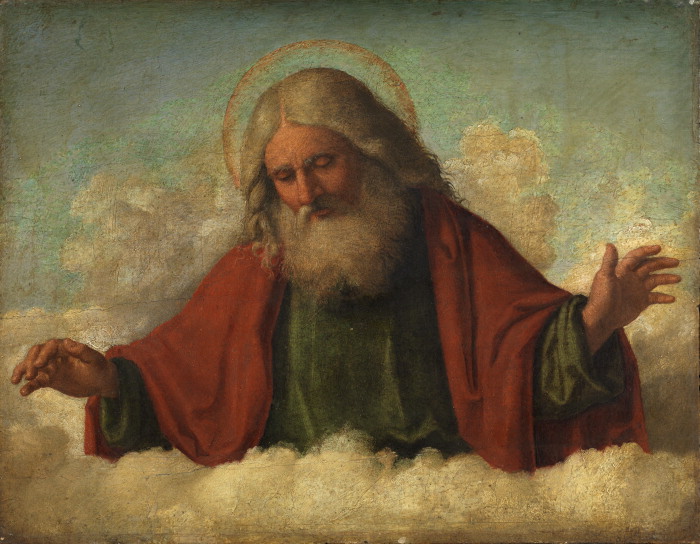
This year it is from July 25 to August 2
To God Our Father we pray that through The Holy Octave of Consecration and it’s solemn eighth day, The Feast of the Father of All Mankind, He may be known, loved, served and honored by all His children.
Dearest God Our Father, we love You; we adore You; we worship You!
The Holy Octave of Consecration to God Our Father
to start on Saturday, July 25
For the full text click here
Eucharistic Miracles of the World
Click here for the Miracles by Language
The brainchild of young Servant of God Carlo Acutis, an exhibition on Eucharistic miracles, has collected over 130 prodigious facts testifying to the real presence of Jesus in the Eucharist
By Federico Cenci
Rome, July 20, 2015 (ZENIT.org)
There is a red woven thread of wonder that runs through the history of the Church. An extraordinary event that transcends the laws of nature to show us the heart, the summit, and the core of God’s great plan. This crucial fact, the death and resurrection of Jesus, determines our faith.
From the Andes to the Indian Ocean, through all of Europe and the Middle East, Eucharistic miracles are an invisible bond linking people to the mystery and beauty of God’s presence.
Cataloguing all the miraculous events, throughout history, where the consecrated Host turned into flesh, and the wine into the blood, or when the Sacred Species was saved from desecration, theft, fire is a difficult task. The exhibition on Eucharistic miracles, thanks to a large collection of photographs and abundant historical descriptions, is unique.
About 136 Eucharistic miracles that occurred over the centuries in different countries around the world, and have been acknowledged by the Church, have been collected by this museum that runs through the panels which “virtually” lead us in the places where the events occurred. Already hosted in all five continents, thousands of parishes, 100 universities in the United States and in major Marian shrines throughout the world, the exhibition is the brainchild of the young Carlo Acutis.
Born in London on 3 May 1991 (where his parents used to work) and died in 2006, aged 15, due to a fulminant leukaemia, Carlo focused his short life on developing a friendship with Jesus. Friendship that granted him the strength to face death with amazing courage: minimizing the pain which doctors described as atrocious and deciding to offer them for the good of the Church and Pope Benedict XVI.
A multitude of moved people took part in his funeral. Whoever knew him acknowledged that they met a special teenager. Self-confident, lively, passionate about sport and a computing expert, Carlo had an ability to make himself close to those who suffer, friends or acquaintances. In each he saw the face of the One who is the centre of his affection.
At just 11 years-old he decided to talk about his special bond with the Eucharist. “The more Eucharist we receive, the more we will become like Jesus, so that on this earth we will have a foretaste of Heaven” he wrote. He asked his parents to take him in all the places where the Eucharistic miracles took place. Hence the idea of the creation of this exhibition assumed a primary historical value.
Its organization took about two and a half years. A long, but worthwhile work. As you can read on the website, “The spiritual effects brought about by the exhibition could not have been predicted before its opening.” The initiative’s goodness is underlined by the authoritative foreword of Cardinal Angelo Comastri, Archpriest of the Vatican Basilica, and another from Monsignor Raffaello Martinelli who was, at the time, the Head of the Catechetical Office of the Congregation for the Doctrine of the Faith.
Some recent Eucharistic miracles were added after Carlo’s death. Among these, there is one which happened in Tixtla, Mexico, October 21, 2006, just nine days after the death of the exhibition’s young creator. During a spiritual retreat in the San Martin de Tours parish, during the Communion, the eyes of a priest suddenly grew moist with tears. The celebrant approached him and realized that the Host that this priest had taken to give Communion to a parishioner had begun to pour out a reddish substance.
This caused a sensation and emotion among all the faithful and outside the parish. Scientific research was conducted which ended in October 2012 with the following conclusion: the reddish substance corresponds to AB blood type, similar to that found in the Host of Lanciano and the Shroud of Turin, The blood comes from within, so we must exclude the possibility that someone might have placed it from the outside. The tissue found corresponded to the heart muscle.
In the light of these findings, in 2013 Monsignor Alejo Zavala Castro, Bishop of Chilpancingo, announced in a pastoral letter that “this event brings us a wonderful sign of God’s love, which confirms the real presence of Jesus in the Eucharist.” He said that the case was a “divine sign”.
It was a sign perhaps that this letter was published on October 12, 2013, day of the seventh anniversary of Carlo Acutis’s death — the young man who called the Eucharist “my highway to heaven.” This exhibition is a testament to his friendship with Jesus that Carlo has bequeathed to us all and for which his beatification cause has started.
Click here for the Virtual Museum Page
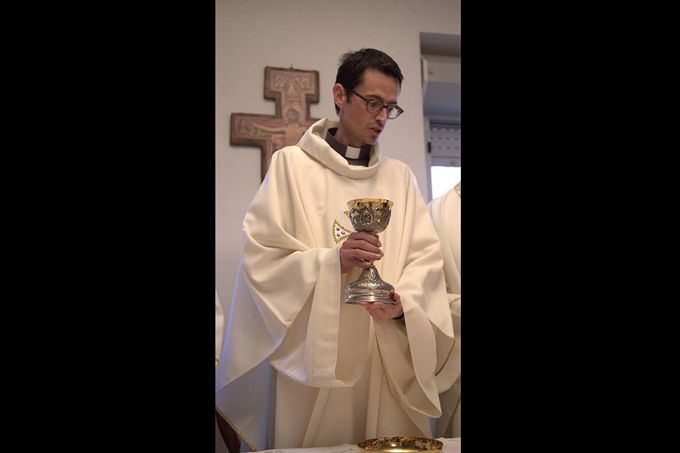
Fr. Salvatore Mellone says Mass
on the day of his priestly ordination April 16, 2015
Photo courtesy of the Archdiocese of Trani-Barletta-Bisceglie
.- The life of Father Salvatore Mellone, who died on Monday, was moving to thousands of people. He was to have at least two more years of seminary when he was diagnosed with terminal cancer, but by special permission and the blessing of Pope Francis, he was ordained nevertheless.
Click here for more information.
Fr. Bucci’s 6/27/15 Ohio Conference
51st Internatinal Eucharistic Congress
Click here for link
CARDINAL: “WHAT SISTER LUCIA TOLD ME: FINAL CONFRONTATION BETWEEN THE LORD AND SATAN WILL BE OVER FAMILY AND MARRIAGE.”
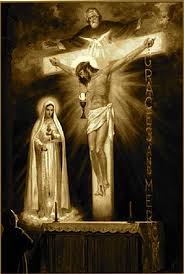
A Cardinal tells: Sister Lucia wrote me…
On Feburary 16, 2008, Cardinal Carlo Caffara (Archbishop of Bologna), after a Mass celebrated at the tomb of St. Pio of Pietrelcina, granted an interview to Tele Radio Padre Pio, which was subsequently reported in the monthly magazine “Voce di Padre Pio” March, 2008 . Here are some significant excerpts.
Q. Your Eminence, recently in Corriere della Sera you said that you had always had a great devotion to Padre Pio. Please tell us why.
I have had great devotion to him since the beginning of my priesthood as a result of a rather unique experience. I had been a priest for some months and a brother-priest came to see me. He was quite a bit older than me and was going through a serious crisis of faith. It is difficult to describe what a crisis of faith is for a priest: a terrible thing! I told him “Brother, I’m too little, and sense that I can’t carry such a burden. Go to Padre Pio.” So he went, and while he was talking to Padre he had a great mystical experience, touched profoundly by the mercy of God. Now he is one of the best priests I know. There you have it, it all began like that.No, I didn’t. I never had the courage to go to him, thinking that I would be wasting his time! […] I retain that Padre Pio belongs to the series of great mystics who have this characteristic: the most profound sharing in the Cross of Christ, as they carry upon themselves the great tragedy of mankind today – atheism. Padre Pio, St. Gemma Galgani, St. Teresa Benedicta of the Cross , Mother Theresa, the Curé d’Ars all had the experience of sitting round the table with sinners, living their experiences, of carrying, in a different way, the weight of the Agony in Gethsemane; they testified to the love of Christ Who takes upon Himself, the pain of the man who has left his Father’s house and doesn’t want to go back, even if he knows in his heart that he is better off in his Father’s house rather than tending to pigs. Man today continues to imagine that he can live as if God didn’t exist; and we see the devastation this has caused.Q. There is a prophecy by Sister Lucia dos Santos, of Fatima, which concerns “the final battle between the Lord and the kingdom of Satan”. The battlefield is the family. Life and the family. We know that you were given charge by John Paul II to plan and establish the Pontifical Institute for the Studies on Marriage and the Family.Yes, I was. At the start of this work entrusted to me by the Servant of God John Paul II, I wrote to Sister Lucia of Fatima through her Bishop as I couldn’t do so directly. Unexplainably however, since I didn’t expect an answer, seeing that I had only asked for prayers, I received a very long letter with her signature – now in the Institute’s archives. In it we find written: the final battle between the Lord and the reign of Satan will be about marriage and the family. Don’t be afraid, she added, because anyone who works for the sanctity of marriage and the family will always be fought and opposed in every way, because this is the decisive issue. And then she concluded: however, Our Lady has already crushed its head.Talking also to John Paul II, you felt too that this was the crux, as it touches the very pillar of creation, the truth of the relationship between man and woman among the generations. If the founding pillar is touched the entire building collapses and we see this now, because we are at this point and we know it. And I’m moved when I read the best biographies of Padre Pio , on how this man was so attentive to the sanctity of marriage and the sanctity of the spouses, even with justifiable rigor on occasion.