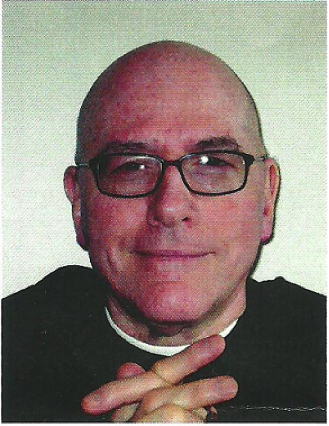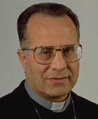
Archbishop Giovanni Battista Pichierri
Prot. 29/06GBP
Dearest brothers,
…The life of the Servant of God Luisa Piccarreta is extraordinary, especially in the way of how she lived the spirituality of the Divine Will, of which she is an exemplary model. But not only her life gives proof of it, also her writings do. It is necessary, therefore, to understand them and to present them in the context of her life. We must therefore know how to present her spirituality taking into consideration the deeply human Christian and Ecclesiastical roots that sustain and accompany all her spiritual experience.
Mons. Giovanni Battista Pichierri
ARCHBISHOP
of TRANI – BARLETTA – BISCEGLIE
TITOLARE of NAZARETH
==============================================================
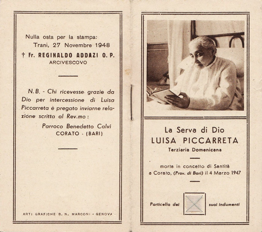
O merciful Heart of my Jesus, who for the salvation and sanctification of many souls have deigned to keep for numerous years on earth Your humble servant LUISA PICCARRETA Your Little Daughter of the Divine Will, grant my prayer: that she be glorified soon by Your Holy Church. And through her intercession may You grant me the grace that I humble ask of You …..
Our Father, Hail Mary, Glory be.
Trani, November 28, 1948
† Fr. REGINALDO ADDAZI O. P.
ARCHBISHOP
==============================================================
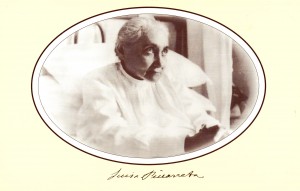
Prayer to Obtain the Beatification of the Servant of God, LUISA PICCARRETA
O Most Holy Trinity, Our Lord Jesus Christ taught us that as we pray, we should ask that our Father’s Name be always glorified, that His Will be done on earth, and that His Kingdom should come to reign among us.
In our great desire to make known this Kingdom of love, justice, and peace, we humbly ask that You glorify Your Servant, LUISA PICCARRETA, the little daughter of the Divine Will, who, with her constant prayer and suffering, deeply yearned for the salvation of souls and the coming of God’s Kingdom in the world.
Following her example, we pray to You, Father, Son, and Holy Spirit, to help us joyously embrace the crosses of this world, so that we may also glorify Your Name and enter into the Kingdom of Your Will. Amen.
Our Father, Hail Mary, Glory be.
Curia of the Archdiocese
+Carmelo Cassati
Archbishop Emeritus
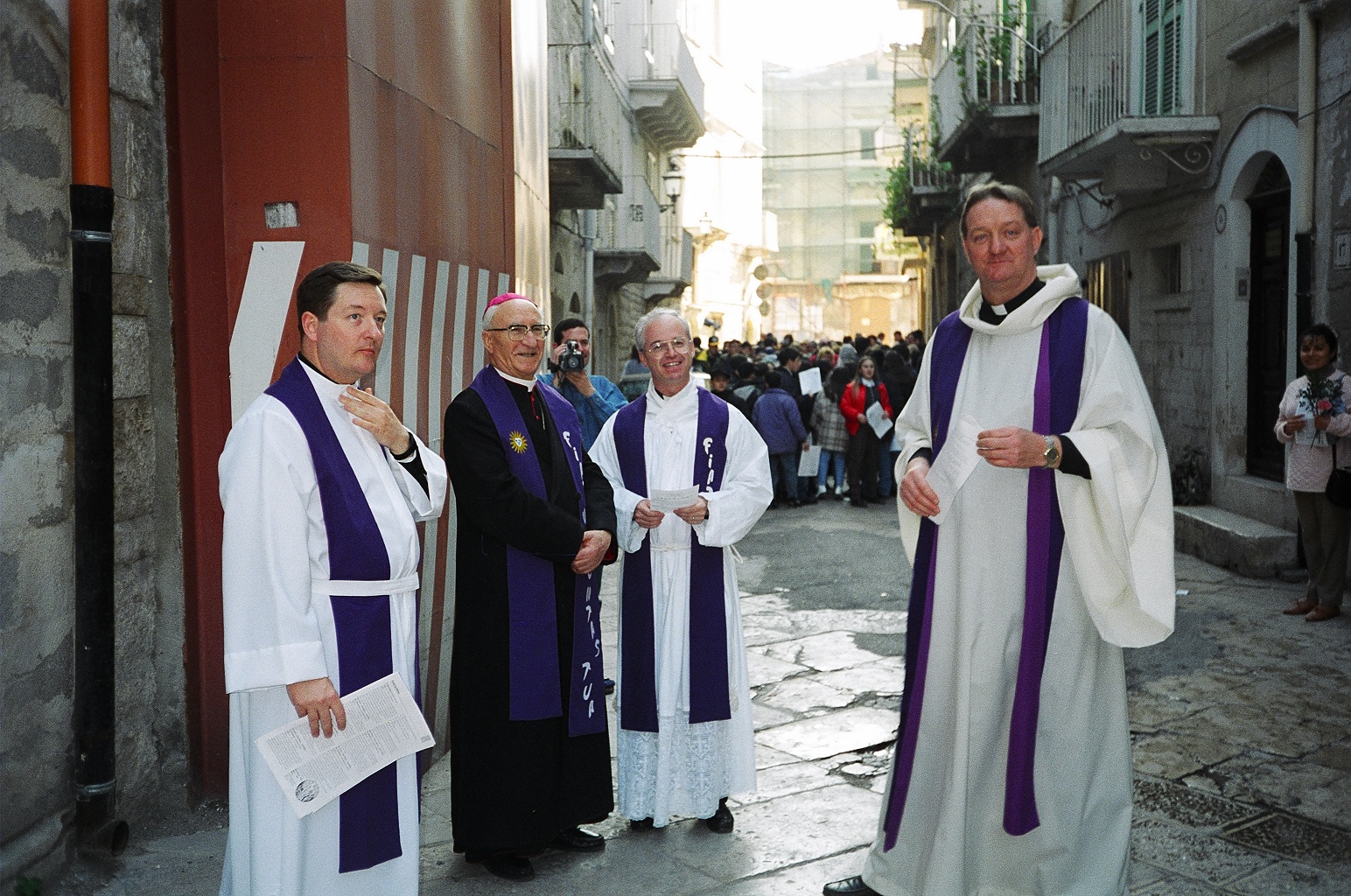
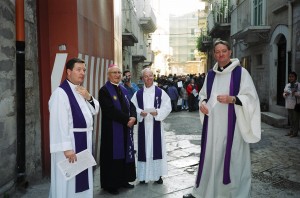 Archbishop Emeritis Carmelo Cassati, second from left, Corato 1997
==============================================================
Prayer to the Most Holy Trinity
For the glorification of the Servant of God, LUISA PICCARRETA
Oh Most Holy Trinity, Father, Son, and Holy Spirit we praise and thank You for the gift of holiness You granted to Your faithful servant LUISA PICCARRETA.
She lived, dear Father, in Your Divine Will and became, under the influence of the Holy Spirit, similar to Your Son, who died on the cross due to His obedience.
She was a victim and a host welcome to You, thus contributing to the Redemption of mankind.
Her virtues of obedience, humility, love of Christ and to the Church urge us to ask You for the gift of her glorification on earth, so that Your glory may shine, and Your kingdom of truth, justice and love may spread all over the world in the particular charisma of:
“Fiat voluntas tua sicut in coelo et in terra.”
We appeal to her merits to obtain from You, Holy Trinity, the particular grace for which we pray to You in Your Divine Will. Amen.
Three Glory be’s …
Our Father …
Our Lady, Queen of Saints, pray for us.
Trani, Italy October 29th 2005
+Archbishop Giovan Battista Pichierri
==============================================================
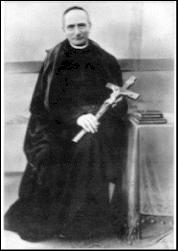 St. Annibale di Francia
Excerpt from Letter 2 of Saint Di Francia to the Servant of God Luisa Piccarreta:
Messina, June 20, 1924
These are writings that must now be made known to the world. I believe they will produce great good. For as sublime as this science of the Divine Will is, so do these writings of divine dictation present it, clearly and limpidly. In my opinion, no human intellect would have been able to form them.
==============================================================
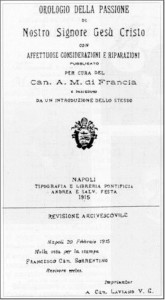
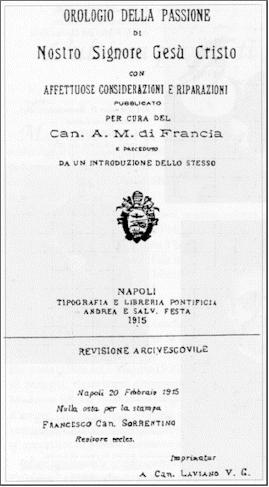
Imprimatur of St. Annibale di Francia
on the 1915 First Edition of the Hours of the Passion
Around early 1930, Maria de Regibus from Turin asked Don Calvi to send copies of the Treatise on the Divine Will and The Hours of the Passion of Our Lord Jesus Christ to well-known German Benedictine scholar, Fr. Ludwig Beda.
Fr. Beda a well known publisher of numerous books in several languages. A couple of months after reading the Treatise on the Divine Will, Fr. Beda wrote to Don Calvi asking permission to translate it into German. He called the Treatise greatest that has ever been written on this theme of the Divine Will.

Fr. Ludwig Beda O.S.B.
Fr. Beda devoted himself primarily to the teachings on the Divine Will. It is reported he told Maria de Regibus:
“To be linked with such a soul as this [Luisa] is more precious to me than possessing half the world, because she communicates to me what is divine, with such abundance.. . . I have set aside my great work on stigmatics and humanly speaking I don’t think it will be published anymore . . . even though the editor wants to publish my work, I have not been able to persuade myself to set aside the Kingdom of the Divine Will . . . It seems to me that God wanted to put me to the test, to see what I would prefer. But the Kingdom of the Divine Will is over everything else. I remain faithful to the work to which I have consecrated myself with a vow.”
Fr. Beda wrote Luisa:
“The Kingdom of the Divine Will keeps me busy day and night. It is the most important thing in my life, and I would like this Divine Will to be my own life . . . The deeper we penetrate into this Treatise, the more we discover the divine, which absorbs us and penetrates us so gently and sweetly that to follow it and live it is everything.”
==============================================================
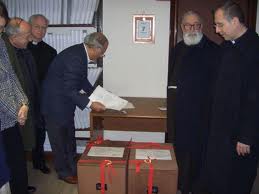
Opening of the Luisa’s Cause in Rome March 7, 2006
On June 4, 2005 a letter was sent from the Archdiocese of Trani-Barletta-Bisceglie–Nazareth by His Grace, Mons. Savino Giannotti stating that:
“The “Divine Will” has guided the Archdiocese, in this last decade, which completed of the works regarding the process of the Cause of Beatification of the Servant of God Luisa Piccarreta. The Diocesan Postulation announces having completed this journey”. On March 7th, three days after the 59th anniversary of Luisa’s passage to Heaven Luisa’s cause was officially opened in Rome. The official seals on the cases containing the documents from the Archdiocese of Trani were broken and the cases opened by the Congregation for the Causes of the Saints. In attendance were Padre Bernardino Bucci and the Vicar General of Trani Msgr. Savino Giannotti.
==============================================================
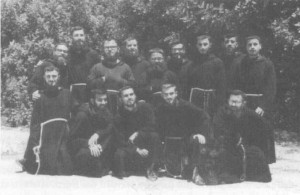
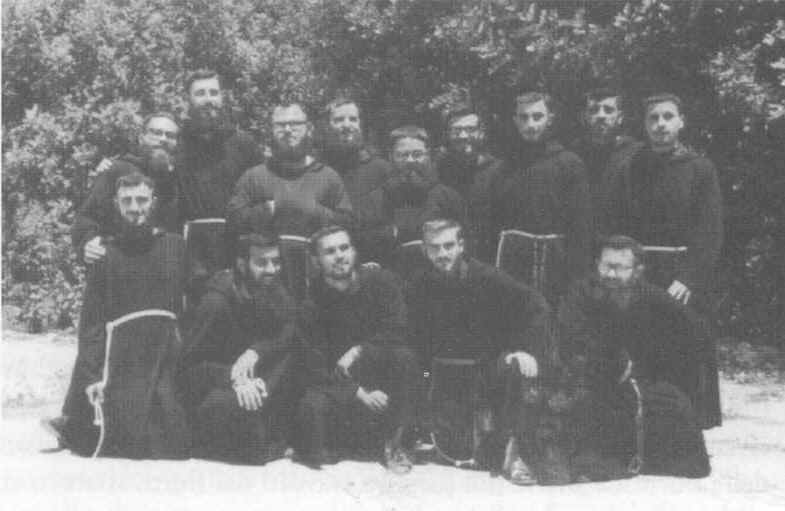
Fra Bernardino Giuseppe Bucci, a Capuchin student,
with the other students in a souvenir photograph
(standing, second from the left beside the director)
The Capuchin friar who had the most to say about this was Fr. Isaia from Triggiano, who was simple and humble, the figure of an authentic priest. This father had a deep veneration for Luisa Piccarreta and jealously preserved her writings and a few objects that had belonged to the Servant of God. Among these was a holy card with a picture on which a prayer had been written by Luisa in her own hand.
Fr. Isaia often used to say: “Luisa is a great saint and Fr. Annibale another great saint, because he enabled us to know her. Saints understand one another. It is God who brings them together”.
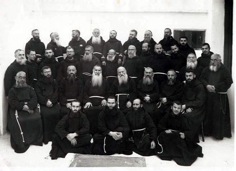
Most of the Capuchin friars pictured in the group
had direct contact with Luisa Piccarreta and Saint Annibale
==============================================================
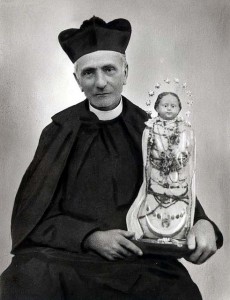
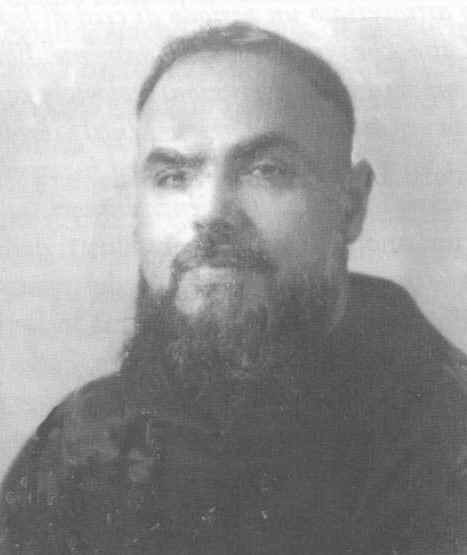
Saint Annibale di Francia
These are Fr. Isaia’s impressions of Fr. Annibale: “He was a priest who truly belonged to God, and at the sight of him, we students would gather round him with great sympathy. We all went to him for confession. He had an unusual appearance, as well as an unusual manner of speech and gestures, always moderate and with a reserve that did not command fear but filial trust. He constantly spoke to us of God’s Will and exhorted us to bear with hardships and contradictions. He told us that a soul who was consecrated entirely to God was suffering and praying for us all”.
“This soul”, Saint Annibale said to Fr. Isaia, “is a daughter of your region, and this is a sign that the Lord is blessing the people of Bari”. To comfort him in his doubts and sufferings, he gave him L’orologio della Passione, which he himself had had printed.Fra Isaia, a Capuchin student at the time, asked him where this holy soul lived and who she was, but Fr. Annibale answered: “just think about preparing yourself properly for the priesthood and always doing God’s Will, and in due course you will discover who this soul is”.
==============================================================
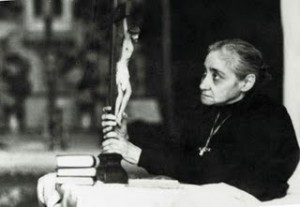
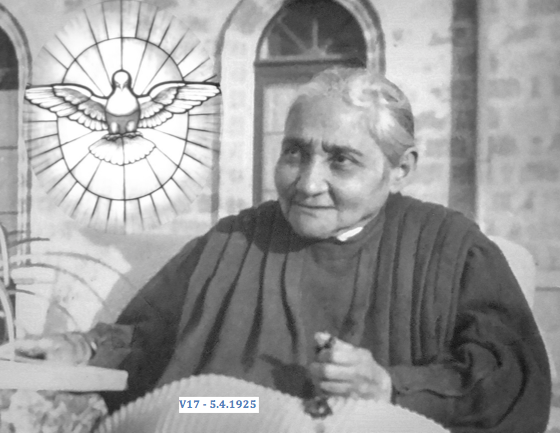
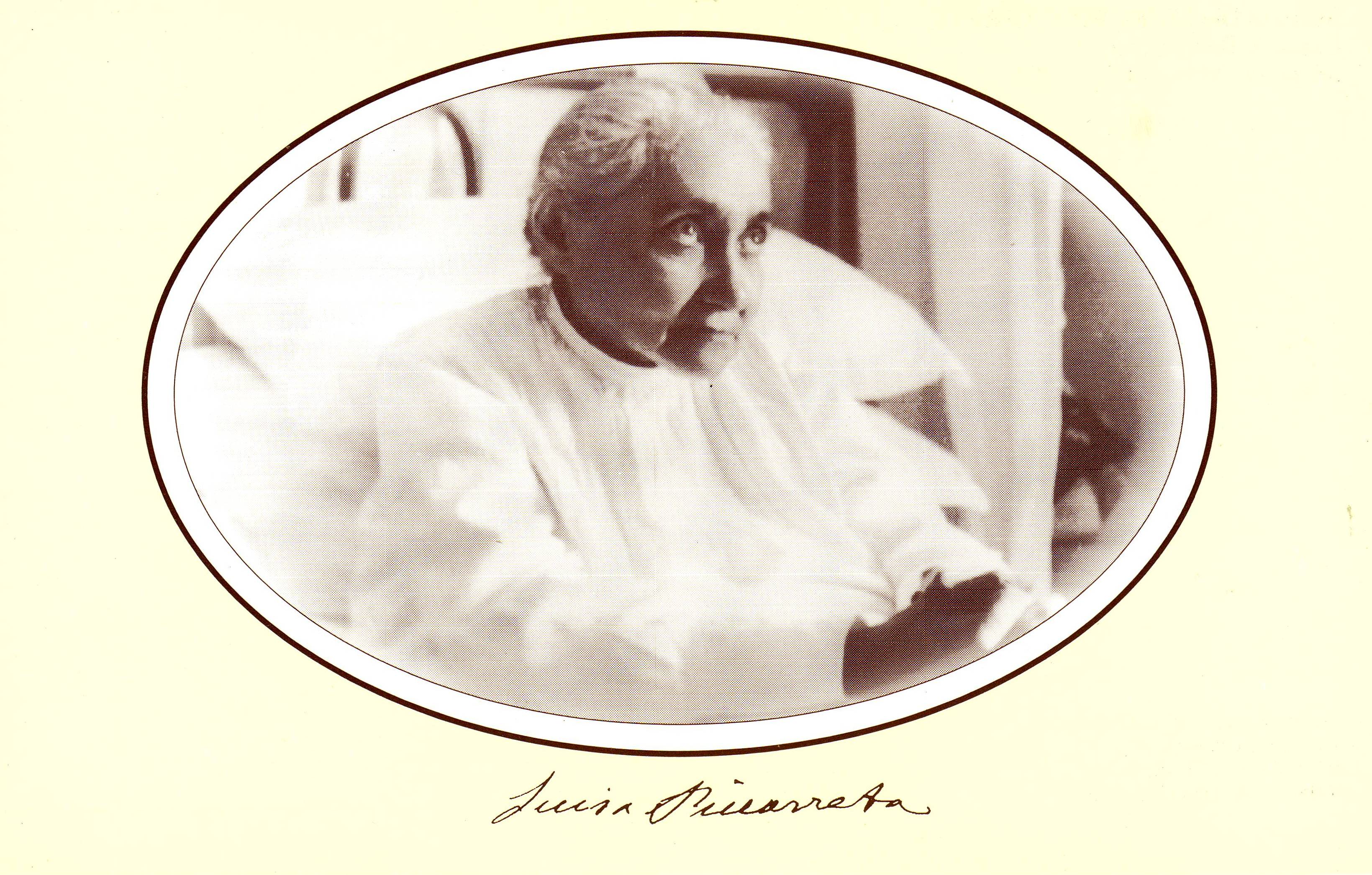
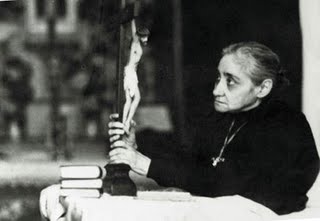
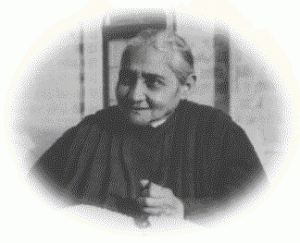
The Servant of God, Luisa Piccarreta
Many fathers were in contact with Fr. Annibale and through him became acquainted with Luisa. How is it possible to forget Fr. Daniel from Triggiano, a splendid figure of a Capuchin, a man who was a true little flower of St. Francis. Still today, his simplicity, his words and his acts live on throughout our Monastic Province.
Fr. Daniele spoke of Luisa Piccarreta as though she were a heavenly creature and when, as a young seminarian, I went to his room for confession, he always said this to me:
“Are you Bucci from Corato? Did you know Luisa? You should know that she is a great saint and you should never stop praying to her if you want to be a priest”.
Fr. Daniele was the historian of Triggiano and also published several devotional manuals, drawing heavily from Luisa Piccarreta’s books. The way he spoke of Luisa suggests that he was in direct contact with the Servant of God and with Saint Annibale.
==============================================================
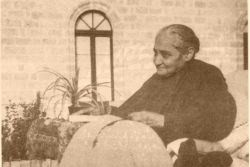
Servant of God, Luisa Piccarreta
Fr. Giovanni De Bellis, who was frequently invited to Corato to preach, went to Luisa’s house on these occasions. Fr. Giovanni, my confrere in the community of the Friary of Trinitapoli when I was superior and parish priest, often spoke to me of Luisa Piccarreta and Saint Annibale Maria di Francia, whom he had known personally. I had the good fortune to be present at Fr. Giovanni’s last moments. This father died while he was completely immersed in prayer, ‘his hands joined, the beads of the rosary between them. His last words were:
“May God’s Will be done”.
It was 1982.
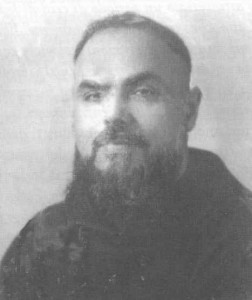
Fr. Terenzio from Campi Salentina
Fr. Terenzio from Campi Salentina also deeply venerated the Servant of God Luisa Piccarreta and would talk of her every time he met me. It was he who told me that the beatification cause of Fr. Annibale, Luisa’s confessor, had been initiated. When I was a young novice at the Friary of Alessandro, Fr. Terenzio was superior. One day he offered me this testimony: “There was a period when I was going through a crisis in my faith, and one day I went to Luisa, who listened to me kindly. She clarified all my doubts, and gave me such clear and profound theological explanations that they were a revelation to me. All the doubts that my theological studies had not clarified were dispelled by Luisa. There is no doubt that Luisa had the gift of infused knowledge”.
Fr. Guglielmo from Barletta, one of the most distinguished priests of the Province who had several times been Minster Provincial and was rector of our theology center for students, spoke one day, during a lesson on ascetics, of Saint Annibale and his works. He spoke at length of L’orologio della Passione and of the book Maria nel Regno della Divina Voluntà. Referring to Luisa Piccarreta, he said: “She is a great and marvelous soul. We are not even worthy to be her fingernail”. Fr. Giuglielmo did not tell me whether he had known Luisa personally.
==============================================================
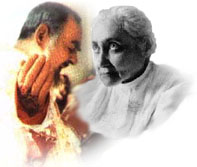
St. Pio and the Servant of God, Luisa Piccarreta
When Luisa was condemned by the Holy Office and her works put on the Index, Padre Pio sent her this message though Federico Abresch: “Dear Luisa, saints serve for the good of souls, but their suffering knows no bounds”. At that time Padre Pio was also in very great difficulties.
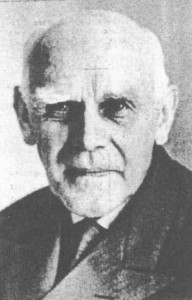
Federico Abresch
Blessed Padre Pio sent many people to Luisa Piccarreta and would say to the people of Corato who went to San Giovanni Rotondo: “What have you come here for? You have Luisa, go to her”.
Padre Pio recommended to certain of his faithful (including Federico Abresch) that they open a spirituality center at San Giovanni Rotondo, inspired by the Servant of God Luisa Piccarreta.
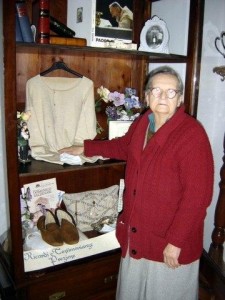
Miss Adriana Pallotti
Miss Adriana Pallotti (a spiritual daughter of Padre Pio) is currently an heir to Padre Pio’s wishes. She has opened a House of the Divine Will at San Giovanni Rotondo, keeping alive the torch lit by Padre Pio with Federico Abresch. Miss Adriana Pallotti says that it was Blessed Padre Pio who encouraged her to spread Luisa Piccarreta’s spirituality in San Giovanni Rotondo and to help disseminate the Divine Will throughout the world, as Padre Pio desired.
==============================================================
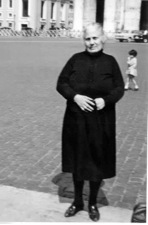
Aunt Rosaria in Rome
Aunt Rosaria went regularly to San Giovanni Rotondo, especially after Luisa’s death. Padre Pio knew her very well, and when Luisa was still alive he would ask Aunt Rosaria when he saw her: “Rosa’, how is Luisa?”.
Aunt Rosaria would answer him: “She is well!”.
Luisa and Padre Pio exchanged greetings and prayers, and each one referred visitors to the other. This is evidenced in the follow excerpts from the letters of Luisa Piccarreta to Federico Abresch a close friend of her and of Padre Bio.:
“With all my heart, I thank the Lord, and additionally for the visit you made to venerable Padre Pio.” “Thanks be to God, for that young man returned safe and sound. He went to see Padre Pio, went to confession, and cannot thank you enough for your goodness and hospitality. He brought me your dear letter. ““Thank you, my child, for remembering me when you went to Padre Pio. Tell him to pray for me for I have great need of it.” “Very dearest Son, why not tell the holy Padre Pio to pray in a very special way that the Divine Will be made known?” “ Tell the holy Padre Pio to pray to the Lord that the Kingdom of His Will come if we want peace; but I believe that our lord will put His limit with a general scourge throughout the world and perhaps with an epidemic for only in this way will the heads of governments surrender.”
“Tell Padre Pio to pray for me, because I need it and with all respect I kiss his right hand.” The dearest Jesus says: “The first one to sacrifice will be I because you want to do My Will.” For this reason it will not harm the many miracles worked by Padre Pio to add this one also. Beg Padre Pio to pray to the Lord and obtain this cure that can produce much good for souls. Kiss His hand and tell him to pray for me.” “With respect to Padre Pio, He is right because, the poor thing, he has had to endure great problems and therefore it is necessary to obey the Holy Church; but we do not say what is printed in the books, but rather that which the Holy Church does not know yet and what is printed in the book is but a few drops; the seas of the Divine Desire are not known yet.” “I leave you all in the sea of the Divine Desire. I kiss the hand of Padre Pio and tell him to pray for me.” “I leave you in the Divine Desire so that you become holy; Kiss the hand of Padre Pio on my behalf, greet him with the love of the Fiat; pray for me.” I leave you in the Divine Desire; pray for me, kiss the hand of Padre Pio for me and receive the greetings of the love of the Fiat.” “Kiss the hand of Padre Pio and I would like to know what he thinks of the writings.”
When Luisa was condemned by the Holy Office and her works put on the Index, Padre Pio sent her this message though Federico Abresch: “Dear Luisa, saints serve for the good of souls, but their suffering knows
==============================================================
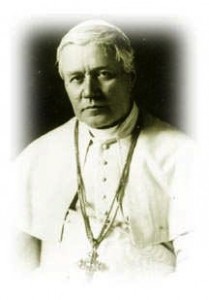
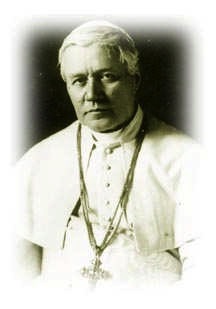
St. Pius X
During the reign of St. Pius X (1903-14) whose motto was “renew all things in Christ” it was an eleven year period where Luisa completed the very important book “The Hours of the Passion”, which was soon followed by WWI. In the year of 1903, Luisa completed the 1st volume of her life, up to the point on February 28, 1899, when she was given the obedience to write.
“Several witnesses relate that one day Father Anniable came to the house of Luisa more content than ever, and said that he had brought this book to the Holy Father, Saint Pious X, who had received him several times in private audience. Father Anniable was reading him one of the Hours (that of the Crucifixion), when the Pope interrupted, saying: “Not this way, Father, but kneeling one must read. It is Jesus Christ that is speaking.” Finally, Father Anniable, as Censor of the writings, obtained the Imprimatur from His Excellency the Archbishop of Trani for the volumes written by Luisa (at that time there were already nineteen).
==============================================================
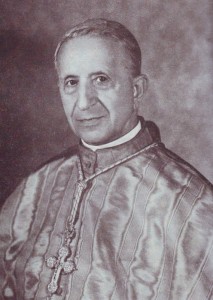
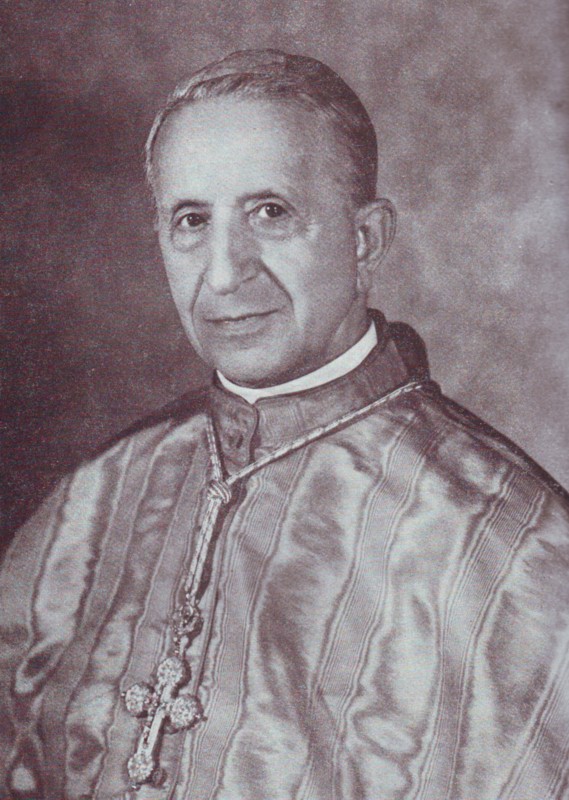
Cardinal Cento
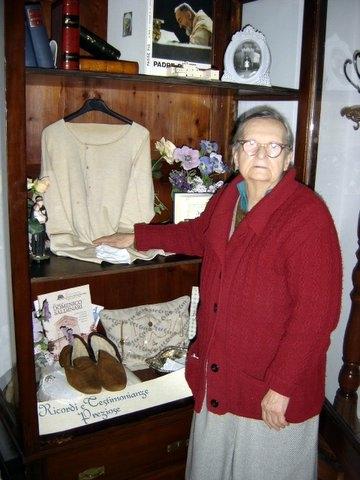
From the early days of his priesthood, Cardinal Cento had been a regular visitor to Luisa’s house. Aunt Rosaria often spoke to me of Cardinal Cento and although he had attained the high rank of cardinal, she always referred to him simply as Father or Fr. Cento.
At first I did not realize that she meant Cardinal Cento. Once, when I was at home, the postman handed me a letter covered in Vatican stamps, and bearing a cardinal’s coat of arms; only then did I understand who Fr. Cento was, whom I had heard my aunt mention so often. I asked her to explain why she called a cardinal by that name, but she answered: “I was very close to Fr. Cento, I treated him as if he were my brother. Every time he came to Corato, to Luisa’s house, it was I who accompanied him to various places, to see the archpriest or the Bishop in Trani, and I showed him the sights of Corato many times. He was a cheerful, jocular person, and when he celebrated Holy Mass he seemed an angel. I knew Fr. Cento from the days of my youth and on various occasions we had a meal together at Luisa’s house with Angelina. Cardinal Cento would spend a long time talking to Luisa, and he once said to me ‘Luisa always tells me that they will ‘dye me red’ (make me a Cardinal), but“, and he said this jokingly, “‘I shall try not to have myself rigged out in fancy dress!’. One day I saw Fr. Cento with a dark look on his face, and it was the only time that he did not joke and had very little to say. It was when Luisa was condemned. Despite the censure of the Holy Office, Fr. Cento did not interrupt his visits to Luisa and he answered my question as to what had led to this disaster with these dry words: ‘Rosaria, please don’t talk about all this, because it is we who are the most hurt by it’. And after a long silence, he added: “These are tremendous trials that the Lord is sending us’”.
As is common knowledge, Fr. Cento was an outstanding figure in the Roman Curia.
Aunt Rosaria kept in touch with Cardinal Cento by letter, and it seems that he used all his influence when it was a question of translating Luisa’s body from the cemetery to the Church of Santa Maria Greca.
==============================================================

St. Annibale di Francia
On February 14, 1927, a few months before his death, Fr. Hannibal wrote to Luisa, “You know that at this point I do not occupy myself with almost anything regarding my institutes, since I am completely dedicated to the great work of the Divine Will. I speak of it with spiritual persons. I raise the subject when I deem it best to do so. I promote it as much as possible, also within my institutes.”
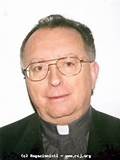
Fr. Riccardo Pignatelli R.C.J.
Fr. Riccardo Pignatelli R.C.J.:
I can maintain that the process of canonization of Fr. Hannibal was influenced also by his relationship with Luisa, I must also affirm that, in her turn, Luisa was drawn by Fr. Hannibal to share also in the concern for the Rogate. In fact, in the writings of Luisa on can find explicit references to vocations, as for example, in the fourth hour of The Hours of the Passion of Our Lord Jesus Christ, :I will pray to you for the priests, that they be worthy of your ministries…Jesus, I make reparation for the mistaken vocations of priests on their own part and on the part of those who ordain them without using all the proper means to discern their true vocations. In the 19th Hour she prays for “all priests, that they be light to the people,” and later, during the same hour, she extends her prayer to other vocations, asking of Jesus, “Give me your heart, so that I feed your same thirst for souls consecrated to you.” There are many other references to vocations throughout the volumes of Luisa’s writings.
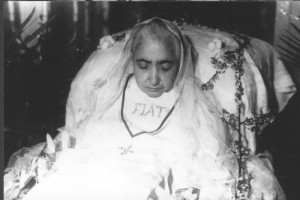
Servant of God, Luisa Piccarreta
From Padre Bucci:
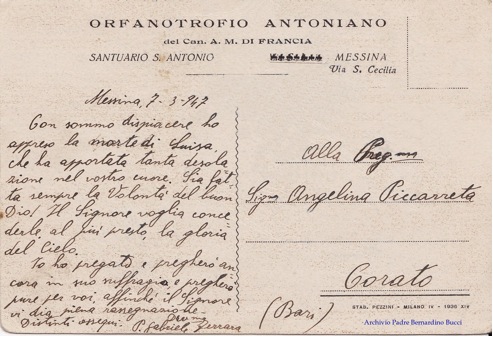
Below is a copy of a postcard that Father Ferrara Rogazionista sent in 1947 to the sister of Luisa (Angelina), sending her his condolences for the death of the Servant of God Luisa Piccarreta. This postcard shows the great bond that there was among the members of the Rogationist congregation with Luisa.
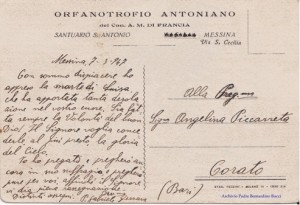
***
Fr. Riccardo Pignatelli R.C.J.
This is the will of God: your sanctification (1 Thes, 4:3). Now, the Rogate, the charism which characterizes the spirituality of Fr. Hannibal is none other than an expression of the Will of God, who sees the harvest of souls weary and forlorn like sheep without a shepherd, and at the risk of being lost. The Lord has compassion for them and commands his disciples to pray to the Lord of the Harvest that many respond with their generous Fiat to His call and become new apostles of the Divine Will, ready to work for the salvation of all.
Every life is a vocation, and holiness is the common vocation of every Christian. “God has called us to holiness,” St. Paul tells us (1 Thes. 4:7). But to respond to one’s proper vocation is none other than to fulfill this call and to realize the plan of the Will of God for us. We are therefore in the realm of the Fiat Voluntas Dei (The Will of God be done).
==============================================================
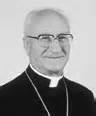
Msgr. Carmelo Cassati
His Excellency Msgr. Cassati, ex-Archbishop of the Diocese of Corato to which Luisa’s city belongs, had this to say at the international Congress on Luisa held in Costa Rica, “The Church proclaimed Fr. Hannibal Blessed. Without doubt, part of the sanctity of Luisa reached his soul, conforming him to the Fiat and to the Divine Will which the Servant of God cultivated to tirelessly.” It was the same Luisa who called our Saint the First Apostle of the Divine Fiat and its Herald in her writings.
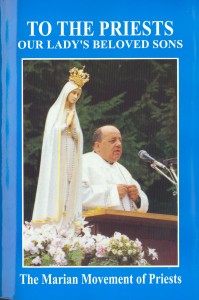
Father Stefano Gobbi
June 24, 1996 in San Marino, Italy
Dear Mother (Father Gobbi turns to the statue of Our Lady next to him), forgive me, I am not pleased that the serpent is here but I am pleased that You crush its head—crush it!
“Finally, the power of the serpent will be broken, it will be powerless, it will no longer be able to seduce creatures to say no to the Divine Will. The creatures will say YES to the Divine Will of God.
“In this complete fulfillment of the Divine Will the creation will be almost transposed into an original state, in a state of a new earthly paradise, in which all creatures will say YES to the Divine Will of the Heavenly Father.
“Here in Italy, a certain woman named [Luisa] Piccarreta, [Servant of God,] whose beatification is in progress, wrote a great book about Divine Will. Once when I was in Mexico, I was shown passages of the book, which related to so many topics about which our book [To the Priests: Our Lady’s Beloved Sons] also speaks.
“Let me cite a passage from this book [The Book of Heaven] by [the Servant of God, Luisa] Piccarreta. She says that 2000 years after creation came the Great Flood so that the water would cleanse mankind; and 2000 years later, came the flood of the Blood: the Redemption; and still 2000 years hence, there will be the flood of fire—a spiritual fire, I believe—and finally the Kingdom of [the] Divine Will will come upon this world: because every creature will fulfill the Divine Will of God in a complete way.
“This is what I think, that the Second Coming of Christ in glory will bring this Kingdom of [the] Divine Will.
“Every creature will fulfill the Will of the Father completely and the Heavenly Father will be glorified in His children, who will say YES to His Divine Will. Christ will bring His Kingdom, the Kingdom of holiness and of humble obedience to the Will of the Heavenly Father.”
Editor’s Note: The YES of the children of God is that FIAT (Let it be done) we learn from the Servant of God, Luisa Piccarreta.
================================================================
[youtube]http://youtu.be/5dwQugGBAns[/youtube]
[youtube]http://youtu.be/WfavW4_RfOc[/youtube]
Above is a You Tube interview of Adriana Pallotti by Fr. Bucci
(Not the interview that follows)
Key:
AP: Adriana Pallotti
I: Interviewer
I came to live here, in San Giovanni Rotondo in 1945, when I heard from some friends that here there was a saint, so great, so holy, and with the stigmata. I decided to leave the house of my father and all my things to come here, to live in poverty close to Padre Pio. After a few years, I met Federico Abresch, who was a German man, converted by Padre Pio. He had come to live in San Giovanni.
I – Wasn’t Federico a doctor, from Bologna?
AP – No. Federico was a photographer, who had established his laboratory in Bologna.
I – …And how did he arrive here?
AP – He was here because a friend of his invited him to come and visit this great saint. He didn’t know him, but he came out of curiosity. As soon as his eyes met the eyes of Padre Pio, his heart was touched and he felt the desire to kneel at Padre Pio’s feet. And Padre Pio told him: ‘What are you doing here after so many years without going to Confession?!’ He said: ‘Father, please help me!’ And Padre Pio: ‘Start from your last Confession!… No, I don’t mean this confession now… I mean from your last Confession before you got married!’ So he started his new Confession and then, touched by the words of Padre Pio, he was converted. After his conversion, he started to go around in search for spiritual things and beautiful souls. He heard that there was a saint in Corato, bedridden for 70 years, so he went to visit this soul, who began to talk to him about beautiful spiritual things on the Divine Will. He was very touched, and continued to visit Luisa with the permission of Padre Pio. Luisa continued to talk to him about living in the Divine Will, and he wrote notes. Sometimes, he saw her when she received the stigmata. One day, he was visiting Luisa and saw her bed shaking. He asked: ‘What’s happening?’ And Luisa said: ‘I suffer, I suffer! – but gladly!’ She was suffering the Passion of Jesus. Abresch went to her very often, also with his little son Pio, who was three years old. He asked: ‘So, what are we going to do with this little boy… a Priest?’ And Luisa said: ‘Eh, eh, let’s pray.’ In fact, Pio became a priest and now he is in the Vatican. Abresch always continued to go to her. He learned from her diaries, which she wrote at night. He would copy them and then return them to Luisa. We learned this spirituality from him, since he always continued to keep these writings.
I – So he started his first little cenacles…
AP – Yes, at night we used to go and listen to his talks about Luisa. We were enthusiastic! I couldn’t wait to go there, every Saturday night. We were about 5 or 6. He spoke every week for one hour and a half, but we never wanted him to stop, so much we loved this spirituality! It was about to give our human will to God, and to receive His Will in exchange, so as to become divinized… In hearing this, we felt that we had found Paradise on earth! We were enthusiastic, and Padre Pio was happy too.
Once I asked Padre Pio: ‘Father, is it good for me to listen, write and print the writings of Luisa Piccarreta? And he said: ‘Yes! Repeat it!’ So, I asked again: ‘Father, can I give some money to Andrea Magnifico to buy the equipment to print the books of Luisa? And he again: ‘Yes!!!’ So I understood that it was really the Will of God to have the writings printed…and we did it.
I – In which year did Federico start these conferences?
AP – Before I came, in 1945, he had already started with another group.
I – So, Luisa was still alive…
AP – ….yes, Luisa was still living.
I – …so, you started during the 50’s…
AP – …Yes, I started from the 50’s to talk about Luisa in my home to my guests. All were enthusiastic about this spirituality of the Divine Will…
I – Who were some of the other souls?…You and who else?..
AP – There was a certain Giulietta Marchi from Bologna…She was very happy… Jesus spoke to this beautiful soul… She died all of a sudden, after many years in which we were going together to Abresch. Before dying she told me: ‘Adriana, you must get some tapes and record all that Abresch says, because in the future you will have to talk about this spirituality…. The Lord wants this, because He wants to free us from the misery of the human will, in order for us to live in a divine manner!…
I – Tell us about Andrea. When did you meet him?
AP – Andrea Magnifico from Milan came to my home to “change air.” I told him that we were going to listen to Abresch who spoke about the spirituality of a certain Luisa from Corato, who lived in bed for many years…. and that the spirituality that Jesus taught to Luisa was so sublime and so great that we felt that were living in Heaven,.. no longer on earth! He said: ‘I want to come and listen’ And after he came he said: ‘Oh Finally! I had asked St. Joseph to let me know if there was something, in the spiritual life, much greater than the things I knew…. And here it is! St. Joseph is now letting me discover this great novelty….much greater than anything else
I – …So he started to make copies of the books…
AP – Yes, he started with photocopies, which we gave to many people… and we started to distribute them also to Priests and others. Many souls followed them and were very happy about these spiritual lessons which Jesus had given to Luisa, and which – through Luisa – we were able to know.
I – Are there other things that – as you remember – Padre Pio said about the Divine Will? Did you talk with Padre Pio about Luisa?
AP – Yes, I asked him if it was a good thing to get a recorder in order to tape the writings of Luisa….and I went to Milan to buy a recorder, because here I couldn’t find a good one… I asked him and he said: ‘Yes!!!’ After this other positive answer…I went to Milan to get it.
I – …So he was aware of this…
AP – Yes, yes, yes, very much… Even more, among the young people who came to Abresch to listen to the lessons on the Divine Will, one of them told us that he went to Confession to Padre Pio, asking him: ‘Father, is it true that the Blessed Mother is Great not because She has been the Mother of God,.. for her virginity…her being Immaculate, but because – as Luisa says in the writings – She never did Her human will, but only and exclusively the Will of God?’ Padre Pio answered: ‘Yes, my son, this is the truth! This is the truth!’ And he continued: ‘Father, allow me to ask you one more thing. Is it true that Jesus would have remained on the Cross even till the end of the world in order to save the humanity?… And that His Cross is long as much as the centuries, and large as much as humanity?’ And Padre Pio: ‘Yes, my son, this is the truth! This is the truth!’ And he said: ‘Father, please, can we hug each other?’ And they hugged.
I – Adriana, you have been reading about this spirituality, teaching it to many people, for years. What this spirituality of Luisa mean to you?
AP – It means that as we give to the Lord our own will, and we no longer use it, receiving His Will in exchange, we feel such an interior peace that we are able to bear things that, humanly speaking, we were not able to suffer. But with His Divine Will, the Lord gives us His Power, His Divine Power…His Creative Power.
I – He says that these writings will renew the face of the earth…
AP – …we will live on earth as the Blessed in Heaven…. It is the fulfillment of the Our Father!
I – …so, in you opinion, this is the future of the Church…
AP – Yes, in the writings of Luisa it is said that when the Church will possess them, there will be a fire within the Church… It will be that same fire which the Gospel talks about: ‘They came to bring the fire on earth. Oh, how I wish that it could be already burning…’ This is the fire of the Divine Will!!!
I – …and do you think that Luisa herself is important in this? I mean, is it possible for people to know the Divine Will without knowing Luisa?
AP – The two things go together!
I – Is Luisa a saint?
AP – … remaining in bed for all those years, writing all these things…Of course!! We know from Abresch, who knew Luisa personally, that Jesus Himself called her “My Divine Luisa… I exalted her up to the highest Seraphim”
I – Will she be Canonized, in your opinion?
AP – It might be that the Lord does not need this, since He is already glorified if we live this spirituality. If we do it, this is His Glory! But it is up to us to live this spirituality…so that It may open its ways. In this way Luisa is “ipso facto” (by fact) a Saint!
I – Well. Is there anything else you would like to tell us? What would be your advice to someone who has just heard about the Divine Will for the first time?
AP – If these souls have sufferings, problems and many other things, they can say the Lord: ‘Lord, I can do nothing, but I know that You can do everything. Take my will, and come to act in me,…to work, to walk, to breathe, to suffer in me…’ As we empty ourselves and let Him do, our lives become more simple,… and perfect. It will be easier to proceed along the path of this life.
I – Are you happy to have known this spirituality?
AP – It has been the greatest grace I have received on this earth. Even greater than knowing Padre Pio, who has been a great Confessor and Spiritual Director,… But with this spirituality we become divinized. We find this also in the Gospel, but Jesus teaches this to Luisa with many examples, which make it easy and attractive. This is the greatest grace for us, which allows us to bear and suffer things that we could not bear before; but with the suffering of Jesus within us, everything becomes easy!
I – Very well Adriana. May God bless you always. Thank you.
AP – Thank you.
I – Adriana, do you know whether Padre Pio did ever read any of the writings of Luisa?
AP – One lady who went to Confession to Padre Pio told him that she had read the Hours of the Passion. Padre Pio said: ‘I read it four times! Oh, how beautiful! And now, another one is about to come out – about the Blessed Virgin in the Kingdom. Oh, how beautiful that one too!’ So, Padre Pio was aware of everything that came from Luisa’s hands.
I – Is it possible that he was reading the Hour of the Passion when he received the stigmata?
AP – It is possible. It is said that they found a “pool of his tears” on the floor of the Chapel, when he meditated on the Passion.
I – Adriana, do you know whether any vocations matured from the conferences of Federico Abresch?
P – Yes, many vocations! For example there was a young lady, who left her boyfriend to become a cloistered nun. When Padre Pio told her that those things were the truth, she said: ‘So, what am I doing here in the world? I want to be in a Convent and lead a cloistered life.’ So she went and died in the Convent. Also, other young people, when they heard Abresch talking about this spirituality – which is leaving on earth as the Saints and the Blessed live in Heaven – decided to become priests or monks…. Yes, listening to Abresch… saying that, as we exchange our miserable human will, which is only capable of evil, with the Divine Will, we start living in a divine way, and our acts become like shining suns…like stars…divine things! So they said: ‘What are doing in the world? We’d rather spend our lives thinking about these things!!’
================================================================
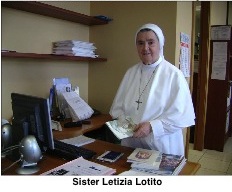
My name is Sister Letizia Lotito. I was born in Corato on March 7, 1934. I have personally known the Servant of God, having been born in Corato where I remained without interruption until my entrance into the Institute of the Apostles of the Sacred Heart of Jesus. Until 1950, I was a member of the parish of “Saint Mary the Greek”, the same parish as Luisa Piccarreta. There I grew in the Catholic Action movement = dell’Azione Cattolica (A.C.) and had the opportunity to meet many beautiful spiritual souls one of which was Miss Cimadomo who never failed to speak about Luisa, her life and her incessant prayers.
It was not easy to go to the house of Luisa. This same Miss Cimadono, on various occasions, gave details to a small group the possibility to go there to spin, to greet and to offer small gestures of love to this Person, who was known to them as “The Saint” while they were still alive. From my early childhood, I felt the need to speak about Luisa with my aunts, grandmother and other persons much larger than myself. They turned to Luisa for her intercession for their necessities and in order to recommend their beloved ones who were called to war (before and after the second world war); for she always had a word of comfort, and encouragement. She never stopped reassuring them of her prayers for their intentions because all their necessities were granted.
The Servant of God said: “We pray, we only pray” – with these words she wanted to say – “do not trust just my prayers but our prayers together”. My mother was a pupil of Rosaria Bucci who lived many years with Luisa and directed the embroidery school. The Servant of God, especially during her last few years, lived only on faith and she did not dedicate much time to the work of the tombolo; however she was always alert for the girls who attend this school. My mother, in her turn, has also taught me how to work the tombolo, which I appreciated very much.
She took me a few times to the house of Luisa, but that was enough for me to save the beautiful memory of her. It was always her serene face, always turned toward something or Someone that it was not given to us to see.
Luisa had the ability to reach others, not because of her persona, but through the grace of God, the diffusion of the Spirituality of the Divine Will and her writings. In fact, even though Luisa lived in silence and hiddeness, she was well known, loved and respected by everyone; however this did not create fanaticisms around her. In fact, as for Padre Pio, there was such fanaticism (and probably still is now), but for Luisa I have not seen this in anyone.
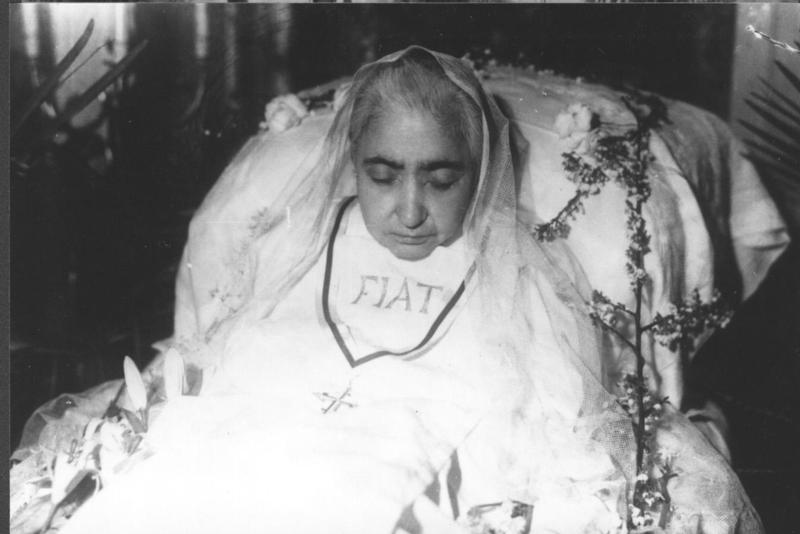
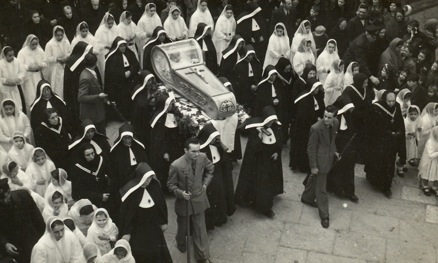
Because I had the opportunity to meet Luisa many times during her life, this made it possible for me to participate in Luisa’s funeral which we can call “The Triumph of Luisa”. Always guided and directed by the A.C.., groups of little ones were given the opportunity to see Luisa even though many people wanted to see the body of Luisa, dressed in white, even if just for a few minutes. From the largest to the smallest, everyone followed Luisa’s coffin over the long distance. It was carried on the shoulders of the larger of us (the youth of the A.C.) and also that of the nuns. Even The Daughters of Mary, other congregations had the joy to carry it on their shoulders.
================================================================
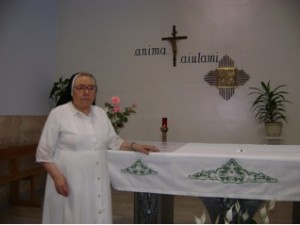
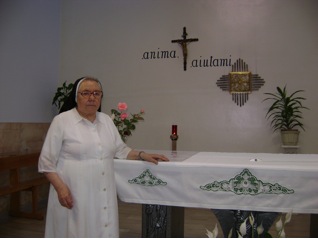
Sister Vincenza Caputo on the right side of the altar and tabernacle
where the bed of Luisa was located
when she lived with the Daughters of Divine Zeal
My name is Sister Vincenza Caputo, I was born in Corato and I am 81 years old. I am currently in the Institute of Saint Antonio in Corato, established by Saint Hannibal who had the desire to make this a place for the Servant of God, Luisa Piccarreta to live.
I knew Luisa when I was about 14 years old. From the time of my novitiate, every time I visited my family, I would go to Luisa. There was destiny in her words. She did not speak very much, she said those little things that are recorded in the spirit and leave a deep impression. I have an excellent memory of the love Luisa had for Jesus and that she was a sweet heart of the Madonna. She carried the spirit of love for them.
When I met Luisa for the first time, I said to her: “I want to become a nun” – She answered me “You want to become a nun? Then you must put your will under your feet.” With these words, she wanted to impress obedience and submission to the superiors. She said: “If you want to become a spouse of Christ you must have these characteristics of a spouse. Having read the writings of Father Hannibal, I have noticed he appreciated the spirituality of Luisa; he said: “I have never found spirituality so sublime, this is not a spirituality of the earth but a celestial spirituality”, in fact everything which Luisa was said to produced was actually produced by Jesus and the Madonna. Luisa has absorbed it, because Luisa’s life was dipped in the hearts of Jesus and Mary as they instructed her.
Luisa’s life was all Jesus and Mary. They transmitted their spirituality to her and she transmitted this doctrine of the Heavens. This is a deep attribute of Luisa that we all can receive this doctrine and we can all live this intimate life of God. This is a beautiful memory I have of Luisa.
I was not too close to the Servant of God, but I have known many things about Luisa on account of my Sister, Sister Giovannina Capozza from Corato. Her parents knew and loved the Servant and God and entrusted their daughter to her when she was young. She learned much from the Servant of God, in addition how to do the tombolo, she assimilated her spirituality.
Sister Giovannina was a mine of information. She never ceased to speak about Luisa. She knew very well all the clergymen who went to Luisa. When I was with Sister Giovanni, in the convent of Monza, she was inexhaustible. She told me everything I did not know. She told the that one day Father Bracale had gone to speak to Luisa and when he was celebrating the Mass, he was raised from the earth, leaving her terrified since she was still a child.
Her talks were centered also on the person of Rosaria Bucci who was a relative of Sister Giovannina and she spoke of her often. I was already a postulant in the general house in Rome when Luisa died. The death of Luisa was communicated to our community in Rome. On that occasion I suffered very much because I could not be in Corato for her funeral, but I was there spiritually.
I entered the convent of Trani in June of 1945, before leaving for Rome, our teacher, Sister Ermenegilda, took us to Corato to greet Luisa; that was an obligation for all the nuns. The nuns of the Divine Zeal often went to Luisa. Luisa had treasures to communicate to us and every nun had an intimate talk with the Servant of God.
For my profession, I had Fr. Luca Appi Rogationist for my spiritual advisor. When I was introduced to his church he asked: “Where do you come from” I answered: “I am from Corato” and he: “Then you are of Luisa Piccarreta” – I answered “yes, I am of Luisa Piccarreta”. He continued: “I recommend that you must be an image of the Divine Will because you have learned this from Luisa”.
When I entered the convent, I was not totally aware of the great treasure that I knew. I have assimilated and live it every day because of our Founder Father Hannibal Maria Di Francia had fallen in love with this spirit. This spirituality has fused him to Luisa. Luisa learned the “Rogate’ from Father Hannibal and he learned the Divine Will from her. Thanks to Luisa he investigated deeply this mystery of the Divine Will.
For ten years Luisa lived in this convent from 1928 to 1938. Her room was located at the head of the altar of the Holy Sacrament, adjacent to the chapel where the nuns gathered with the orphans in order to assist and pray at the Holy Mass. Luisa wrote her last diaries under the gaze of Jesus in the Holy Sacrament.
In the recent renovation for the widening of the chapel, perhaps without knowing it, the Holy Sacrament and the altar are now located in the place where the bed of the Servant of God used to be. A phrase written on the wall remembers the presence of Luisa in that place : “Anima, aiutami!” (Soul help me!), this distinguished phrase spoken by Jesus characterized all of Luisa’s life. Luisa from her bed, contemplated the Eucharistic Mystery and instilled its spirit. Luisa did not speak about it but did speak about Jesus and the Madonna.
Often, when time allowed, Luisa was taken outside to the garden, her sister Angelina and her assistant Rosaria often accompanied her. She instructed the orphans she received to love Jesus and Mary; in particular, she invited them to pray the novena of the Nativity of the Immacolata. In this garden, sometimes mystical phenomena occurred. Besides the orphans, Luisa often received the boys of the Association of Saint Luigi, brought there by their confessor Don Benedetto Calvi. All those who approached Luisa were surly watched with fondness by Jesus and the Madonna; she was the instrument that carried the great friendship of Jesus. The Servant of God participated in the sufferings of Jesus and this she likewise communicated to us all, and we are very proud of this.
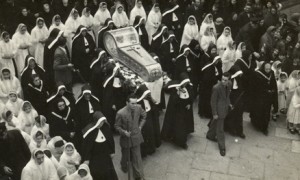
The memory of that day remains always alive in my mind, the pain for the loss of a person so very much beloved but at the same time the great joy in seeing the participation and accompaniment of the entire country which was like a sign of affection and thanks which everyone gave to Luisa. This soul left a great impression on the world, in fact when the news of her death was announced, all of Corato exclaimed: “The Saint Luisa has died”. Her holiness and spirituality was already recognized during her life, in fact, everyone asked her for her prayer and intercession.
I thank the Lord for giving me the opportunity to know Luisa and for the gift of a religious vocation; it is not a mistake to say that Luisa prayed for all vocations, Luisa also prayed for my vocation which is a fruit of the prayers of Luisa.
The memory of Luisa is very much alive in me; she had wonderful eyes which spoke directly to your spirit and I will not be able to ever forget them. When I have the occasion to see Luisa’s image, I again relive, see and feel it. It appeals to me to deepen the thoughts that she has left with us to write and read the testimonies of those who knew her during her life. In my life I have had the fortune to know two great souls; first Luisa Piccarreta and then Padre Pio.
I have known the Servant of God Luisa Piccarreta since I was a young girl; in 1961 I became a novice in the community of nuns in the House of Relief of the Suffering. I also knew Padre Pio while he was still alive, who today is now a Saint, thus while I am still alive I want to see the Servant of God, Luisa Piccarreta raised to the altar and venerated as a Saint.
================================================================
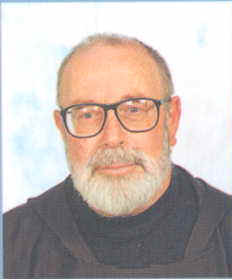
Father Bernardino Giuseppe Bucci
Parish Priest Cappuccino
(Please refer to the Certificate written at Trani, Italy on July 30, 2003 by Msgr. Savino Giannotti, the Vicar General, concerning Fr. Bernardino Giuseppe Bucci)
The Bishop healed
(From “A Collection of Memories of the Servant of God Luisa Piccarreta” by Fr. Bucci)
It was during the year 1917. The new Archbishop of Trani, Archbishop Regime, perhaps influenced by that part of the clergy, who not only attached no importance to all that was happening to Luisa Piccarreta but openly manifested their hostility to the Servant of God, had established a very severe decree with regard to Luisa: priests were prohibited from entering her house and from celebrating Holy Mass there, a privilege which had been granted to Luisa by Pope Leo XIII and confirmed by Pope Pius X in 1907.
This measure was to be read out in all the churches of the diocese.
This is what happened.
While he was signing his “famous decree”, he was suddenly afflicted by partial paralysis. When the priests present at that moment came to his help, he made them understand that he wanted to be taken to Luisa’s house.
Aunt Rosaria described this unusual episode in this way: “It was about eleven o’clock when we heard the sound of a carriage that stopped right outside the porch of Luisa’s house. I looked out from the balcony to see who it was and saw three priests, one of them, as it were, supported by the other two. Luisa said to me: ‘Open the door, the bishop is coming’. In fact, Archbishop Regime was at the door, supported by two other priests“, probably the vicar and chancellor of the Curia of Trani, “the bishop was uttering incomprehensible words. He was immediately ushered into Luisa’s room. It was his first visit to the home of the Servant of God, who, as soon as she saw him, said: “Bless me, Your Excellency“. The bishop raised his hand as though nothing had happened and blessed her. He was completely cured!
Archbishop Regime remained in Luisa’s room in a secret conversation for about two hours, and to the wonder of all, especially the priests, he emerged from her room smiling. He blessed those present and left“.
An effort was made to keep the case secret, and so it remained to the wider public. As long as he was in Trani, Archbishop Regime regularly visited Luisa Piccarreta, with whom he would have spiritual conversations. This episode inspired a sacred fear in the clergy and Luisa’s holy confessor, Gennaro di Gennaro, was able to continue his ministry more peacefully. After this event, Annibale Maria Di Francia also visited the Servant of God more often.
================================================================
Father Bernardino Giuseppe Bucci
Parish Priest Cappuccino
(Please refer to the Certificate written at Trani, Italy on July 30, 2003 by Msgr. Savino Giannotti, the Vicar General, concerning Fr. Bernardino Giuseppe Bucci)
The young man killed and restored to life
(From “A Collection of Memories of the Servant of God Luisa Piccarreta” by Fr. Bucci)
Before I end these memoirs, I cannot omit to record a most outstanding episode.
I had always heard tell of a young man who had been killed and
was restored to life by Luisa. I had heard the story told by the old blind
singer in the “upper room” of Via Panseri.
One day a young man was found dead, lying on the ground in a
pool of blood. When his mother heard this fatal news, she did not rush to see
her son but ran howling and disheveled to Luisa’s house where she knelt on the
doorstep, crying: “Luisa, Luisa, they’ve killed my son!“
The holy little one – as the singer called Luisa – was moved
and said: “Go and fetch your son, the Lord is giving him back to
you“.
The mother was helped to her feet and accompanied by a few
devout persons to the place where her son lay dead.
At the sight of him, ignoring the police, the mother flung
herself on the body, cradled it in her arms and kissed it desperately like the
sorrowful Mary at the foot of the cross.
But suddenly the young man opened his eyes and said: “Mammà,
sto ca nan pianger” (Mother, I’m here, don’t cry).
On hearing this story, the whole gathering was in tears,
especially the older women whose sons were serving in the war.
Sometimes – though in hushed tones – I even heard this story
told in my own home. I remember Aunt Rosaria addressing my father with these
words: “Don’t start talking such nonsense, concentrate on eating your
food“. My father had in fact been telling the story of the man brought back
to life by Luisa the Saint.
In my parish I once heard Miss Redda, Minister of the
Franciscan Third Order, speaking of this miracle to a group of women. When she
became aware of my presence, she immediately put her hand to her mouth,
regretting her imprudence. Indeed, the parish priest, Fr. Cataldo Tota, who was
present said: “Certain things should not be said in public while those
concerned are still alive“.
I never attached much importance to this episode – always
spoken of in hushed tones – because it seemed incredible to me. Aunt Rosaria
never wanted to discuss the matter. Whenever I asked about it, she would answer:
“Leave that nonsense alone!“.
I realized that talking about the event was totally forbidden,
both by Luisa and by the clergy.
It seemed to me that the story told by the blind old man was
too fantastic, too embellished and sounded more like a Greek tragedy than an
event which had actually occurred. I never previously wanted to write anything
about it so as not to make a laughing-stock of the Servant of God, Luisa
Piccarreta (and I was also convinced that this episode was merely the fruit of
popular imagination).
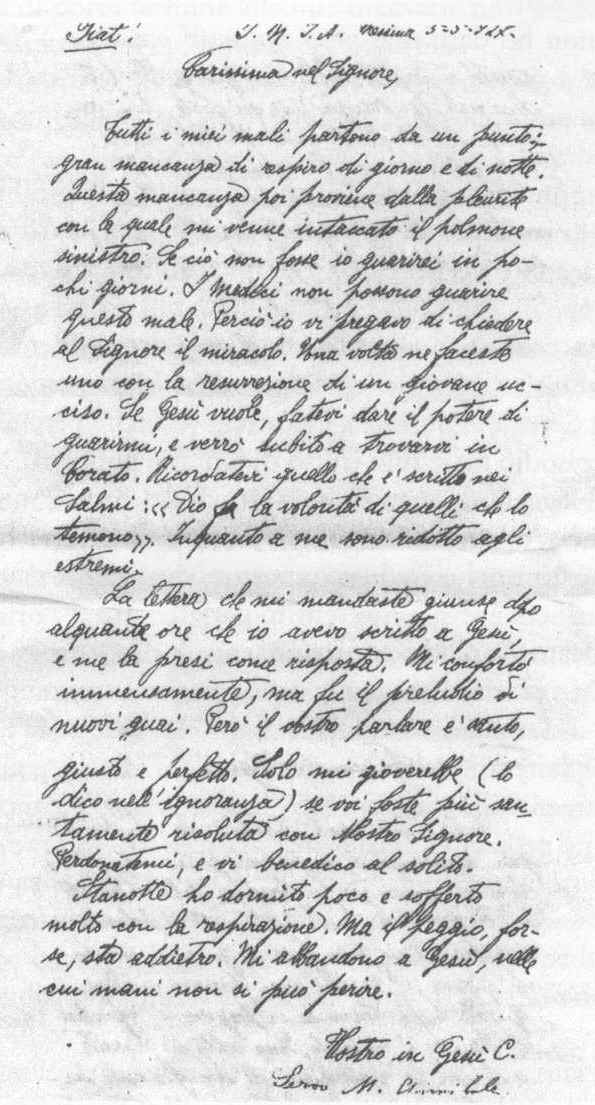
Later, having read a letter by the Blessed Annibale M. di
Francia, which speaks of the miracle of the resuscitation of a young man who had
been killed, I thought it appropriate to mention here the phenomenon about which
I had heard so much.
Blessed Annibale confirms, bringing to bear all his authority
as a saint, that it was due to Luisa Piccarreta’s prayers that this young man
was restored to life.
His letter is dated May 5, 1927. A few days later, on June 1,
1927, Blessed Annibale died serenely in the town of Messina.
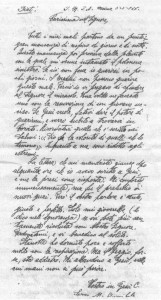
Letter from Saint Annibale Maria di Francia to Luisa Piccarreta, sent a few days before his death, in which he confirms the miracle