6/2 CORPUS CHRISTI PROCESSION IN A CONCENTRATION CAMP

Pope Francis remembers Auschwitz victims

Published on Jul 29, 2016

The Pope visits Auschwitz on Friday to remember those who lost their lives in the Nazi death camp. He is the third pope to visit the camp. Pope Francis chose not to make a public address, instead opting to pray silently in one of the cells before meeting Holocaust survivors

***

CORPUS CHRISTI PROCESSION IN A CONCENTRATION CAMP

Father Stephan Treuchel, S.A.C.


Introduction


“Corpus Christi Procession in a Concentration Camp” is a Testimony of the profound faith of imprisoned priests, written by a survivor of the Nazi persecution, Father Stefan Treuchel, S.A.C., member of the Polish Province of the Pallottine Fathers. It is presented here by his classmate, Father M. Ignatius Curzydlo, S.A.C., chaplain of the V.A. Medical Center, Canandaigua, New York.

We express our gratitude to the unnamed lay persons who have underwritten the costs of producing this article.


——————————————————————————————————————-


The thermometer was rising heavenward on the third day of June in 1942. We were 120 priests interned at Dachau and our chief occupation lay in the building of a so-called “Barrack X.” The handling of masonry was very exacting of our strength and the extreme heat took toll of all our energy. Moreover, we were starved and craving for water and the strict surveillance of our captors, who did not permit even the shortest respite was almost more than we could humanly bear.

Our only consolation lay in silent prayer and Holy Communion stealthily though seldomly received. Sometimes at noon, our Kapo[1], Karl Wagner and Hilfskapo[2] Gustav Eberle, former Communists who had fought with the Reds in the Spanish Civil War, and their helpers sought to escape the intense heat and retire into shade, and so we stopped working and instead our hearts were turned to the Throne of God in hearty prayer.

On this certain day in June, I stood beside Father Bronislaus Szymanski, (a fellow prisoner), who formerly served as a curate at a church in Suwalki[3]. We were pretending to be using our trowels and hammers vigorously, when in reality we were trying to deaden our low chanting of the Litany to the Sacred Heart of Jesus.

June the month of the Sacred Heart! How we wished to pay homage to this divine heart; yet, every means was denied us. We endeavored whenever possible, to recite the Litany to the Sacred Heart. This was done amid distraught distractions and many interruptions and it was sometimes after a long time that we were able to conclude, Sacred Heart of Jesus, delight of all the Saints, have mercy on us.

After the Litany on this memorable day, Father Bronislaus, after cautiously looking around whispered, “Father Stefan, will we be able to receive Holy Communion tomorrow?” “Why tomorrow?” I questioned. “Why especially tomorrow?”

“Because tomorrow is the Feast of Corpus Christi!”

Almost simultaneously with Father Bronislaus’s answer, Gustav came in view and with his unrefined and indelicate, “Auf, auf,” compelled us to return to work. I pretended to return for my tools for another word with Father Bronislaus, but for this I was brutally kicked and cursed at.

I hardly took notice of this for one incessant echo rant in my soul—tomorrow, Corpus Christi!

Dear God! Where will I obtain the Blessed Sacrament? True, not a distance from us were a group of German Priests, but we were entirely prohibited any conversation with them. Altar bread and wine—we had none!

But tomorrow—the feast of Corpus Christi!

No matter what I thought, every possibility to obtain the Blessed Eucharist for tomorrow morning seemed futile and yet how timely that we should receive It with great fervor—the feast of Its institution and the institution of the Priesthood. What to do? O Christ, Great Priest, we trust in Thee!

I had a restless night. The tension I was under reflected in my dreams and I was struggling with Gustav because he was about to tear away the Sacred Host from my hands when suddenly I awoke unrested to the “Auf, of” who was telling me that it was time to rise.

I washed and dressed hurriedly. After a very meagre breakfast I walked out to pray and tried to compensate in a small way for Holy Communion. I was surprised to find almost immediately at my side, Father Joseph Fischer, a German Pallotine. He looked carefully around and handing me an envelope whispered, “Today is the feast of Corpus Christi and I brought you Holy Communion. Take care lest this be detected.” Could I ever describe my emotions? I scarcely had time for a whispered, “Thank you” when Father Fischer was gone and the shrill sound of a siren was summoning all of us. I took my place in line and pressed the Precious Envelope to my heart when from my soul burst out a prayer of Thanksgiving. But then, what should happen to me were my Treasure found? Would today be an inspection day? Where shall I place this envelope?

Suddenly an idea struck me! I took off my prisoner’s cap, tore a bit of lining, placed the envelope within and replaced my cap.

At the same time we had a roll call and after this we formed our lines to follow to our place of work. I hurriedly whispered to my companions and prisoner priests that I had the Blessed Sacrament with me so that each heart silently sang “Pange Linga Gloriosi.[4]” We were nearing the gate and I felt that my heart would almost break because it beat so rapidly since I was ever conscious of the Treasure I carried in so inappropriate manner. If only not to be suspected and not detected!

Soon we were told to remove our caps and I lovingly fondled my Blessed Lord. We were recounted and then began the very unusual and unforgettable Corpus Christi Procession. My head covered with a prisoner’s cap served as the monstrance; the ejaculations we whispered—the incense; the rhythmic beating of our shoes against the pavement—the bells; and the azure sky—the canopy! Can one imagine anything more beautiful in the life of a priest—a prisoner?

The happiness and contentment we felt at having with us the King of Kings was enough to make us almost immune to the loud commands of Gustav to sing what we sang almost to loathing, “Die blauen Dragonen sie reiten, mit klingendem Spiel durch das Tor, Fanfaren sie begleiten, hell zu dem Himmel empor.[5]” Yes, we sang, but the words had a very different meaning for us. We saw instead of the “blauen Dragonen” angel choirs accompanying us and their triumphant fanfare ascending into heaven.

Singing, some of us with our lips and some with our hearts, we finally came to the place of our work. We decided on groups and we agreed upon a place we were all to meet.

Normally, after a Corpus Christi Procession the Blessed Sacrament is reposed in the Tabernacle. Today, however, to our utter joy and happiness, our hearts were truly this Tabernacle.

Jesus Prisoner of Love, came to live in the hearts of His servants—prisoners in a Concentration Camp.

At the end of this Corpus Christi Procession on June 4, 1942, our hearts swelled out in the hymn of Praise and Thanksgiving, “TE DEUM LAUDAMUS[6]

————————————————————————————————————

PANGE LINGUA[7]

Sing my tongue, the Savior’s glory,

Of his flesh the mystery sing:

Of his blood, all price exceeding,

Shed by our immortal King,

Destined for the world’s redemption,

From a noble womb to spring.

Of a pure and spotless Virgin,

Born for us on earth below,

He, as Man with man conversing,

Stayed the seeds of truth to sow.

Then he closed in solemn order

Wondrously his life of woe.

On the night of the last supper,

Seated with his chosen band,

He, the Paschal Victim eating,

First fulfills the Law’s command;

Then as food to all his brethren

Gives himself with his own hand.

Word made flesh, the bread of nature,

By his word to flesh he turns;

Wine into his blood he changes;

What through sense no change discerns?

Only be the heart in earnest,

Faith her lesson quickly learns.

Down in adoration falling,

Lo! the sacred Host we hail,

Lo! o’er ancient forms departing

Newer rites of grace prevail;

Faith for all defects supplying,

Where the feeble senses fail.

To the everlasting Father

And the Son who reigns on high

With the Holy Spirit proceeding

———————————————————————-

[1] Kapo—German for man in charge

[2] Hilfskapo—German for assistant man in charge

[3] City in Northern Poland

[4] Latin for “Sing my tongue the Savior’s glory”

[5] German for “The Blue Dragons ride with sonorous band through the gate, as the trumpets accompany them to the bright heaven above.”

[6] Latin for “We praise Thee O Lord”

[7] Latin for “Sing my tongue”—A Eucharistic hymn composed by St. Thomas Aquinas
6/1 St. Annibale Maria di Francia passed away June 1, 1927

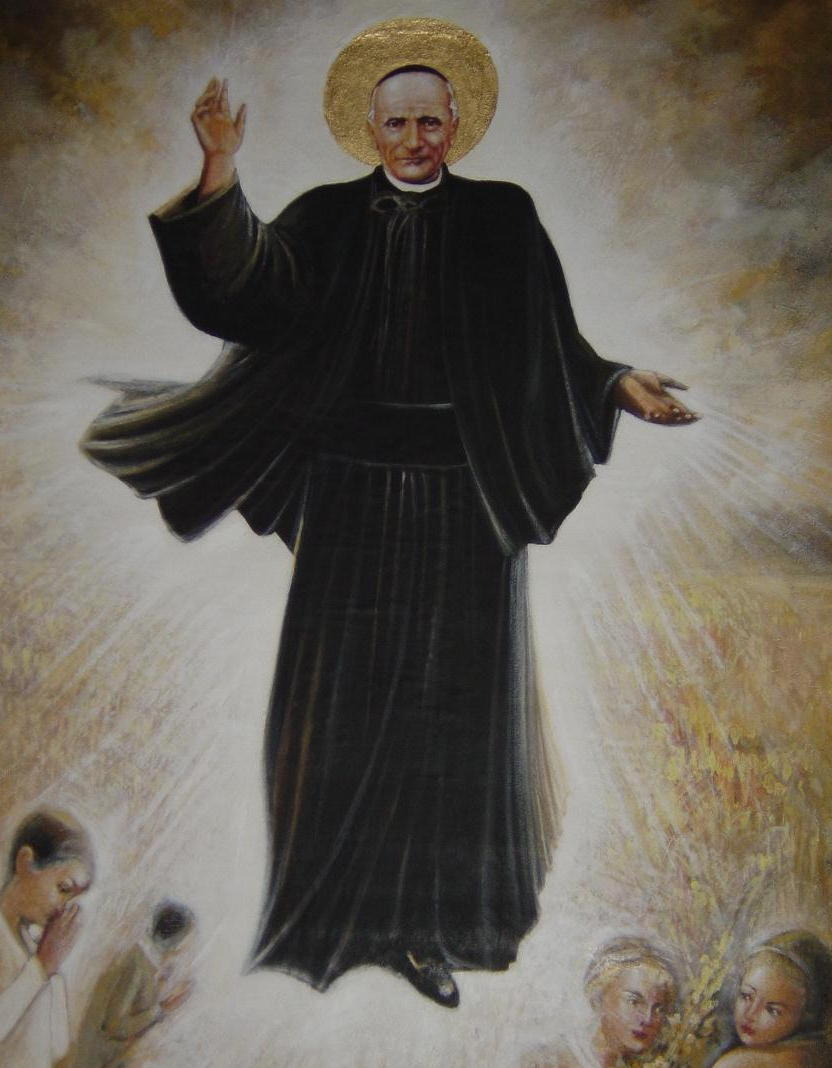
 Luisa: “I saw the blessed soul of father (St. Annibale Maria di Francia) before me, near my bed, Invested with Light, Suspended from the earth, fixing on me, but without telling me one word.  I too felt mute before him, and Jesus added:  “Look at him, how Transformed he is.  My Will is Light, and has Transformed that soul into Light; It is Beautiful, and has Given him all the Tints of Perfect Beauty; It is Holy, and he has been Sanctified.  My Will Possesses All Sciences, and his soul has been Invested by Divine Science. There is nothing which My Will has not Given to him.  Oh! if all understood what Divine Will means, they would put everything aside, they would care about doing nothing else, and their whole commitment would be to do My Will alone… the Miracle which the Divine Will wants you to make is that of Giving My Will to creatures, and of making It Known in order to let It Reign.  With this Miracle you will do more than anything; you will place the Salvation, the Sanctity, the Nobility of creatures in Safety, and will also banish their corporal maladies, caused by the fact that My Divine Will does not Reign.  Not only this, but you will place a Divine Will in Safety in the midst of creatures, and will Give Back to It All the Glory and the Honor which human ingratitude has taken away from It.  This is why I did not allow that you would make the Miracle of healing him (Father di Francia); but you made for him the Great Miracle of letting him know My Will, and he left the earth with the Possession of It.  And now he Enjoys, in the Sea of the Light of the Divine Will – and this is More than anything.”  V22 – 6.1.27

6/1 Archbishop Paul F. Leibold passed away in 1972


Most Reverend Paul F. Leibold
Second Bishop of the Catholic Diocese of Evansville
Born December 22, 1914
Ordained a Priest: May 18, 1940
Named Auxiliary Bishop of Cincinnati: April 10, 1958
Consecrated Bishop: June 17, 1958
Apostolic Administrator of Evansville: Oct. 20, 1965
Installed as Bishop of Evansville: June 15, 1966
Installed as Archbishop of Cincinnati: Oct. 2, 1969
Died: June 1, 1972
Burial: Cincinnati, June 7, 1972

– +Archbishop Paul F. Leibold to Heaven 1972 – Confessor of Sister Mary Ephrem – Jesus: “I ask of him (Rev. Leibold) what I continue to ask of you (Sr. Mary Ephrem), oh bride of My Heart – prayer and penance. As a priest after My Own Heart, I will be with him in all his trials and sorrows. Tell him not to become discouraged at the crosses awaiting him for I, the Great High-Priest go before him carrying the heaviest part of his cross. I seek always the humble and lowly of heart and since I have found two such, so I have entrusted to them a great mission, but become not vain, for I have Chosen him and you only because of your unworthiness and lack of virtue. Let this thought be with you always, that you may remember that it is I working through you, Who sanctify you for His Glory and the salvation of souls. You are poor instruments in My Hands, but through you a Great Work will be accomplished. I AM the Great Sculptor of souls. With hammer and chisel I form them that they may glorify My Father by their beauty and perfection. Be pliant in My Hands, oh My two lowly ones, My priest and My little white dove, and then will you be formed into My likeness and through you, I will be formed in souls.” (Letter from Sr. Mary Ephrem to her confessor Archbishop +Paul Leibold 2/20/54).

5/4 Testimony of Grace Received through the Intercession of Servant of God, Luisa Piccarreta

Date: January 27, 2020

My name is Marta.

Marcos, my husband’s cousin, at the end of December 2019, at the age of 54, was diagnosed with cancer at a very advanced stage. It was less than one month between receiving the diagnosis and his final days on earth.  When Marcos was diagnosed, the doctor already alerted the family that there was nothing else that could be done; the cancer had already spread to the head, pancreas, liver and spleen. Since the doctor had not discovered the disease earlier, there was no treatment that would benefit Marcos and he was admitted to the Santa Casa de Misericórdia Hospital in Valinhos, São Paulo. Family and friends would visit him already knowing his serious health condition.
In the afternoon of Saturday, January 18, 2020, Marcos’ health status worsened rapidly. His breathing was very slow; they put him on oxygen and started giving him morphine. A priest was called to give the anointing of the sick but an aunt, who was present, thought it was unnecessary, (probably because she was unaware of his serious situation).
On Sunday afternoon, January 19, 2020, at 3 pm, I took my husband to the hospital to stay as Marcos’ companion for that hour. I wanted to go in and pray the Chaplet of Divine Mercy, but my husband thought it would not be possible, as there were many people wanting to go in and see him. So, I said the Chaplet of Divine Mercy at home and decided to take the holy oil and the relic of Servant of God, Luisa Piccarreta, to the hospital to place it on Marcos.
When I arrived at the hospital, my sister-in-law, who had been in the room with Marcos, came out in desperation saying that Marcos was very distressed and agitated, (although he had already taken morphine) and he was saying:  “I need to go … help!”
My sister-in-law said to me:  Marta, for God’s sake, what do I do?
At that moment, I remembered that I had the holy oil and the relic of Servant of God, Luisa Piccarreta. I gave them to my sister-in-law and asked her to go in and anoint him, and place the relic card on his chest.
She went back in the room.  There were two of Marcos’ cousins in the room who watched as my sister-in-law started anointing him and placing the relic on his chest.
In an instant, Marcos calmed down and said:  “I’m ready. I’m going. I love you all.”
He closed his eyes and remained so calm, until the priest arrived at 4:30pm who administered the anointing of the sick to him. The priest left and my husband remained in the room.
At 5:30 pm, my husband said that Marcos passed away peacefully. His little heart became weak and stopped slowly; it appeared as if he were sleeping. The passage was very smooth. The holy oil and the relic of Servant of God, Luisa Piccarreta, brought comfort and peace — like a miracle — for Marcos who had been agonizing on his deathbed. Thank you, my Father God!  Infinite Thanks!

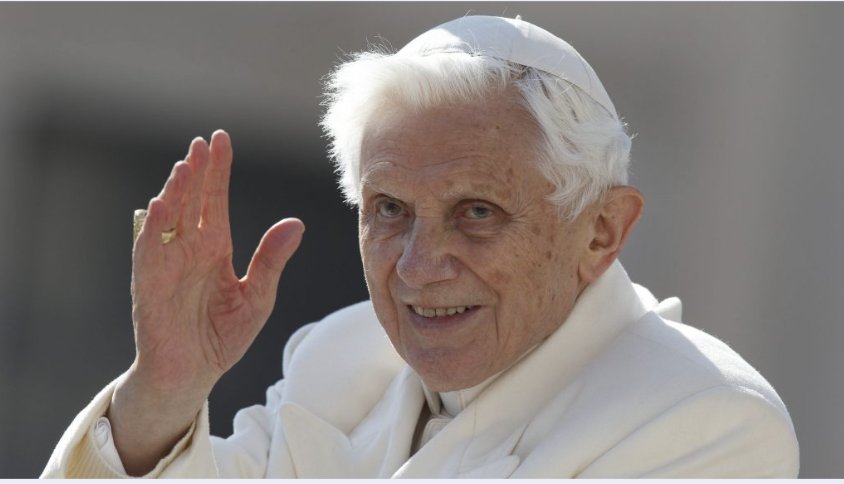
4/16 Blessed 94th Birthday to Pope Emeritis Benedict XVI


Pope Benedict XVI

Book of Heaven; Volume 2, May 2, 1899

How the whole of Heaven is veiled in the Church.
     This morning, Jesus aroused much compassion; He was so Afflicted and in Suffering that I would not dare to ask Him a single question.  We would look at each other in Silence; every now and then He would give me a kiss, and I to Him; and He continued to make Himself seen in this way several times.  On the last time He made me see the Church, telling me these Exact Words:  “The whole of Heaven is veiled in My Church.  Just as in Heaven one is the head, that is God, and many are the saints, of different conditions, orders and merits, so in My Church, in which all Heaven is veiled, one is the Head, that is the Pope, and even in the triple tiara that covers his head is the Sacrosanct Trinity veiled; and many are the members that depend upon this head – that is, different dignities, various orders, superior and inferior.  From the littlest to the greatest, they all serve to embellish My Church; and each one, according to its degree, has the office entrusted to it; and by the Exact Fulfillment of the Virtues, it comes to give of itself a Splendor so Very Fragrant in My Church, that the earth and Heaven are perfumed and illumined, and the people are so drawn by this light and by this fragrance, that it is almost impossible for them not to surrender to the Truth.  I leave it to you, then, to consider those infected members that, instead of shedding Light, cast darkness.  How much torment they cause in My Church.”…

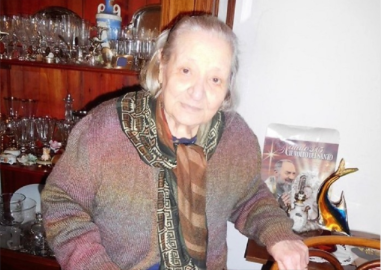
4/13 Miss Eugenia Carvelli was one of the lucky people who knew the Little Daughter of the Divine Will, Luisa Piccarreta.


Miss Eugenia Carvelli

(Click here for website)

Miss Eugenia Carvelli died on April 13, 2018 at the age of 93. She was one of the lucky people who knew the servant of God Luisa Piccarreta. Eugenia was born in Catanzaro on 10 March 1925. She was the last of six siblings, and lost both her parents at the age of three. The children, left orphans, were entrusted to a different orphanage. Providence brought Eugenia to the Institute of the Sisters of Divine Zeal in which she remained until she reached the age of majority. And it was in this place that her meeting with Luisa originated.

We report, below, some excerpts of an interview that was made with Dr. Marina Labartino and published on Lostradone newspaper in which her memories emerge.

“For the most part, during the summer or on the warm days of spring and autumn, I and the other girls had the task of taking Luisa out in the garden, on the wheelchair, after lunch, during the recreation … Luisa attended the Mass from access to the sacristy sitting on the wheelchair; she lived in a room close to the chapel, and was helped by her sister Angelina and another attendant … .. She spoke very little – Eugenia continued – she always spoke only of the Divine Will “.

In the convent, Eugenia received the sacraments of Reconciliation, Eucharist and Confirmation. Miss Maria Greca Calvi, sister of Don Benedetto accompanied her on the Christian path. In fact, she became Eugenia’s godmother of Confirmation, and promised her that, at the age of majority, she and Don Benedetto would welcome her into their home as a niece. And so it happens. At the age of 21, Eugenia left the orphanage and went to live with them; she was joined to them by a deep bond, and when she spoke to them she affectionately called them “Uncle Benedetto” and “Aunt Maria Greca”.

After her transfer to Calvi family’s house, Eugenia went with Maria Greca to visit Luisa in her house in Via Maddalena, every afternoon and spent time with her for about an hour. ” We often talked with her sister Angelina in the other room, because there were always so many people in Luisa’s that we preferred to move or leave … Luisa had a good word for everybody, a word of hope. Most people who went to her, suffered from some disorder or illness, or worried about some family members. Luisa told them to entrust themselves to the Divine Will, that the strength to bear everything would come from God. Also the foreigners who came from anywhere were so many, they came even from America “.

Eugenia reported that she often saw Luisa with a booklet in her hand while writing. “When it happened, Aunt Maria Greca and I, we immediately moved to the next room so as not to disturb.” She also remembered the molten iron bowl near the bed where Luisa vomited all her food: “Luisa ate very little, more liquid things, but after an hour she vomited everything. She was unable to throw up only the Eucharist”.

The thing that fascinated her most was the fact that Luisa never complained, that she was always sitting, in the same position for years, yet she had no sores, as it happens to people who are bedridden  for a long time.

Eugenia remembered vividly also the day of Luisa’s funeral: We were called immediately. Aunt Maria Greca and I, we ran to help dress her. As her body was soft and flexible,  we also tried to stretch it on the bed, holding it firm, but, as we loosened the grasp, the body lifted up again and restored the original position that it had held for so many years. Each of our operations aimed at lying down was vain. As Luisa remained in a sitting position when she was  alive, so she remained even after death. So, a coffin especially for her was built. “

Even the memories of the exhumation of Luisa’s body in 1963 were still shining: “Aunt Maria Greca and I, we cleaned the bones, one by one, with pieces soaked in alcohol. A few tiny fragments and the shirt that was worn by Luisa was cut into strips and given to those who wanted a memory of her. Together with some dressmakers devoted to Luisa, we made many small cardboard hearts covered with white silk. Inside, between the two cardboard hearts, we inserted the relics: some shreds of cloth or crumbs of bones. Nothing was lost or thrown away. During Mass celebrated by Uncle Benedetto in Santa Maria Greca,  there were so many foreigners. Then what remained of Luisa’s body was buried in a grave placed on one side of the Church of Santa Maria Greca “.

It is always nice to read or listen to testimonies of people who knew Luisa, because they also allow us to have a direct encounter with her humanity.

Fiat!

It is adapted from an article by Marina Labartino – “Lostradone” newspaper  – March 2017

Antonella