[gview file=”http://luisapiccarreta.co/wp-content/uploads/2017/10/Newsletter-No-186.pdf”]
Adam & Luisa in the Divine Will

[gview file=”http://luisapiccarreta.co/wp-content/uploads/2017/10/2004-August-Adam-and-Luisa-in-the-Kingdom-of-the-Divine-Will.pdf”]
Mons. Felice Posa passes away
The first Postulator of the Diocesan Investigation of the Process of Beatification and Canonization of the Servant of God Luisa Piccarreta
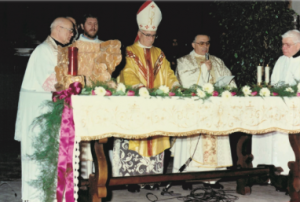
Mons. Felice Posa
From the Luisa Piccareta Official Website
On October 24, 2017, Fr. Felice Posa returned to the Father’s house after 62 years of priesthood. He was a spiritual son of Fr. Pasquale Uva and ordained a priest on August 14, 1955. He became Vicar General for the diocese of Bisceglie, Director of the “Don Uva” Health Institute in Bisceglie and a close associate of Fr. Pasquale.
Fr. Felice was Prothonotary. For years he was the Judge of the Ecclesiastical Tribunal and professor of canon and ecclesiastical law. He served as a parish priest of the churches of St. Lucia and St. Augustine. He was the Director of the Miulli Hospital Research Center, Treasurer of the Chapter in Acquaviva and Director of the Chapter Archive.
On August 9, 1994, Fr. Felice was appointed first Postulator of the Cause of Beatification and Canonization of the Servant of God, Luisa Piccarreta, and held this office until 2001.
The Association Luisa Piccarreta Little Children of the Divine Will fondly remembers his moral qualities and the praiseworthy commitment made by him in setting up the works on the Cause, supported by his faith and love for the spirituality of the Divine Will. We entrust Him to the mercy of God. We are confident that our Heavenly Father welcomed him in the Kingdom of His Supreme Fiat giving him the greatest joy: living in Him and in His Will.
Associazione Luisa Piccarreta
“Light does not speak, but makes one see and know the most hidden things … Who can withstand the power of light?”
from the Luisa Piccarreta Official Website
…which He lavished upon us, in all wisdom and insight making known to us the mystery of His will, according to His purpose, which He set forth in Christ as a plan for the fullness of time, to unite all things in Him, things in Heaven and things on earth” (Eph 1:8-10).
We are meditating on the third verse of the Hymn from the Letter to the Ephesians, which focuses on the work of Jesus Christ – the Son – in which are all the Father’s pleasures; He is the Beloved, the delight of the Father and in whom God’s plan is fulfilled.
In the previous articles we have recalled the most common themes of the catechetical tradition: the redemption, the remission of sins, the value of Christ’s blood as the instrument of redemption and remission of sins, which manifest the richness of God’s grace which “He lavished upon us, in all wisdom and insight making known to us the mystery of His will, according to His purpose, which He set forth in Christ as a plan for the fullness of time, to unite all things in Him, things in Heaven and things on earth” (Eph 1:8-10).
In these two verses the word “mystery” emerges. The term “mystery” must be traced back to the Jewish tradition and especially to the apocalyptic tradition. In the latter, there is a definite sense of time: time and history are subject to a plan of God, Who in Himself is mysterious, but a plan that God is able to reveal to His servants – if He wills and can – and which He has, indeed, revealed. There is a plan of God that has been “kept silent for centuries everlasting”, which the prophets had announced without revealing it in the fullness of its wealth. Now it has been revealed to us in Christ – in the words, in the deeds and in the person of Christ. This mystery, which is revealed and proclaimed to all nations through preaching to reach out to the whole world, is the mystery of God; that is, the revelation of God’s benevolent and powerful will (see Eph 1:8-9). It is “powerful” because nothing worldly can oppose it; it is “benevolent” because the content of this event is salvation, and it is “wise” because it is part of a plan that has its own logic and its own extraordinary internal coherence.
This mystery of God is identified with the mystery of Christ: the revelation of God’s plan is within the life and death of Christ. It can be said in different ways. In 1 Corinthians, Chapter 2, verses 6-8, St. Paul speaks of the mystery referring to the cross of the Lord: “We do, however, speak a message of wisdom among the mature, but not the wisdom of this age or of the rulers of this age, who are coming to nothing; the wisdom we speak of is the mystery of God – His plan that was previously hidden, even though He made it for our ultimate glory before the world began. None of the rulers of this age understood it, for if they had, they would not have crucified the Lord of glory” (1 Cor 2:6-8). St. Paul speaks of the cross, of Christ crucified, which is “…a stumbling block to Jews and foolishness to Gentiles, but to those whom God has called […], the crucified Christ is the wisdom of God, the power of God” (1 Cor 1:23-24). In other words, in the cross of Christ is a mystery of wisdom, which from our human perspective appears to be entirely contrary to every intellectual expectation or religious desire. In the cross of Christ one can behold the revelation of God’s love and the destruction of sin – all “the reproaches of those who reproached You have fallen on Me” (Rom 15:3), because He has become sin, the innocent One. In reality, in the cross of Christ is wisdom, a revelation of the reality of the world and of God. The depth of the world’s sin is seen in the cross of Christ at the very moment when the depth of God’s love, the radicality, and the decision of God to love us is made manifest; that is the mystery of God.
Why is Jesus Christ the mystery of God? Because in the Son the will of God is perfectly fulfilled: in Him is what God is and what God wants. Therefore, God’s plan is actually present through the perfect obedience of the Son. Coming into the world Christ said: “You have neither desired nor taken pleasure in sacrifices and offerings … Here I am, I have come to do Your will” (Heb 10:8). “Your will” means that Jesus Christ is obedient; but if He is obedient, in His life can be perceived what God wants, asks and intends to accomplish in the history of the world. It is Christ’s obedience that makes Him “transparent”, so much so that in looking at Him one finds the will and the mystery of the Father; it is the place in the world where God’s will is perfectly fulfilled.
The “mystery” of which Paul speaks is a revealed reality, which is known and to be known; God has revealed it so that we come to know it. The mystery of God is to be presented in a plain, frank, sober and brave language, with an attitude of praise and gratitude toward God and of amazement for what God has revealed to us. Therefore, it is not a mystery of concealment, rather it is a secret that is disclosed and made known; it is an event, a fact, which is contained and is essentially revealed in the Gospel. God is not a two-faced Janus, who has shown me one face and concealed the other, which He will show one day. Perhaps that day will hold a surprise and I will see him radically different from how I had imagined Him before. But it is God’s revelation fixed once and for all in Jesus Christ in the mystery of God’s love for us.
In the passage of December 22, 1926, Luisa asks Jesus for a great grace: to fulfill His Will in every way and to make It known to the whole world so that God would be reinstated in the glory that the creatures have denied Him. And Jesus replies, affirming that what Luisa wants is what God wants. When a child has the same aspiration as the Father, the child wants what the Father wants and never lives in another’s home; instead, the child works in his father’s fields. When in the company of people, the child talks about the goodness, the ingenuity and the great aspirations of the father; says that he/she is a perfect copy of the father, and from every aspect of the child one can clearly perceive that he/she belongs to that family and is a son or daughter worthy of honorably carrying within the generation of the father.
Instead, when the child does not have the same intent, little or nothing dwells in the palace of the Divine Will. The child is always wandering from one place to another, meandering in the open space of passions, doing acts unworthy of the family. If he/she works, it is in the fields of strangers; when the child speaks, the father’s plan, love, goodness and wisdom never resound on his lips, so that in his/her behavior one cannot perceive at all that the child belongs to the family. And if the child did come from that family, he or she is a degenerate child who has broken all ties and relationships that bound him/her to the family.
Therefore, only those who do the Will of God and live in It can be called His sons and daughters, a member of his Divine and Celestial Family.
When God wants to do a great work, He first does it with a single creature face to face. Mary was the first, and with her alone did He carry out all the work and great prodigy of the Incarnation. No one entered their secrets or went into the shrine of their apartments to see what passed between Him and the Celestial Sovereign. Nor did Mary occupy a place of dignity and authority in the world, because when the Lord chooses He does not look in the face of dignity and superiority, but looks at the small individual in whom He can see the reflection of His Will, which is the highest dignity and authority. From the heights of the little girl of Nazareth, in her hands were the destinies of mankind and the fate of all of God’s glory that was to be received from all Creation. So it was sufficient that in His Elect the mystery of the Incarnation would be formed. One was the Humanity of Jesus, and from it sprang forth the generation of the redeemed.
All of God’s greatest works bear the image of divine unity, and the more good they are destined to do, the more goodness of this supreme unity do they enclose. In Creation such similarities of divine unity exist; although they are separate works, they do much more good than all the multiplicity of works put together.
One is the Sun, but how many goods does it not contain? How much good does it not do to the earth? One can say that its life depends on the Sun. While it is one, it embraces everyone and everything with its light, it holds everything in its womb of light and gives each one a distinct act. Depending on the variety of things that it invests, it communicates fecundity, growth, color, sweetness, and beauty. And yet the Sun is one, while the stars are many, and they do not do the great good that the Sun does to the earth. The power of a single act, animated by the creative power, is incomprehensible and there is not one good that can not come from it. It can change the face of the earth, from a horrid desert into a blooming spring. The sky is one, and therefore it extends everywhere. Water is one, and although it seems to be divided into so many different points in all the earth, forming seas, lakes, and rivers, when it comes down from the sky it comes in a single form; there is no point on the earth where water does not reside. The same is true for the things created by God, which bear the image of divine unity. They are the ones that do the most good, are the most necessary, and without which the earth could not have life.
God wants to accomplish a marvellous work in us. We should not consider the fact that we have no external dignity or authority; this means nothing. The Divine Will is greater than anything else. Its light seems to be silent, but in this silence It invests all intelligences and speaks with such eloquence as to stun the most learned, leaving them silent. Light does not speak, but makes one see and know the most hidden things. Light does not speak, but with its gentle and sweet warmth it softens the toughest things and the most obstinate hearts. Light does not contain any seed or any matter; everything in it is pure. All that can be seen is a wave of shining light, but it knows how to penetrate to the point of generating, developing and fecundating the most sterile things. Who can withstand the power of light? Nobody. Even the blind, although they do not see it, feel its warmth; the mute and the deaf hear and receive the good that comes from light. Now, who can resist the light of the Eternal Fiat? All one’s knowledge will be more than the rays of light of the Divine Will, which will hit the surface of the earth and penetrating into hearts will bring the good that the light of the Divine Will contains and knows how to do. But these rays must have their sphere to proceed from; they need to be centered at a single point from which they spring forth to form the dawn, the day, the afternoon and the sunset in hearts, to rise again. Therefore, the sphere and the single point is one who lives in the Divine Will; the rays centered in it are his knowledge, which will give fecundity to the generation of the children of the kingdom of His Will. We must be careful and make sure that none of this knowledge gets lost, because each ray contains something special of the good that it must do to the children of the Divine Will. We would deprive God of His glory of that good which are His children.
don Marco
Burke on 100 Years Fatima – keynote address
Click here for Video
10/09 Columbus Day Observed
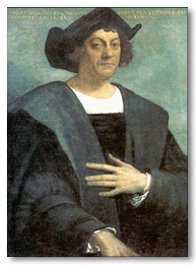
Christopher Columbus
May Our Lord Jesus Christ, His Most Holy Mother Mary,
and the Servant of God Luisa Piccarreta
Bless and Protect the The Knights Of Columbus
Click here for history on the Knights of Columbus
And, if you’re interested in “the rest of the story”, try a Web search with the words:
“Christopher Columbus Catholic”
Vatican Two opened under Pope John XXIII on 11 October 1962
and closed under Pope Paul VI on 8 December 1965.
“Participation in the celebration of the Holy Mass opens our minds and heart to recognize the great Mystery of Faith, made present in every celebration of the Holy Mass. Our Holy Father Pope Benedict XVI, by his Apostolic Letter Summorum Pontificum, which was promulgated three years ago, on July 7th of 2007, has desired that the two expressions of the one Roman Rite in the Church, that is, the Roman Missal of Blessed John XIII and the Roman Missal of the Servant of God Pope Paul VI, should mutually enrich one another for the sake of a greater holiness of life among all the faithful and for the sake of drawing to Christ those who do not yet believe in Him Whose glorious presence with us in the Church appears most fully in the Sacred Liturgy, above all, in the Holy Sacrifice of the Mass.”
By His Excellency Archbishop Raymond Burke, Prefect of the Apostolic Signatura.
Wednesday, 29th September 2010
Note: On November 20, 2010, Pope Benedict XVI elevated His Excellency Archbishop Burke to the Cardinalate, as Cardinal-Deacon of Sant’Agata dei Goti
Book of Heaven
The Call of the Creature to the Order, the Place and the Purpose
for which He was Created by God
The Servant of God, Luisa Piccarreta the Little Daughter of the Divine Will:
Volume 25 – October 10, 1928
My life is carried out before my Jesus in the Sacrament, and—oh! how many thoughts crowd my mind. I was thinking to myself: “After forty years, and months, that I had not seen the tabernacle, that I had not been given to be before His adorable Sacramental Presence—forty years, not only of prison, but of exile—finally, and after so
long an exile, I have come back as though to my fatherland, though a prisoner,
but no longer exiled, near my Jesus in the Sacrament; and not once a day, as I
used to do before Jesus made me a prisoner, but always—always. My poor heart, if I have it at all in my chest, feels consumed at so much love of Jesus.”
But while I was thinking of this and other things, my highest Good, Jesus, moving in my interior, told me: “My daughter, do you think that My keeping you imprisoned for forty years and more has been by chance, without a great design of Mine? No! no! The number forty has always been significant and preparatory to great works. For forty years the Jews walked in the desert without being able to reach the Promised Land, their fatherland; but after forty years of sacrifices they had the good of taking possession of it. But, how many miracles, how many graces, to the point of nourishing them with the celestial manna during that time.
“A prolonged sacrifice has the virtue and strength to obtain great things from God. I Myself, during My Life down here, wanted to remain in the desert for forty days, away from all, even from My Mama, to then go out in public to announce the Gospel which was to form the life of My Church—that is, the Kingdom of Redemption. For forty days I wanted to remain as risen, to confirm My Resurrection and to place the seal upon all the goods of Redemption. So I wanted for you, My daughter: in order to manifest the Kingdom of My Divine Will, I wanted forty years of sacrifices. But, how many graces have I not given you! How many manifestations! I can say that in this great length of time I placed in you all the capital of the Kingdom of My Will, and everything that is necessary in order to make creatures comprehend it. So, your long imprisonment has been the continual weapon, always in the act of fighting with your very Creator, to have you manifest My Kingdom. . . .
Volume 22 – September 8, 1927
. . . After this, I (Luisa) was following the Holy Divine Volition in the act in which my sweet Jesus separated from the Sovereign Queen to go into the desert . . .
. . . “My daughter (Luisa), the number of forty days is symbolic and significant in My Life down here. When I (Jesus) was born, for forty days I wanted to remain in the grotto of Bethlehem—symbol of My Divine Will that, while being present in the midst of creatures, was as though hidden and outside of the city of their souls. And I, in order to repair for the forty centuries of human will, wanted to remain outside of the city for forty days, in a miserable hut, crying, moaning and praying, to call back My Divine Will into the city of souls, so as to give It Its dominion.
“And after forty days I went out to present Myself to the Temple, and reveal Myself to the holy old Simeon. He was the first city I was calling to the knowledge of My Kingdom; and his joy was so great, that he closed his eyes to the earth to open them to
eternity. Forty days I spent in the desert, and then, immediately, I did My Public Life, to give them the remedies and the means in order to reach the Kingdom of My Will. For forty days I wanted to remain on earth after My Resurrection, to confirm the Kingdom of the Divine Fiat and Its forty centuries of Kingdom that It was to possess.
“So, in everything I (Jesus) did down here, the first act was the restoration of the Kingdom; all other things entered into the secondary order, but the first link of connection between Me and creatures was the Kingdom of My Will. Therefore, when it is about My Will, I hold nothing back, neither light, nor sacrifices, nor manifestations, nor happiness—they are seas that I release from Myself so as to make It known, to make It reign, and to make It loved.”
Newsletter #185 LCDW October 2017
[gview file=”http://luisapiccarreta.co/wp-content/uploads/2017/09/Newsletter-No-185.pdf”]