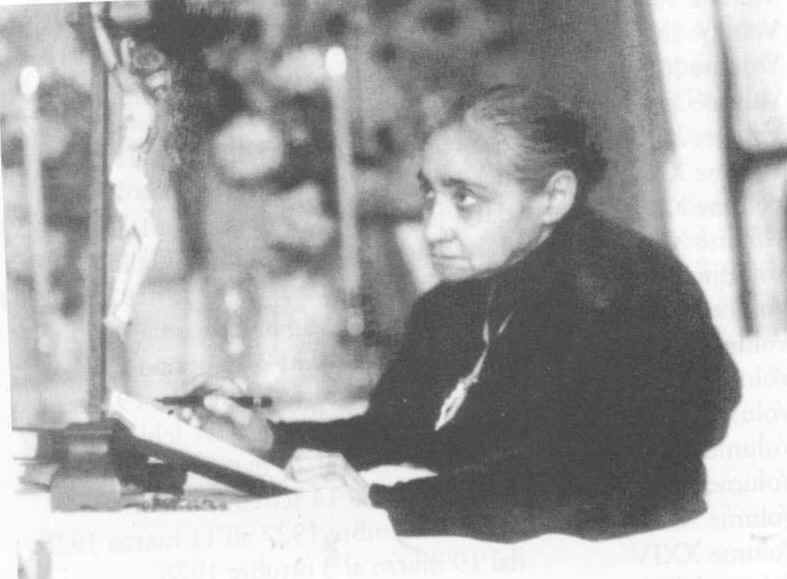
11/16 There is no sacrifice without denying oneself, and sacrifice and denying oneself give rise to the most pure and perfect love.

Book of Heaven
11/16/03 – Vol. 6


This morning, as I was outside of myself, I found myself with Baby Jesus in my arms, and with a virgin, who laid me on the ground to make me suffer the crucifixion – not with nails, but with fire, placing a charcoal of fire on my hands and feet.  Blessed Jesus was there assisting me while I was suffering, and said to me:  “My daughter, there is no sacrifice without denying oneself, and sacrifice and denying oneself give rise to the most pure and perfect love.  And since sacrifice is sacred, it happens that it consecrates the soul to Me, as a sanctuary worthy of Me to make of it my perpetual dwelling.  So, let sacrifice work in you to render your soul and body sacred, so that everything may be sacred in you; and consecrate everything to Me.”

11/15 The soul forms her paradise on earth.

Book of Heaven
11/15/16 – Vol. 11


I was lamenting to my sweet Jesus that He no longer loved me as before, and He, all goodness, told me: “My daughter, not loving one who loves Me is impossible for Me. Rather, I feel so drawn toward her, that at the littlest act of love she does for Me, I respond with triple love and I place a divine vein in her heart, which administers to her divine science, divine sanctity and virtue; and the more the soul loves Me, the more this divine vein rises, and watering all the powers of the soul, it diffuses for the good of the other creatures. I have placed this vein in you, and when you lack my presence and do not hear my voice, this vein will make up for everything, and will be voice for you and for the other creatures.”

Another day, I was fusing all of myself, as usual, in the Will of blessed Jesus, and He said to me: “My daughter, the more you fuse yourself in Me, the more I fuse Myself in you. So, it is on earth that the soul forms her paradise; according to how much she fills herself with holy thoughts, with holy affections, desires, words, works and steps, so does she keep forming her paradise. To one more holy thought or word, one more contentment will correspond, and many varieties of beauty, of contentments, of glory, for as much more good as she has done. What will the surprise of this soul be when, once the prison of her body is broken, immediately she will find herself in the sea of as many pleasures and happinesses, as much light and beauty, for as much more good as she has done – be it even a thought!”
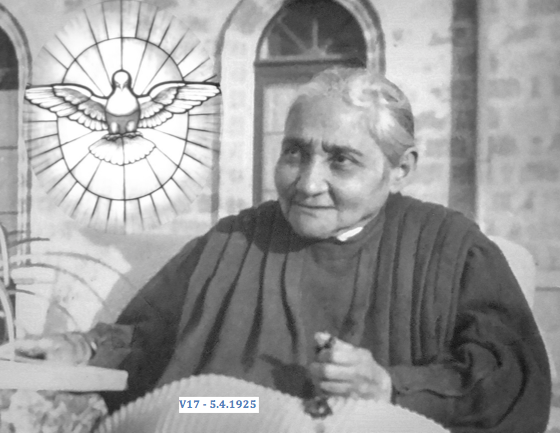

11/10 Effects of meditating continuously on the Passion.

Book of Heaven
11/9/06 – Vol. 7

Finding myself in my usual state, I was thinking about the Passion of Our Lord; and while I was doing this, He came and told me: “My daughter, one who meditates continuously on my Passion and feels sorrow for it and compassion for Me, pleases Me so much that I feel as though comforted for all that I suffered in the course of my Passion; and by always meditating on it, the soul arrives at preparing a continuous food. In this food there are many different spices and flavors, which form different effects. So, if in the course of my Passion they gave Me ropes and chains to tie Me, the soul releases Me and gives Me freedom. They despised Me, spat on Me, and dishonored Me; she appreciates Me, cleans Me of that spittle, and honors Me. They stripped Me and scourged Me; she heals Me and clothes Me. They crowned Me with thorns, mocking Me as king, embittered my mouth with bile, and crucified Me; while the soul, meditating on all my pains, crowns Me with glory and honors Me as her king, fills my mouth with sweetness, giving Me the most delicious food, which is the memory of my own works; and unnailing Me from the Cross, she makes Me rise again in her heart. And every time she does so, I give her a new life of grace as recompense. She is my food, and I become her continuous food. So, the thing that pleases Me the most is meditating continuously on my Passion.”

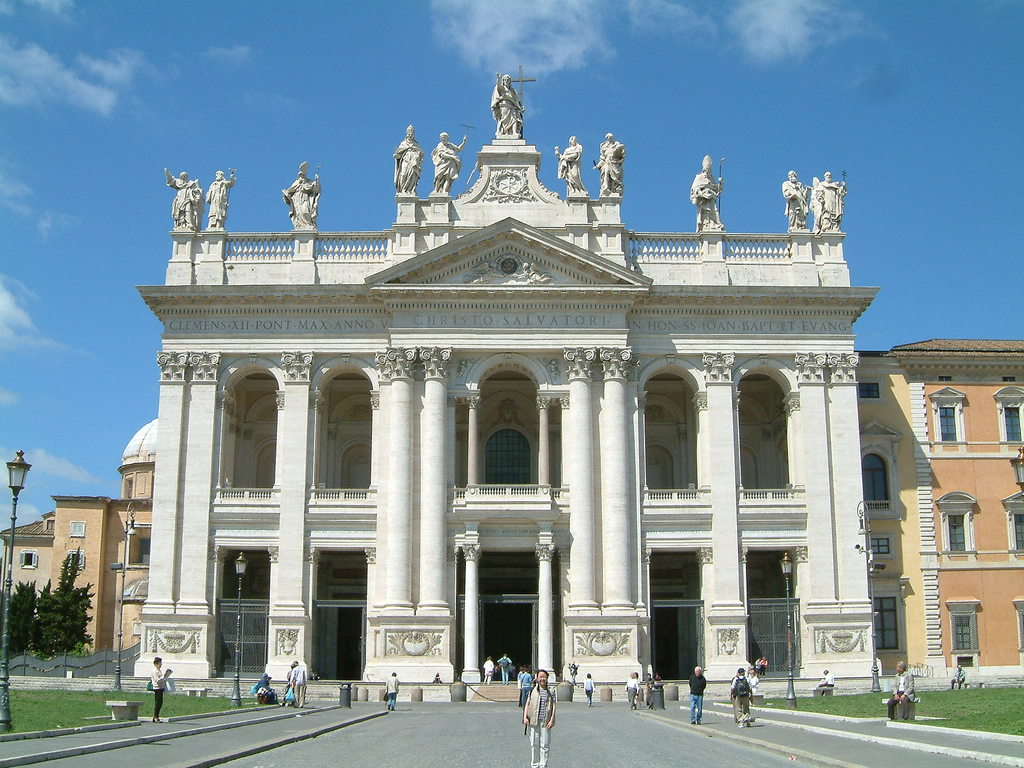
11/8 Eve of the Dedication of the Lateran Basilica

S_Lateran Basilica

St. John Lateran Basilica

This is the oldest, and ranks first among the four great “patriarchal” basilicas of Rome. The site was, in ancient times, occupied by the palace of the family of the Laterani. A member of this family, P. Sextius Lateranus, was the first plebian to attain the rank of consul. In the time of Nero, another member of the family, Plautius Lateranus, at the time consul designatus was accused of conspiracy against the emperor, and his goods were confiscated. Juvenal mentions the palace, and speaks of it as being of some magnificence, “regiæ ædes Lateranorum”. Some few remains of the original buildings may still be traced in the city walls outside the Gate of St. John, and a large hall decorated with paintings was uncovered in the eighteenth century within the basilica itself, behind the Lancellotti Chapel. A few traces of older buildings also came to light during the excavations made in 1880, when the work of extending the apse was in progress, but nothing was then discovered of real value or importance. The palace came eventually into the hands of Constantine, the first Christian emperor, through his wife Fausta, and it is from her that it derived the name by which it was then sometimes called, “Domus Faustæ”. Constantine must have given it to the Church in the time of Miltiades, not later than about 311, for we find a council against the Donatists meeting within its walls as early as 313. From that time onwards it was always the centre of Christian life within the city; the residence of the popes and the cathedral of Rome. The latter distinction it still holds, though it has long lost the former. Hence the proud title which may be read upon its walls, that it is “Omnium urbis et orbis ecclesiarum mater, et caput”.

(Taken from Catholic Encyclopedia)