11/1 – 11/8 Here’s How You Can Help the Holy Souls in Purgatory (Nov. 1-8)

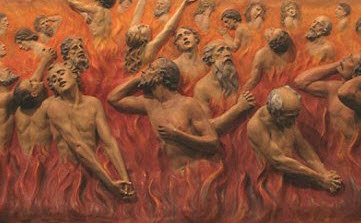
A plenary indulgence will be obtained if visiting a cemetery November 1 thru 8 but a partial indulgence will occur if the following is done:

1.  Visit a Catholic Cemetery November 1 thru 8

2.  Pray for one person per day applicable only to the souls in purgatory.

3.  Pray verbally or mentally for a specific soul (a spouse, family member, friend, religious, or a soul who does not have anyone to pray for them.)

4.  Pray the Eternal Rest Requiem and also but not required an Our Father, a Hail Mary, and the Apostles Creed.

The Eternal Rest Requiem:

Eternal Rest grant unto them, O Lord.  And let the perpetual light shine upon them.  And may the souls of all the faithful departed through the mercy of God, Rest In Peace.  Amen.

(Pray this Prayer all year long not just in November and particularly when you pass by a cemetery.  After these souls in purgatory are in Heaven, they will intercede for us.)

5.  Optional:  Sprinkle the grave with Holy Water if you are at the specific person’s grave you are praying for.

Source:

9/15 Eve of ROSH HASHANAH/FEAST OF TRUMPETS starts Sundown Today and Ends 9/17

STARTS AT SUNDOWN TODAY

ab19336.jpg

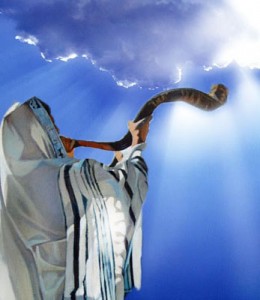
The Feast of Trumpets or Rosh Hashanah

 Lev 23:24 Speak unto the children of Israel, saying, In the seventh month, in the first day of the month, shall ye have a sabbath, a memorial of blowing of trumpets, an holy convocation.

Themes linked to THIS Feast of the Lord are repentance, resurrection, kingship, coronation and a marriage feast. Rosh Hashanah is not only the start of “The Day of the Lord” (Millennium), but is also the day of the resurrection! It has to do with the moon and its 29-½-day cycle of renewal.
In this period of slightly less than 30 days, the moon goes from darkness to light and back to darkness again. This is not a haphazard occurrence attributed to evolution or science. God planned it for many reasons, one being as a picture of resurrection and renewal. With each cycle of nearly 30 days the ancient rabbis understood that the moon was being reborn or “born again.”

NEW MOONS

In Yeshua’s day, the moon was so important that a Jewish festival was proclaimed at the beginning of every month. This was called the New Moon Festival and in the apostle Paul makes note of it (Colossians 2:16). King David provoked King Saul over it (1Samuel 20:5). In the millennium all nations will celebrate the New Moon festival every month Isaiah 66:23. It is obvious from the Scriptures that in the millennium God has no plans to do away with His system.
Since it is so important, exactly what is a new moon? It is the opposite of a full moon. Every month the moon goes through a complete cycle of renewal called Rosh Chodesh, the head or beginning of the renewed month. Twelve times a year on Rosh Chodesh, the moon always starts off with its disk being very dark to the naked eye. Over the course of 15 days it gets brighter and brighter until it finally reaches a full white-faced disk or full moon. Over the next 15 days it becomes darker and darker and finally becomes invisible to the naked eye again.
The ancient rabbis saw a great lesson in this. Just as the moon has no light of its own but receives its light from the sun, so we too have no light of our own and must receive it from God. As the moon goes through a near 30-day cycle of dark to light to dark, so we need constant spiritual renewal and repentance. Like the moon, we too must be reborn or “born again” into the Messiah and constantly renewed through REPENTANCE. This is why God called the moon a faithful witness in the sky Psalm 89:37. We have lost touch with God’s faithful witness in the sky. But Yeshua, and the people of His day never lost touch with it. The new moon was necessary for the Jewish calendar, and it was also a monthly festival celebrated with a feast fit for a king! 
So, when Yeshua said His famous words Matthew 24:36, it had far-reaching implications. Here are the words of Yeshua in Matt 24:36 But of that day and hour knoweth no man, no, not the angels of heaven, but my Father only.
Taking phrases out of Jewish context can lead one to misunderstand His words. For example, in many places of the New Testament. Yeshua knew the future and talked about it openly. In one instance He warned His disciples about their future saying, “See, I have told you ahead of time” Matthew 24:25. His context concerned the tribulation, the destruction of the Temple, the rise and fall of false messiahs (antichrists), etc. If He knew the future in Matt 24:25, and the context is about the Day of Trouble. Why would He suddenly speak as though He did not know the future in the same context just 11 verses later in Matt 24:36? Was He confused? Or was He making perfect sense in light of the customs of the Jews? The phrase, “Of that day and hour no man knows” refers to the sanctification or setting apart of the new moon. 
Twelve times a year a new Jewish month (Rosh Chodesh) was announced to the people. We have no system like it today. We look at a calendar to determine the first of the month; the Jews, however, looked at the moon. This system of time keeping was given to the Jews to know precisely when the Holy Feasts of the Lord would fall. The moon was the faithful Jewish calendar or witness in the sky. And 12 times a year was sanctified as the basis of the Jewish calendar.
To correctly announce the first day of the month, established by the new moon, was one of the Sanhedrin’s greatest responsibilities. They had to ensure the people knew when the first of the month began 12 times a year! Therefore God said to the leaders of Israel:
Leviticus 23:4 These are the feasts of the LORD, even holy convocations, which ye shall proclaim in their seasons.
As soon as the new moon was announced, the first day of the month began. In Hebrew, those observances have always been called “appointed times” or moedim, literally “a sacred and set time”. From God’s perspective, the appointed times belong to Him and no one has the authority to change the celebration of an appointed time. To do so was a serious matter and great sin. Appointed times had to be kept because of their Messianic implications.
Also notice the phrase, “holy convocation”. God’s appointed times are actually “holy rehearsals” set apart to reflect events in the Messianic era. God said to the people, “Pay attention! On this day I am going to do something! Wake-up! The Jews were to know and practice all of God’s holy convocations. This is the essence of Paul’s words that the Shabbat, new moons and festivals, “are a shadow of things to come to the body of Messiah” (Colossians 2:17).
Twice a year, in the spring and fall, there were several appointed times and specific days of holy convocation dedicated to the Lord. The new moon was the key in being able to fulfill those set times, holy convocations and rehearsals. For example, when the new moon was announced on the first day of Nisan, also called Aviv, or Abib, the people knew when to observe the holy convocations and set times. 
Again, once the Sanhedrin set Rosh Chodesh, or the beginning of the new month by sighting the new moon, the rest of the festivals were calculated. However because of the 29.5 day cycle, and a 365.25 day year some years would need a 13th month. Determining the new moon in the FIRST month of Abib or Nissan was the most important for that determination set the appointed times or Feast of the Lord for the whole year. That first month called Nissan was also called Abib. When the BARLEY WAS ABIB. When the barley would be abib means that it has grain heads at the time of the new moon in Jerusalem. This can also be effected by a lack of sufficient rain. With no rain the barley seeds would not germinate. The barley would not be seen abib if there was no rain. Then, all the feasts of the Lord would be postponed by a month in that year.
The seventh month, Tishri, was particularly important because it was the only month that had a holy convocation or appointed time on the first day of the month. This posed a unique problem. The first day of Tishri was the appointed time called Rosh Hashanah, the Feast of Trumpets (Leviticus 23:24). Yet no one could begin observing the festival until they heard those famous words from the President of the Sanhedrin, “Sanctified!” No one in Israel could plan for the first day of the seventh month Tishri, called Yom Teruah or the Feast of Trumpets (also called Rosh Hashanah). When they knew how many days to count to a festival, that would be easy.
But: HOW COULD THEY PLAN FOR A FESTIVAL THAT THEY DID NOT KNOW AT WHAT DAY OR HOUR IT WOULD PUBLICLY BE ANNOUNCED AND THUS BEGIN?
That is why, to this day, the Feast of Trumpets is a 2 day feast of the Lord.
This was unique to Rosh Hashanah and dependent upon the testimony of the two witnesses. Prophetically, we are informed of two important witnesses during the Great Tribulation: Rev 11:3 And I will give power unto My Two Witnessesand they will prophesy 1260 days, clothed in sackcloth. 
Of course, anyone could look up into the twilight or early morning sky and, if they looked hard enough, see the new moon or at least its “horns”. And certainly a good observer knew when about 29-½ days were completed since the previous Rosh Chodesh. Once proclaimed, the Feast of Trumpets (Rosh Hashanah) commenced. Until that public announcement, everyone had to wait before they could begin the observance of the festival. No one could begin the festival beforehand! Thus, we can more clearly see the analogy Jesus made with His words:
“But of that day and hour knoweth no man, no, not the angels of heaven, but my Father only” was in regard to this important festival of the Feast of Trumpets. Jesus told the apostles as clearly as possible that His Second coming and end of the age of grace and testing of mankind as we know it, was what the Feast of Trumpets is all about. The Feast of Trumpets calls us to seek the Lord while HE MAY YET BE FOUND!

Feast of Trumpets, Modern Rosh Hashanah, is the sounding of the trumpets on the first day of the seventh month (Tishri) of the religious calendar year (Lev. 23:24; Num. 29:1). The trumpet referred to here was the shofar, a ram’s horn. It was distinctive from the silver trumpets blown on the other new moons. Silver trumpets were sounded at the daily burnt offering and at the beginning of each new month (Num. 10:10), but the shofar specifically was blown on the beginning of the month Tishri.
This day evolved into the second most holy day on the modern Jewish religious calendar. It begins the “ten days of awe” before the day of atonement. According to Lev. 23:24-27 the celebration consisted of the blowing of trumpets, a time of rest, and “an offering made by fire.”
Thanks to Jim Searcy of Great Joy in Great Tribulation website (moresureword.com) for this summary of Rosh Hashanah which begins approx. on Sept. 4, 2013. Le us be in prayer during this time, repenting and anxiously

9/7 And even more on Tomorrow is the Birthday of Mary Bambinella!

M_Mary Bambinella
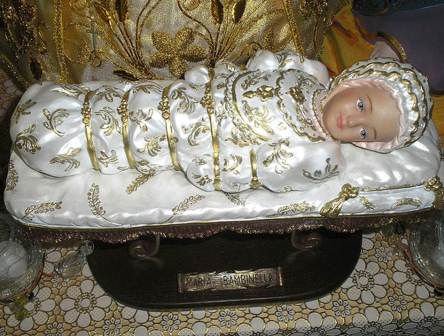
Mary Bambinella

Written by ton nocellado

Our beloved Founder, St. Hannibal Mary Di Francia had singular devotion to the Blessed Virgin Mary under the title Bambinella or the Child Mary. One of the testimonies given for the cause of his canonization affirmed that the Child Mary was the poetry of his heart. The Founder himself deemed it necessary to his sons and daughters-the Rogationists and the Daughters of Divine Zeal to have a solemn celebration of the feast by preparing a triduum, procession, sermons and vigil on the eve. It was a one of St. Hannibal’s dearest forms of piety as he was madly in love with the Bambinella. So much so that at the end of this saint’s earthly life, the Child Mary assured him of her love and protection.

Did you know how this devotion gets into the traditions of the Rogationists and Daughters of Divine Zeal? In the book The Father’s Soul, Fr. Teodoro Tusino narrated the unexpected event that led into the introduction of this beautiful Marian Feast in our tradition.

The story of the devotion to Mary Bambinella was connected with the Daughters of Divine Zeal’s house in Taormina which was later on dedicated to her. A beehive was given by Fr. Antonio Catanese to the community of the sisters. One day, when the community noticed that the beehive was empty, the Mother Superior reported it to Fr. Hannibal who the latter just smiled at the news. Coincidentally, a sister in-charge of the sacristy happened to find a little statue in unrecognizable state and mistook it for St. Anthony. The sister brought it to Fr. Hannibal just when the Mother Superior was informing about the empty beehive. As soon as Fr. Hannibal saw the little statue, he recognized it as image of Mary Bambinella. Fr. Hannibal took the occasion to draw parallelism between the empty hive and little image as he said, “The Bambinella is the queen bee and we are the bees.”   Immediately, St. Hannibal had the image restored and the sisters dressed it as fit for a queen. From that time on, in all communities of St. Hannibal, this beautiful feast of the Mary Bambinella or the Child Mary had been celebrated with great solemnity recognizing how dear this devotion to the St. Hannibal and to his two congregations. 
(p. 338)

In the Church’s Liturgical Calendar, this Feast of Bambinella or Child Mary is being celebrated every year on September 8, which is commonly known as the Birthday of Mama Mary. Let us then consider some important points of reflection on Virgin Mary drawing out from the Devotion of St. Hannibal in celebrating this beautiful feast of Mary Bambinella. In the Triduum for the feast, the Virgin Mary is given illustrious titles corresponding her singular role in God’s wonderful plan.

Mary as the Daughter of the Eternal Father. Being the privileged daughter, God willed that Child Mary to be Immaculately Conceived so as preserved her from any stain of sin in view of her important role on God’s plan of Salvation. She became then God’s masterpiece of creation as he enriched Mary with the fullness of grace and inflamed her with the divine love.

     Mary as the Mother of God. As Christians, we give the highest veneration to Mary as much as she is the Mother of God-the Theotokos. In God’s eternal plan, the Eternal Word who is Jesus has chosen the Immaculate Child Mary to be his mother and adore her with all the graces. As a mother, she spent her entire life with Jesus unto his suffering, death on the cross and finally to receive the good news of the resurrection.

Mary as the Virgin Spouse of the Holy Spirit. From the time Mary expressed her Fiat, the Holy Spirit welcomed her to be the spouse and clothed her with graces and goodness. Later on, in the Pentecost Mary stood by the apostles as Holy Spirit descended upon them. She became then the Mother and Model of all the followers of Christ.

With our celebration of the Birth of the Virgin Mary, let us then be filled with joy knowing that she brought the dawn of hope and salvation to the world. The Blessed Virgin Mary is the Model of all Christians as she is the Humble Handmaid and the Obedient Daughter of the Father, the Caring and Faithful Mother of Jesus and the Beloved Spouse of the Holy Spirit.

May the Lord be blessed now and forever, through Mary!!!

9/4 Labor Day

Volume 31: August 28, 1932
Divine alternations:  work and rest.
How God takes the creature always by ways of love.
Universal love and special love.

My little mind continues to wander in the Divine Volition.  It seems to me that I cannot be without plunging myself into Its waves to find, in act, what It has done for love of us.  But in the midst of such great immensity of love, my heart had its loving moans because of the privations of my sweet Jesus – His profound silence.  I feel that, in my soul, although there is a pure air, a heaven most clear, studded with twinkling stars of all colors, a most refulgent sun that with its light beats continuously on my littleness, so that everything may be Divine Will; everything is peace and serenity, there is not even a slight breath of wind that could make noise, and this, however, is all effect and property of the Eternal Fiat – yet, I was saying to myself: ‘It seems to me that I lack the King, I lack the One who, with a love that I cannot tell, has operated and ordered everything in me.  And because I lack Him, I feel lonely.  But, tell me, why have you left me?  Why do You not speak?’  And my dear Jesus, letting Himself be wounded by my moans, and sustaining me in His arms, told me:  “My daughter, do not be surprised, this is my usual way – after work I want to find rest in my own labor, in the midst of my own works which, more than soft bed, are fit to give Me rest in act of profound adoration and in mute silence.  Rest after work is the requital for the work, it is the taste and contentment that sacrifice can give.  Did I not do the same in Creation?  First I created It with my Fiat, because Our word is work, it is step, it is everything; and after I ordered and operated everything, I found the most beautiful and sweet rest.  These are the alternations of Our Supreme Being – work and rest.  Work calls Us to rest, and rest calls Us to work. So, don’t you want Me to rest in your soul Everything that you see in you is nothing other than the work of your Jesus.  Each word I spoke to you was a work that I was doing, and from within my word I formed the new creation in you, more beautiful than Creation Itself.  In fact, that one was to serve for the bodies, while this one was to serve the souls, to give them the life of my Will.  If I did not make alternations of work and rest in your soul, it would be a sign that you had not given Me the freedom to do my work in your soul with my creative power, and therefore I would have continued my work unto reaching the intent, to then rest.

If I do not finish, I do not rest; and if after resting I resume the work, it is because I begin new works.  Don’t you want Me to rest under this heaven so serene, these stars and sun that rain down upon Me like sweet refreshments, and making for Me the most beautiful lullabies they invite Me to rest, and in mute silence they say to Me:  ‘How beautiful are your works – your operating Will, your creative power that gave us life.  We are your works – rest in us, and we will form your glory, your perennial adoration’?  Upon so sweet a speaking I take rest, and at the same time I keep vigil and I preserve my work, and I prepare other works to do – and if you knew what the first work is that I do after resting!  I open my work by saying to the creature a sweet ‘I love you’of mine; I want to begin my work with my love, so that the creature, feeling wounded and enraptured by the irresistible force of my love, lets me operate, and gives Me the field of action in her soul.  I take her, I begin my works, I ask for sacrifices, always by way and by dint of love.  My love makes her happy, invests her, absorbs her, inebriates her; and in the face of my love, inebriated as she is, she lets Me do what I want and reaches the point of sacrificing her life for Me, because an ‘I love you’of mine, coming out from the depth of my Divinity, contains the immensity that is present everywhere, the infinity that never ends, the power that can do anything, the wisdom that disposes everything – so, everything that exists feels the power of my ‘I love you’, and all say it together with Me.  Heaven says it to her with the whole Celestial Court; the stars say it with their twinkling that changes into ‘I love you’; the sun, the wind, the air, the water say to her:  ‘I love you’, because since I said it, my ‘I love you’ has resounded in everything and everywhere, and all say it together with Me.  And the creature feels she is under the rain of an immense ‘I love you’, and feeling drowned by my love, she lets Me operate, she utters not a breath, and she offers herself to let Me accomplish my most beautiful works.  And even though she too feels the need to tell me ‘I love You’, she sees, however, that her own is too small in the face of mine, because it does not possess the weapons of immensity, power and infinity.  Yet, she does not want to remain behind, and she uses the industry of saying it in the power of my Will, and – oh! how much I enjoy it, and it is a spur for Me not only to work, but to repeat for her an ‘I love you’of mine, direct and special.  In fact, it is true that I love all, my love never ceases for anyone; but when I want to do special labors, new works, more distinctive designs, I am not content with my general love, but I add a special and distinct love which, while it serves to charm the creature, serves as material, as the ground on which to form my labor and lay my works.  Therefore, let Me do – I know when work, word, silence and rest are necessary.”

8/ The Spiritual Work of Mercy: Counsel the doubtful

Leading an easier life is the ideal to which all aim, a more direct life without difficulties, without having to opt for choices. Instead, we are continuously subjected to evaluate situations and make decisions, some of which are easier, others more difficult, others literally throw us into state of crisis. This could depend, not only, on a complicated situation, but above all  on our mood or on the fact that we are people strongly uncertain.

In those cases, the support of someone who can help us to open a gate in the darkness that we have before us becomes really providential and this also for a natural need of human beings to live and share with others their own existence, to be able to ask, give or receive help when the need arises.

A need that is totally spiritual, whereas with the corporal works of mercy, although a material need is satisfied we are reborn, however, also in  spirit.

The hardest task belongs to the spirit both when we have to ask for, to disclose our needs, both when there is a need for action. The spiritual  needs as they are less clear than the corporal ones, can also be concealed, but sooner or later they arise  and a help request comes out.

The spiritual works of mercy themselves are more difficult to practice, they requires relationships of true brotherhood, respect and listening from the heart and above all humility and mutual trust.

To have doubts, if this is not a pathological condition, is natural in life, it is part of our limitations, of our growth. The novelty, what we do not know always scares us a little, fear is a primordial feeling that is innate in man, and makes us experience some initial indecision, but it does not have a negative meaning, it can help to protect us from unpleasant situations.

The act of doubting also means that we must not content ourselves, but we must go beyond our securities for a natural instinct of man to know and experience, enriching us with some advice that can be really valuable.

You must be careful to not depend on others to make your own choices, but you should accept the advice through a critical examination, considering the wisdom of one who advises, so that you do not lack your responsibility and freedom, ” Take the advice of sensible people, and never treat any useful advice lightly.”(Tobit 4:18).

Also the act of advising has a double meaning: an advice can be good, if it is given with selflessness and spirit of compassion for the other’s situation, that is when you empathize with the other; but it could also be a bad advice, when you do not know enough about a  subject to be able to assert your opinion or when, some personal interests, both material and spiritual are concealed behind the advice, “Don’t ask  a buyer for advice about selling and a stingy person about gratitude” ( Sir 37:7 to 11).

The Scriptures in fact warn against those who give advice to avoid the risk of being manipulated. Before asking advice it is good that we wander about the person that we have to address  and on what we should receive advice . Not everyone can advise on everything. The text of Sirach is very clear: “Anyone can give advice, but some people do so only in their own interest. Be careful when somebody offers you advice. Find out first what his interest in the matter is. “(Sirach 37:7  8).

The text seems willing to dissuade us from seeking help or moral support, but the advice is to be wary of those who want to give advice, apparently they want to encourage the needy, but essentially they want to consider themselves. We might be tempted to want to affirm our decision on the other, being convinced that ours is the appropriate advice. The intention may be good, but the advice may also be a gaffe. We often give some suggestions as we lived the same experience, but we do not consider the factors that determine it and the other’s feelings. The very strong certainties or being overconfident are two negative aspects of the act of advising.

This also happens to those who live faith as a kind of totalitarian regime, but it is not so. The Christian faith does not impose itself, but it is indulgent and respectful of freedom, it is offered to the man who freely makes his choices. Therefore, in order to be good, the advice must be an extract of the Christian faith which is based on humility, trust and certainties that can be demonstrated only through Jesus’ humanity. In fact we can be experts and teachers of the Christian Law, but this does not imply that we are excellent advisors, if we are not connected to each other in a relationship of empathy.

The greatest example to practice this work of mercy is given to us by Jesus. He helped all the people that turned to Him by showing their doubts. For all He found words of consolation and explanation. He encouraged people to solve their doubts and to believe in God, all with gentleness and humility, for His trust in the Father was very great.

To help the doubtful is therefore necessary that we first believe in God and in the teaching of the Church, or, as Jesus teaches us, we will become like a blind man who leads a blind man, and we both will fall into a pit (Luke 6,39- 42). As the Blessed Virgin Mary also did, it is necessary for the fulfillment of this works of mercy that we follow Jesus, become His true followers and put into practice His teachings on the basis of His greatest attribute: Love.

Luisa, too, was not free from doubting. Certainly, the constant presence of Jesus at her side did not make her arrogant nor she was spared from asking herself questions and from fearing that she was mistaken about her state. In her humility the doubt that often assailed her was that it wasn’t always Jesus who appeared to her. However she, aware of her nothingness, remedied her torment, by asking the figure she had before her, and that she could recognize as Jesus, a sign cross and a prayer, and in this way she regained peace.

Jesus Himself taught her that the most effective means for the soul to be freed of every doubt was to protest before Heaven and earth that she does not want to offend God and that she does not want to consent to any temptation.

Another of Luisa’s constant doubts concerned the fact that her state was not God’s will, but it was her own fantasy.

Jesus reassures her by telling her that the surest sign in order to know whether a state is His Will is when one feels the strength to sustain that state  and it is also His Will for her to be caught by the fear that her state may not be His Will; this fear and doubt purifies her of every slightest defect.

As Jesus dispels her many doubts, He teaches her, conforms her to the Divine Will through her training and education to trust, simplicity, which Luisa passed down, in turn, to those who went to her for advice. “Many people went to her to express their needs of the spirit and body…. .And everyone had,as an answer to their problems, the loving conformity to the Divine Will, which not only easy the pain and makes it praiseworthy, it also sheds light on what to do [1].

Knowing how to counsel is, therefore, a gift that we should use first with ourselves, through a self-examination in front of God, so that He may help us to judge our humility and our faith in Him and our ability to wait the divine light before acting wisely. And as in giving drink to the thirsty, water satisfies thirst  removing it so the advice from a wise man, becomes a source of life that responds to the doubters, dissolving their doubts about faith.

Counseling the doubters is a condition to approach life together, walking side by side, recognizing and learning from those who have the gifts to do that: wisdom, age, the priestly ministry. And since counsel is a gift of the Holy Spirit, of operating in harmony with God, let’s pray to the Holy Spirit to pour forth it on all humanity


[1] MARIA ROSARIA DEL GENIO, The Sun of My Will, Vatican City State, Libreria Editrice Vaticana, 2014, pag. 64

Riccardina
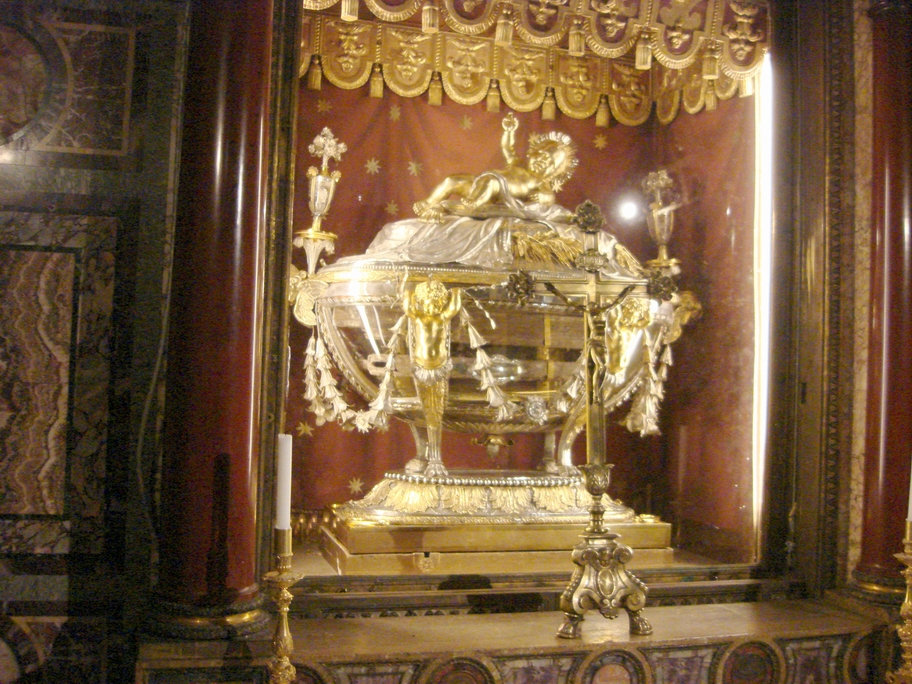
8/4 Eve of the Feast of the Dedication of the Basilica of St. Mary Major in Rome

M_StMaryMajor The Confessio believed to contain relics of the Crib of Bethlehem
The Confessio believed to contain relics of the Crib of Bethlehem
St. Mary Major Basilica 

1/10/03 – Vol. 4

The most pleasing and consoling words for the sweet Mama: ‘Dominus Tecum’.

This morning, after I struggled very much, the Queen Mother came with the Baby in Her arms, and She gave Him to me, telling me to keep Him courted with continuous acts of love. I did as much as I could, and while I was doing this, Jesus told me: “My beloved, the most pleasing and most consoling words for my Mother are: ‘Dominus Tecum’ [‘The Lord is with Thee’]. In fact, as soon as they were pronounced by the Archangel, She felt the whole of the Divine Being being communicated to Her, and therefore She felt invested with Divine Power, in such a way that, in the face of the Divine Power, Her own dissolved; and so my Mother remained with the Divine Power in Her hands.”

***

Vatican Website:

The Patriarchal Basilica of St. Mary Major reigns as an authentic jewel in the crown of Roman churches. Its beautiful treasures are of inestimable value, and represent the Church’s role as the cradle of Christian artistic civilization in Rome. For nearly sixteen centuries, St. Mary Major has held its position as a Marian shrine par excellence and has been a magnet for pilgrims from all over the world who have come to the Eternal City to experience the beauty, grandeur and holiness of the basilica.

Among the Patriarchal Basilicas of Rome, St. Mary Major is the only one to have kept its original structure, though it has been enhanced over the course of years. Special details within the church render it unique including the fifth century mosaics of the central nave, the triumphal arch dating back to the pontificate of Pope Sixtus III (432-440) and the apsidal mosaic executed by the Franciscan friar Jacopo Torriti at the order of Pope Nicholas IV (1288-1292). Other gems of the church include the Cosmatesque pavement donated by the Roman nobleman Scoto Paparone and his son in 1288, Arnolfo di Cambio’s Nativity scene from the thirteenth century and the coffered ceiling in gilt wood designed by Giuliano Sangallo in 1450. The numerous chapels, from the most ornate to the most humble, constructed by popes, cardinals and pious confraternities, the high altar begun by Ferdinando Fuga and later enriched by the genius of Valadier, the Baptistery and finally the relic of the Holy Crib complete the array of splendors contained within these walls. Every column, painting, sculpture and ornament of this basilica resonates with history and pious sentiment.

From the devout pilgrim absorbed in prayer to the studious art-lover, every visitor to St. Mary Major finds both spiritual and visual fulfillment in this holy place. A visit to the Liberian basilica, as it is also called in honor of Pope Liberius, enriches both the mind and soul. Indeed, it is not uncommon to see visitors rapt in admiration before the spellbinding beauty of the artwork nor, at the same time, to observe the devotion of all those engrossed in prayer in search of comfort and assistance before the image of Mary, who is venerated here under the beloved title of Salus Populi Romani.

Every August 5th, a solemn celebration recalls the Miracle of the Snows. Before the amazed eyes of the congregation, a cascade of white petals descends from the coffered ceiling, blanketing the hypogeum. From the very beginning of his pontificate, Pope (Now Saint) John Paul II requested that an oil lamp burn day and night under the icon of the Salus Populi Romani, as witness to his great devotion to the Madonna.

This same Pope, on the eighth of December 2001, inaugurated another precious jewel of the basilica – the museum, where a modern structure would house ancient masterpieces offering visitors a unique perspective of the history of the Basilica.

The numerous treasures contained in the museum render St. Mary Major a place where art and spirituality combine in a perfect union, offering visitors a unique experience in contemplating the great works of man inspired by God.

7/31 Portiuncula Indulgence begins at Vespters (Noon) on August 1st and ends at Midnight on August 2nd

THE PORTIUNCULA INDULGENCE

The conditions to obtain the Plenary Indulgence of the Forgiveness of Assisi is (for oneself or for a departed soul) is as follows: 

          The Portiuncula Indulgence is a grace not to be missed—not only for yourself but for the many suffering souls in Purgatory. … 

          Sacramental Confession to be in God’s grace (during eight days before or after.) … 

          Participation in the Holy Mass and Eucharist … 

          Recitation of The Apostles Creed, Our Father and also a prayer for the Pope’s Intention (such as an Our Father, Hail Mary, etc.). 

Mark your calendar for the Feast of Our Lady of the Angels beginning at Vespers (Noon) on the First of August to August 2nd at Midnight.

Tell everyone of the magnitude of this gift. 

Once again, we see the unfathomable Divine Mercy of God!